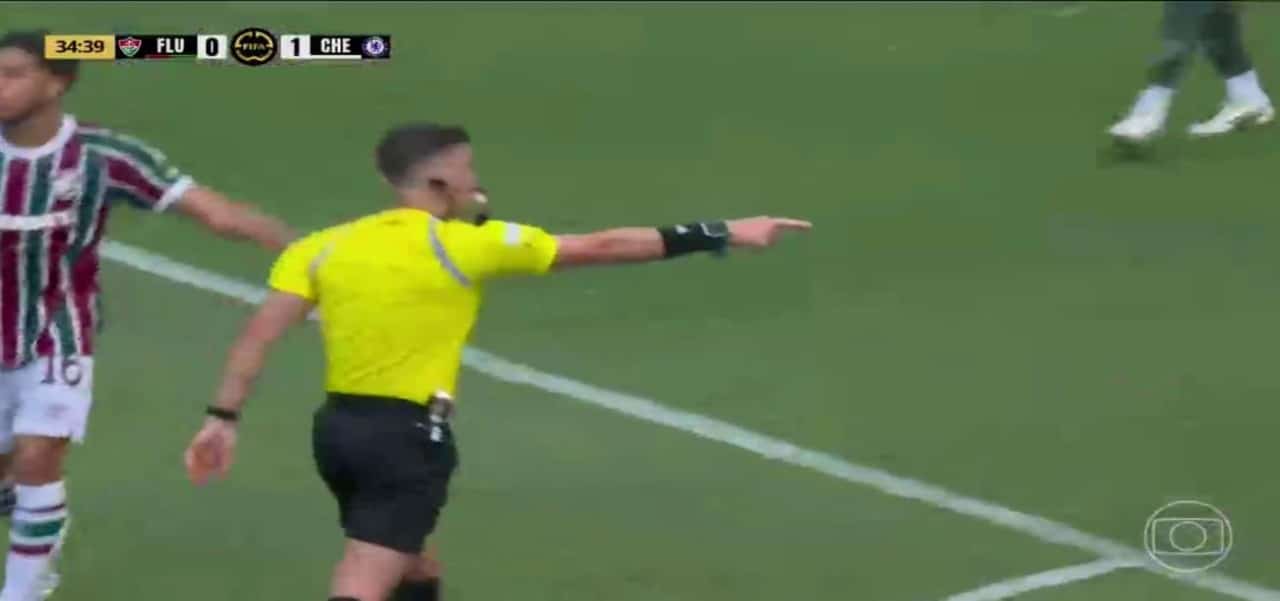
In New Jersey, Fluminense faces Chelsea in a thrilling FIFA Club World Cup 2025 semifinal at MetLife Stadium on Tuesday, July 8. At the 34th minute of the first half, French referee François Letexier awarded a penalty to Fluminense after the ball hit Chalobah’s arm during a free kick by Renê. The match, still ongoing, has been marked by intense moments, with Chelsea taking the lead at 17 minutes through a goal by João Pedro, a former Fluminense player. Kicked off at 4:00 PM, the game draws passionate fans and highlights the unprecedented rivalry between the clubs. This clash determines the first finalist of the tournament, with Fluminense aiming for their maiden world final and Chelsea banking on their European prowess.
The match began with Fluminense deploying a three-defender formation, featuring Thiago Santos, Ignácio, and Thiago Silva, the latter facing his former club. Early on, both teams exchanged quick attacks, with Arias and Cano creating chances for Fluminense, while Pedro Neto and João Pedro threatened for Chelsea. The game’s intensity was clear from the opening whistle, with hard fouls and fierce midfield battles.
- Key early moments:
- Cano attempted a shot at 2 minutes but mistimed it.
- Enzo Fernández was fouled by Cano at 5 minutes, causing a brief pause.
- Fábio made a crucial save at 8 minutes on a Cucurella header.
At 17 minutes, Chelsea took the lead in a move that caught Fluminense’s defense off guard, capitalizing on a Cano error in the buildup. The match grew even more electrifying when Fluminense nearly equalized at 25 minutes, as Hércules came close, only to be denied by Cucurella on the line.
Tricolor pressure and Chelsea’s goal
Fluminense showed resilience after conceding. Hércules, a standout in midfield, linked up with Cano at 25 minutes and fired a shot past goalkeeper Sánchez, but Cucurella cleared it off the line. The Fluminense fans, filling the stands in New Jersey, rallied behind the team, which began to press with plays down the flanks. Renê and Arias were pivotal in building attacks, while Guga attempted crosses from the right.
Chelsea, meanwhile, relied on Pedro Neto’s speed and Enzo Fernández’s precision. At 20 minutes, Malo Gusto’s dangerous header was saved by Fábio. The English side controlled possession at key moments, patiently passing and exploiting gaps in Fluminense’s defense. João Pedro, facing his former club, was a constant threat, especially in deep runs.
- Observed strategies:
- Fluminense: High pressing and crosses from the wings.
- Chelsea: Quick passes and counterattacks led by Pedro Neto.
- Standouts: Fábio with key saves, Hércules with penetrating runs.
Minute-by-minute key moments
The match was defined by critical moments that kept fans on edge. Below are the most significant plays up to the 34th minute of the first half:
- 2’: Arias surges down the right and crosses to Cano, who misfires.
- 8’: Cucurella heads a Palmer cross, but Fábio saves.
- 17’: João Pedro scores for Chelsea after a Cano error in the buildup.
- 25’: Hércules shoots in the box, but Cucurella clears off the line.
- 34’: Penalty awarded to Fluminense after the ball hits Chalobah’s arm.
These moments underscore the match’s intensity, with Fluminense pushing for an equalizer and Chelsea aiming to hold their lead. Letexier’s refereeing was precise but sparked complaints from Chelsea over the penalty call, while Fluminense saw the decision as a chance to shift the game’s momentum.
Historic clash and unprecedented rivalry
Fluminense and Chelsea have never met in official competitions, but there’s historical context. In 1929, Chelsea played a friendly at Fluminense’s Laranjeiras stadium, when Brazilian football was still professionalizing. Now, in 2025, the clubs deliver a high-stakes showdown, with players like Thiago Silva, a former Chelsea star, and João Pedro, a Fluminense youth product, adding emotional weight to the encounter.
Fluminense enters the semifinal with a strong campaign, unbeaten in 11 matches across the Brazilian Championship, Copa do Brasil, and Copa Sudamericana. Their win over Al-Hilal in the quarterfinals, sealed by a Martinelli goal, boosted their confidence under coach Renato Gaúcho. Chelsea, in top form, boasts seven wins in their last eight games and the Conference League title. Their offensive strength, averaging 8.6 shots per game, contrasts with Fluminense’s stout defense, which has conceded few goals in the tournament.
Tactical details and standout players
Fluminense leaned on high pressing to disrupt Chelsea’s buildup. Renato Gaúcho replaced the suspended Freytes with Thiago Santos, sticking with the three-defender setup. In midfield, Hércules and Nonato set the tempo, while Arias and Cano led the attack. Fábio’s critical saves kept the scoreline tight.
Chelsea, coached by Enzo Maresca, exploited the pace of Pedro Neto and Nkunku on the wings, with Enzo Fernández orchestrating play. Chalobah and Adarabioyo formed a solid backline, though occasional lapses gave Fluminense openings. João Pedro’s goal at 17 minutes showcased Chelsea’s counterattacking efficiency.
- Players to watch:
- Fluminense: Fábio (decisive saves), Hércules (infiltrations), Cano (offensive focal point).
- Chelsea: João Pedro (ex-factor), Pedro Neto (speed), Enzo Fernández (playmaking).
What’s at stake in the semifinal
The MetLife Stadium semifinal is a milestone for Fluminense, chasing their first Club World Cup final. The winner will face the victor of PSG vs. Real Madrid in a potentially historic final. For Chelsea, the match is a chance to reinforce their European dominance and return to a world final after their 2021 triumph.
The game remains balanced, with Fluminense gaining momentum after the penalty at 34 minutes. The Tricolor faithful, packing the stands in New Jersey, believe in a comeback, while Chelsea fans trust their team’s experience. The golden ball, a new version used in the semifinal, symbolizes the moment’s magnitude, with both sides vying for a place in history.
Expectations for the coming minutes
With the penalty favoring Fluminense, the match enters a new phase. Cano, Fluminense’s top scorer, is a likely candidate to take the penalty, which could level the score and reshape the game. Chelsea will likely tighten their marking and aim to stay composed after the referee’s call. The technical break at 26 minutes allowed both coaches to tweak tactics, setting the stage for a thrilling second half.
The clash reflects the balance between Fluminense’s South American grit and Chelsea’s European precision. Every play is fiercely contested, and fans are glued to the action, knowing a final berth is on the line. The semifinal remains wide open, with Fluminense determined to seize the moment and Chelsea looking to extend their lead.