
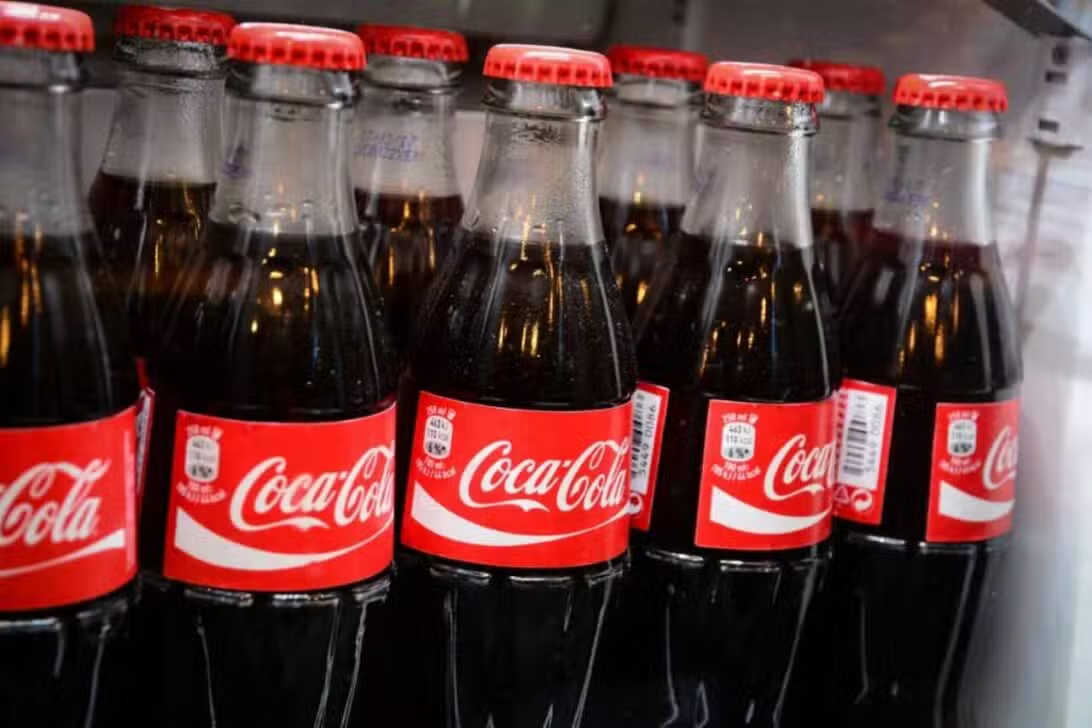
Coca-Cola announced on July 22, 2025, the launch of a new version of its iconic soda sweetened with cane sugar in the United States, responding to public pressure from President Donald Trump. The beverage, set to hit shelves in the fall of 2025, marks a shift from the high-fructose corn syrup currently used in the U.S. recipe. The move aligns with the company’s innovation goals and caters to evolving consumer preferences, potentially spurred by Trump’s call for a return to cane sugar. The cane sugar will be sourced domestically, despite the U.S. relying heavily on imports, particularly from Brazil, the world’s largest sugar producer. This decision comes amid discussions on trade tariffs and self-sufficiency in the U.S. sugar market.
The company highlighted in its second-quarter earnings report that the new product will expand its portfolio, offering consumers more choices. The announcement follows Trump’s statement on July 17, via social media, claiming he had persuaded Coca-Cola to adopt cane sugar in the U.S.
- Trump’s influence: The president’s public push accelerated the company’s decision.
- Domestic sourcing: Coca-Cola emphasized using U.S.-produced cane sugar.
- Consumer trends: The shift reflects demand for natural, less processed ingredients.
The launch has sparked debates about economic feasibility, supply chain challenges, and potential impacts on global sugar trade, particularly with Brazil.
Market response to cane sugar Coca-Cola
Coca-Cola’s decision to introduce a cane sugar-sweetened soda has generated excitement among consumers and industry analysts. The U.S. market, accustomed to corn syrup-based drinks, will now have an option mirroring recipes used in countries like Brazil, Mexico, and parts of Europe. CEO James Quincey noted that the new product aligns with the company’s strategy to diversify sweeteners across its portfolio, including teas, lemonades, and Vitamin Water.
The move taps into a global trend favoring natural ingredients. However, the U.S. faces challenges in meeting sugar demand, consuming about 11 million tons annually while producing only 8 million tons. The shortfall is met through imports, primarily from Mexico and Brazil.
- Sugar demand: The new soda may strain domestic production capacity.
- Corn syrup competition: Corn syrup remains a cheaper, widely available alternative.
- Consumer preferences: Demand for natural ingredients drives market shifts.
Analysts predict the cane sugar version could capture a significant market share, though its impact on import dynamics remains uncertain.
U.S. sugar production and import reliance
Coca-Cola’s commitment to using domestically produced cane sugar raises questions about the U.S. sugar industry’s capacity. The country produces about 8 million tons of sugar annually, primarily in Florida, Louisiana, and Texas, but relies on 3 to 5 million tons of imports yearly, depending on crop yields. Brazil, the world’s top sugar exporter, is the second-largest supplier to the U.S. after Mexico.
Scaling up domestic production to meet Coca-Cola’s needs could require significant investment. Analysts suggest that while the company’s focus on local sourcing supports U.S. farmers, it may still need to import sugar to meet demand, especially if production falls short.
- Limited output: U.S. sugar production falls short of consumption needs.
- Key importers: Mexico and Brazil supply most of the U.S. sugar deficit.
- Cost challenges: Domestic cane sugar is pricier than corn syrup.
- Sustainability goals: Coca-Cola aims to align the launch with eco-friendly practices.
Proposed tariffs of up to 50% on imports, as suggested by Trump, could complicate access to foreign sugar, affecting costs and availability.
Trump’s role in shaping Coca-Cola’s strategy
President Trump’s social media post on July 17, advocating for cane sugar in Coca-Cola, played a pivotal role in the company’s announcement. His influence underscores his ability to sway corporate decisions through public statements. Trump framed the shift as a win for traditional ingredients and American agriculture, resonating with his political base.
While Coca-Cola was already exploring cane sugar for other products, Trump’s intervention expedited the decision. The company’s swift response, announced just five days later, highlights the impact of political pressure on business strategies.
- Political strategy: Trump leveraged the issue to promote his economic agenda.
- Rapid response: Coca-Cola acted quickly to address the president’s call.
- Broader influence: Trump’s comments have previously shaped corporate decisions.
The interplay between political rhetoric and corporate action raises questions about the balance of influence in strategic business choices.

Global sugar market and Brazil’s role
Coca-Cola’s shift to cane sugar could ripple through the global sugar market, particularly for Brazil, which exports around 25 million tons of sugar annually. While the company insists on using U.S. sugar, increased demand could boost imports, benefiting Brazil in the short term. However, Trump’s proposed 50% tariffs on imports could restrict Brazilian sugar’s access to the U.S. market, forcing Brazil to pivot to markets like China and India.
Brazil’s Coca-Cola already uses cane sugar, giving it a flavor profile familiar to local consumers. The U.S. launch could indirectly spotlight Brazil’s sugar industry, though trade barriers may limit direct benefits.
- Brazil’s exports: The country dominates global sugar trade with 25 million tons yearly.
- Trade barriers: Trump’s tariffs could raise costs for Brazilian sugar in the U.S.
- Alternative markets: Asia is a growing destination for Brazil’s sugar exports.
- Global competition: Australia and other producers vie for market share.
The interplay of U.S. demand and trade policies will shape Brazil’s role in the global sugar market.
Consumer expectations and market trends
The cane sugar Coca-Cola taps into a rising consumer preference for natural ingredients. Younger consumers, in particular, favor drinks with fewer additives and a “cleaner” taste. The cane sugar recipe, common in Brazil and Mexico, is often perceived as smoother and less artificial than corn syrup-based versions.
CEO James Quincey described the new soda as a “long-term option” for consumers, signaling plans to expand cane sugar use across other products. This aligns with Coca-Cola’s broader strategy to adapt to evolving tastes and maintain its dominance in the beverage industry.
- Distinct flavor: Cane sugar offers a taste profile different from corn syrup.
- Natural appeal: Consumers increasingly seek minimally processed ingredients.
- Portfolio growth: Coca-Cola aims to cater to diverse consumer segments.
- Marketing edge: The launch could attract nostalgic and health-conscious buyers.
The move positions Coca-Cola to capitalize on shifting consumer preferences while reinforcing its market leadership.
Economic and logistical hurdles
Adopting cane sugar in the U.S. presents logistical and economic challenges. Domestic sugar production is limited, and scaling it up requires significant investment. Cane sugar is also costlier than corn syrup, potentially increasing the soda’s retail price.
Coca-Cola’s focus on local sourcing supports U.S. agriculture but may strain supply chains. The company is betting on the perceived value of cane sugar to offset higher costs, while also aligning the launch with sustainability goals.
- Higher costs: Cane sugar is more expensive than corn syrup.
- Supply chain needs: Expanding domestic production demands infrastructure upgrades.
- Sustainability focus: The launch ties into eco-conscious branding.
- Price impact: The new soda may carry a premium price tag.
The success of the cane sugar Coca-Cola will hinge on balancing these challenges with consumer demand.