
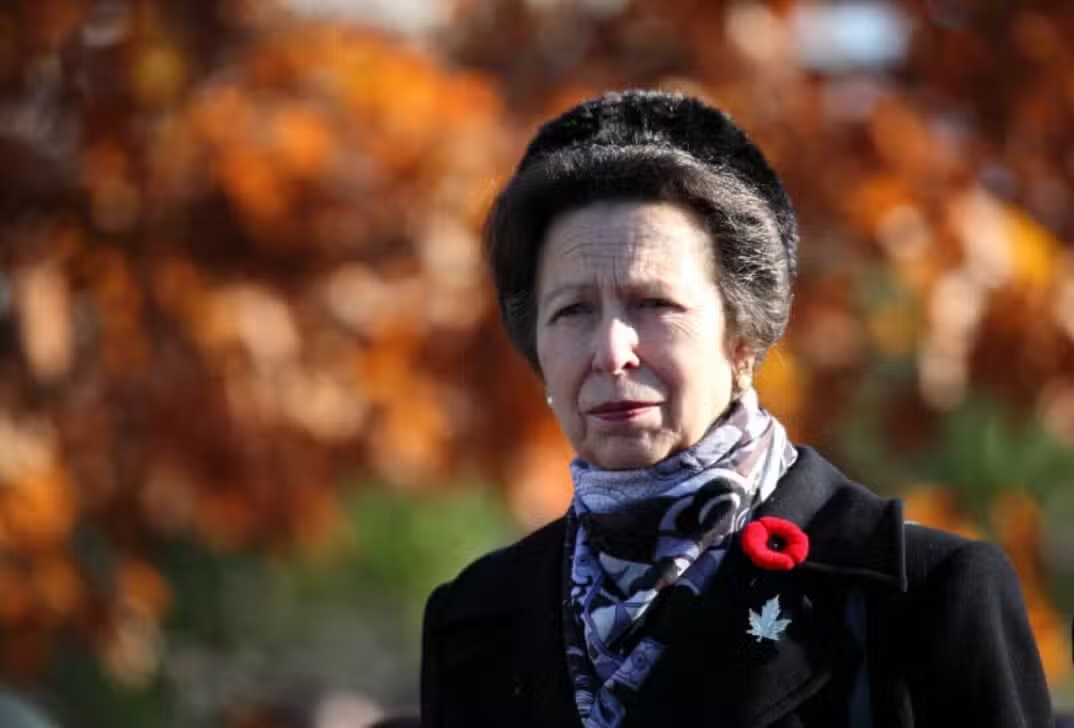
Princess Anne, sister of King Charles III, is frustrated with Prince William’s absence from official engagements, such as investitures at Windsor Castle, where he resides. At 74, Anne, known for her dedication to the monarchy, faces an increased workload due to the king’s cancer treatment, diagnosed in February 2024, and Kate Middleton’s recovery. The tension, revealed by British magazine Tatler, highlights generational differences in the royal family, with Anne urging William to engage more in formal events. The conflict underscores challenges in balancing responsibilities within the British monarchy.
Princess Anne, recognized as the hardest-working royal, completed 217 official engagements in 2024, even after a concussion that briefly sidelined her. Meanwhile, William, heir to the throne, has prioritized personal projects like the Earthshot Prize, focused on environmental initiatives, and reduced his participation in traditional ceremonies. His absence from investitures, which occur about 30 times a year and honor citizens for services to the UK, has drawn criticism from Anne, who views these duties as essential to the monarchy.
- Royal duties: Investitures are formal ceremonies for awarding honors.
- Anne’s role: The princess handled most of these ceremonies in 2024.
- William’s residence: The prince lives minutes from Windsor Castle.
- Workload: Anne remains active despite the king’s fragile health.
The current dynamics of the British royal family face unprecedented challenges, with Charles III and Kate Middleton managing medical treatments, placing additional strain on other members like Anne, Camilla, and Edward.
Generational differences in the monarchy
Anne’s frustration with William reflects a generational divide in the royal family. The princess, raised under the strict traditions of the monarchy, values attendance at formal events as a symbol of duty. William, however, embraces a modern approach, focusing on causes like mental health, housing, and the environment. This shift in priorities, while popular among younger audiences, with 70% approval for William and Kate per a 2024 YouGov poll, creates friction with the older generation, represented by Anne.
The princess royal, who faced challenges like a 1974 kidnapping attempt and criticism for her direct style, is seen as a pillar of stability. Her dedication to over 300 charities and participation in events like the 2022 Princes’ Vigil after Elizabeth II’s death reinforce her reputation. Meanwhile, William pursues a leaner, socially impactful monarchy, which doesn’t always alleviate the workload of other royals.
Investitures: the heart of the conflict
Investitures, held mainly at Windsor Castle, are central to the disagreement. These ceremonies, which award honors to about 60 people per event, are traditionally conducted by the king or the Prince of Wales. With Charles III stepping back from some duties, Anne has taken on most of these responsibilities, despite being 16th in line to the throne. William’s proximity to the venue, living at Adelaide Cottage, makes his absence particularly noticeable to Anne.
- Frequency: Around 30 investitures occur annually in the UK.
- Venue: Windsor Castle is the primary setting for these ceremonies.
- Responsibility: Only the king and the Prince of Wales can lead them.
- Anne’s burden: The princess handled most events in 2024.
William’s absence from such engagements is seen by Anne as a lack of commitment to the monarchy’s “core duties,” though sources close to the prince say he seeks balance between personal life and royal obligations, especially after Kate Middleton’s cancer diagnosis.
Royal family health and pressure on Anne
The year 2024 brought significant challenges for the British monarchy. Charles III’s cancer diagnosis, announced in February, and Kate Middleton’s abdominal surgery followed by chemotherapy reduced their public engagements. Anne, despite a concussion that briefly paused her duties, led the royals with 217 events in 2024. Queen Camilla and Prince Edward also took on additional roles, but Anne remains the central figure in many ceremonial functions.
William scaled back his schedule to support Kate during her recovery, adding to Anne’s workload. The princess, known for her resilience and with no plans to retire before her 90s, like her father, Prince Philip, feels the strain of keeping the monarchy active during a crisis. This burden fueled what Tatler described as a “mild irritation” with William’s approach.
William’s role in modernizing the monarchy
William has gained attention for initiatives to modernize the royal image. His Earthshot Prize, which awards environmental innovations, has global reach, while his campaigns on mental health and housing resonate with younger audiences. However, his “social leadership” approach contrasts with Anne’s traditional view, which prioritizes formal engagements like investitures and official visits.
William and Kate’s popularity, with over 70% approval per YouGov in 2024, outpaces the monarchy itself, which dropped to 56% approval, particularly among youth, where only 34% view it positively. This pressure for relevance may explain William’s focus on high-visibility projects, but his absence from traditional events fuels tensions with figures like Anne, who see these duties as the monarchy’s backbone.
- Earthshot Prize: Environmental award launched by William in 2020.
- Mental health: William leads campaigns like Heads Together.
- Housing: The prince supports initiatives to address homelessness.
- Popularity: William and Kate outshine the monarchy in public approval.
The monarchy’s future and balancing responsibilities
The tension between Anne and William reflects a transitional moment for the British monarchy. With Charles III and Kate facing health challenges, the distribution of duties has become a sensitive issue. Anne, with her experience and dedication, remains vital, but her advancing age and commitment to tradition raise questions about how the next generation will lead.
William, as heir, faces the challenge of balancing modernization with traditional expectations. His absence from investitures may be a strategic choice to focus on high-impact causes, but it doesn’t ease Anne’s frustration, who views formal duties as central to the monarchy. The princess, the first woman to participate in the 2022 Princes’ Vigil, shows that tradition and innovation can coexist, but it requires collective effort.
- Charles’ health: The king reduced duties due to cancer treatment.
- Kate’s recovery: The princess resumed public duties in September 2024.
- Anne’s role: The princess is patron of over 300 organizations.
- Generational shift: William pursues a modernized monarchy model.
The British monarchy, despite its popularity, faces a period of adaptation. The tension between Anne and William is not just personal but reflects a broader debate about the institution’s future, which must balance tradition and modernity to stay relevant.