
Alexandre de Moraes calls Bolsonaro supporters cowards and traitors in a speech at the Supreme Court about Trump’s tariffs and the US Magnitsky Act

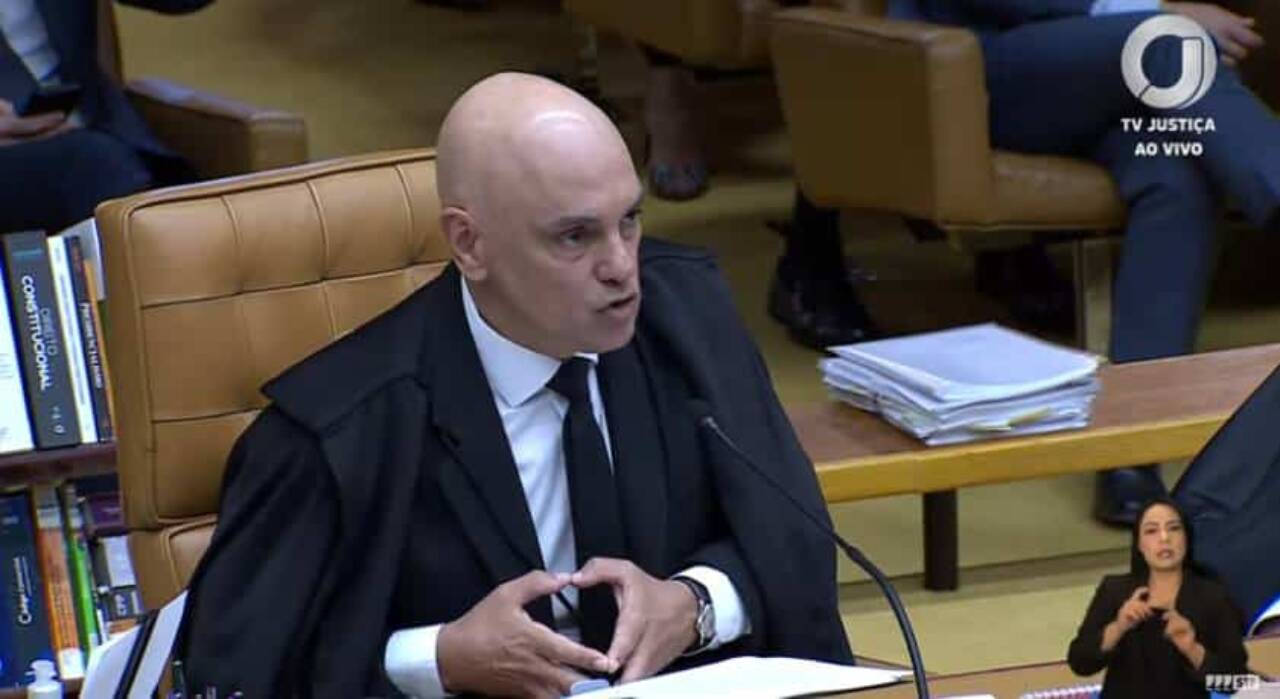
Minister Alexandre de Moraes of the Supreme Federal Court (STF) accused Bolsonarists in hiding of acting as a criminal organization with cowardly and treacherous conduct in a speech delivered at 11 a.m. on Friday, August 1, 2025, in Brasília. He denounced attempts to subject the STF to foreign interests, such as sanctions imposed by the United States under the Magnitsky Act and a 50% tariff on Brazilian products. According to Moraes, these actions aim to create an economic crisis and pressure the Judiciary and Legislature to interfere in criminal cases, such as the investigation into the January 8 coup attempt. The statement comes amid investigations by the Federal Public Prosecutor’s Office (PGR) and the Federal Police (PF) against Brazilians negotiating hostile measures abroad.

Moraes’ words resonated in the STF plenary, where he highlighted the severity of actions by Brazilians who, he said, betray the nation by encouraging economic sanctions against the country. He emphasized that these actions directly impact the economy, causing losses to entrepreneurs and risking mass unemployment. The minister also criticized the lack of courage of the investigated individuals, who fled Brazil to orchestrate their actions.
- Main targets of the criticism: Brazilian fugitives linked to Jair Bolsonaro negotiating sanctions abroad.
- Objective of the actions: pressure for amnesty for January 8 defendants and obstruct justice.
- Economic consequences: tariffs on Brazilian products already causing losses.
- Institutional response: Moraes reinforced the STF’s resistance to external pressures.
The speech was marked by a firm tone, with Moraes reinforcing national sovereignty and judicial independence. He received support from other justices, such as Gilmar Mendes, who also classified the actions as treason against the homeland.
Reaction to sanctions and economic impact
The sanctions cited by Moraes refer to the application of the Magnitsky Act by the United States, which allows punishment of individuals accused of human rights violations or corruption. In the Brazilian context, the measure was orchestrated by Bolsonarist fugitives who allegedly negotiated with U.S. authorities to include Brazilian public officials on the sanctioned list. The 50% tariff on Brazilian exports to the U.S., already in effect, affects sectors such as agribusiness, steel, and technology.
Brazilian entrepreneurs are already reporting difficulties in maintaining international contracts due to increased costs. The National Confederation of Industry (CNI) estimates that the tariffs could reduce exports to the U.S., Brazil’s main trading partner, by up to 20%. The impact threatens supply chains in states like São Paulo, Minas Gerais, and Mato Grosso, with the risk of mass layoffs.
- Most affected sectors:
- Agribusiness: exports of soy and meat face barriers.
- Steel industry: increased costs for steel and aluminum.
- Technology: electronic components with reduced margins.
- Estimated losses: US$10 billion annually, according to the CNI.
- Government response: Ministry of Economy negotiates with the U.S. to reduce tariffs.
The Brazilian government, through the Ministry of Foreign Affairs, condemned the negotiations of Brazilians with foreign authorities, classifying them as an attack on sovereignty. President Luiz Inácio Lula da Silva stated that Brazil will not yield to external or internal pressures and will seek bilateral agreements to mitigate economic damage.
Political pressure and blackmail against Congress
Moraes highlighted that the Bolsonarists’ actions are not limited to economic impacts. He revealed that an unidentified fugitive made direct threats to the presidents of the Chamber of Deputies, Hugo Mota, and the Senate, Davi Alcolumbre, demanding amnesty for January 8 defendants. The threats included the continuation of U.S. tariffs and the application of a “financial death law” against parliamentarians if they did not comply.
The minister’s statements expose an attempt to interfere with the Legislature to halt ongoing criminal cases in the STF. The criminal case 2668, mentioned by Moraes, investigates the core of the attempted coup in 2022, which culminated in the January 8, 2023, attacks on the Three Powers Square. Over 500 defendants have already confessed to participating in the attacks, according to the minister.
Congress reacted with outrage to the threats. Hugo Mota stated that the Chamber will not bow to external or internal pressures, while Davi Alcolumbre reinforced the Senate’s independence. Parliamentarians from various political spectrums, including opposition members, condemned the fugitives’ actions as an attempt to destabilize institutions.
Criminal organization’s modus operandi
Moraes described the Bolsonarists’ tactics as a “golpist modus operandi” similar to that used in 2022. He compared the current international negotiations to the encampments in front of military barracks and the invasion of the Three Powers Square, which aimed to provoke national unrest to justify a coup. Now, the strategy would be to create an economic and social crisis to generate political instability, forcing the Judiciary and Legislature to yield.
- Stages of the plan identified by the STF:
- Negotiation with foreign authorities to impose sanctions.
- Encouragement of economic tariffs against Brazil.
- Pressure for amnesty through blackmail of parliamentarians.
- Use of social media to claim responsibility and amplify impact.
The Federal Police intensified investigations into Brazilian fugitives, many of whom are in the United States, using social media to publicize their actions. Recent posts claim responsibility for negotiating with the U.S. government, celebrating the sanctions as a way to “punish” the STF. The PGR has requested the extradition of some investigated individuals but faces legal obstacles in bilateral agreements.
Institutional response and national sovereignty
Moraes’ speech reinforced the STF’s stance in defense of national sovereignty and the independence of powers. He highlighted that the Bolsonarists’ actions will not achieve their goal of destabilizing Brazil but will cause significant damage to the economy and the country’s international image. The minister praised the joint efforts of the PF and PGR, which have gathered robust evidence against the investigated individuals.
The Judiciary has also expanded measures to monitor social media and bank accounts linked to the fugitives. Cooperation with international authorities, including Interpol, has been intensified to track financial movements supporting the negotiations abroad. The STF is considering the possibility of new criminal cases against those responsible, including charges such as treason and obstruction of justice.
The Brazilian government is working to reverse the U.S. tariffs through diplomatic negotiations. The Ministry of Economy projects that, without a short-term solution, Brazil could face an economic downturn in 2026, impacting GDP and the job market. Lula called an emergency meeting with congressional leaders to discuss measures to contain the crisis.
Judicial actions and next steps
Ongoing investigations by the STF and PGR point to a structured network of Brazilians operating abroad with support from political and financial groups. Moraes revealed that the evidence includes messages, audios, and documents proving negotiations with U.S. authorities. The criminal case 2668, nearing the final arguments phase, is the main target of the pressures, but other investigations into the financing of anti-democratic acts are also advancing.
- Ongoing judicial measures:
- Monitoring of social media and bank accounts.
- Requests for extradition of fugitives.
- New criminal cases for crimes against sovereignty.
- Cooperation with international authorities.
The STF maintains its stance of not yielding to external or internal pressures. Moraes concluded his speech by reiterating that Brazil will not be held hostage by “cowardly traitors” and that justice will run its course. The statement was applauded by other justices, signaling the Supreme Court’s unity in the face of threats.





