Trump slams China after parade with Russia and India in Beijing Por Bruna
6 min de leitura
 |
On September 3, 2025, China held its largest military parade ever in Beijing’s Tiananmen Square, marking 80 years since Japan’s defeat in World War II. Led by President Xi Jinping, the event showcased a complete nuclear triad, including intercontinental missiles, advanced drones, and hypersonic weapons, with allies like Russia’s Vladimir Putin and North Korea’s Kim Jong-un in attendance. The display was seen as a message to the West, particularly the United States, where President Donald Trump reacted by accusing China of luring allies like Russia and India into a “shadowy” coalition. The parade, watched by over 50,000 spectators, also featured leaders like India’s Prime Minister Narendra Modi and reinforced China’s narrative of a new global order. The event heightened geopolitical tensions, drawing criticism from Trump and the European Union, which viewed the alliance as a challenge to the international order.
Xi Jinping’s call for unity against “hegemony” was backed by the display of cutting-edge military equipment, such as the DF-5C missile with a 20,000-km range. The presence of global leaders and the parade’s scale underscored China’s growing role on the world stage.
- New weapons displayed: nuclear missiles, underwater drones, and laser weapons.
- Strengthened alliances: bilateral meetings with Putin, Kim, and Modi.
- International reactions: criticism from Trump and EU diplomacy chief Kaja Kallas.
Details of the military parade
The parade, dubbed Victory Day, was a landmark in showcasing China’s military power. Held in Tiananmen Square, it featured around 10,000 soldiers marching in formation, accompanied by flyovers of fighter jets, helicopters, and drones. China unveiled its full nuclear triad for the first time, comprising land, sea, and air-launched missiles, highlighting the DF-5C intercontinental ballistic missile and the new mobile DF-61. Additionally, underwater drones like the AJX002 and laser weapons like the LY-1, designed to disable optical sensors, were showcased, altering maritime combat dynamics.
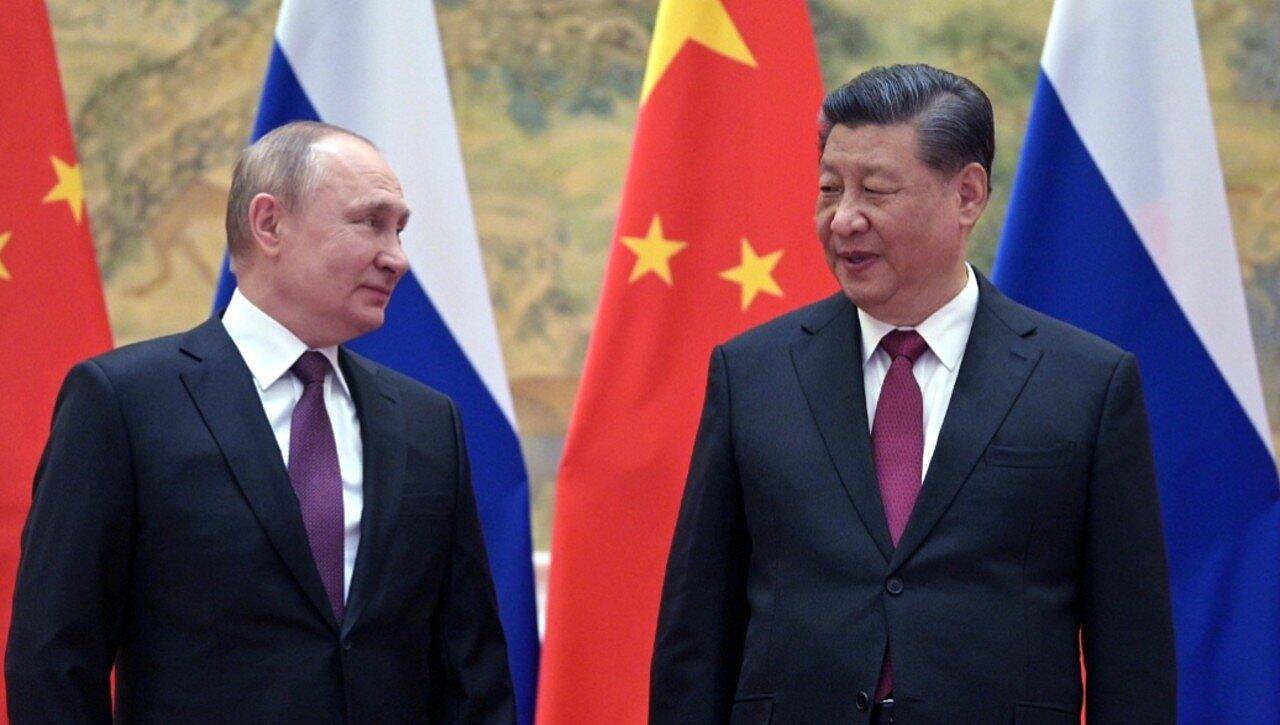
The presence of leaders like Putin and Kim Jong-un alongside Xi symbolized strengthened strategic alliances. The event also included a summit of the Shanghai Cooperation Organization (SCO) days earlier, gathering representatives from Iran, Pakistan, and Mongolia. Xi’s message of unity against “power politics” was clear, with the parade ending in the release of 80,000 peace doves, a symbolic gesture amid advanced weaponry displays.
International reactions to the event
The global response to the parade was swift and polarized. In the U.S., Trump took to Truth Social to express frustration, claiming China was pulling traditional U.S. allies like India into its orbit. He accused Xi, Putin, and Kim of conspiring against American interests, though he offered no specifics. His remarks reflect growing tensions between Washington and Beijing, especially after the display of nuclear missiles capable of reaching U.S. soil.
In Europe, EU diplomacy chief Kaja Kallas called the meeting a “direct challenge to the international order,” highlighting China’s support for Russia in the Ukraine war as a major concern. Putin responded with sarcasm, noting Trump’s “sense of humor.”
- Trump’s criticism: accused China, Russia, and North Korea of conspiring.
- EU’s stance: concerns over China’s support for Russia and global order challenge.
- Putin’s response: mocked Trump’s claims with irony.
- Modi’s presence: signaled India’s closer ties with China.

Highlighted military arsenal
The parade’s centerpiece was China’s advanced weaponry. The DF-5C missile, liquid-fueled, boasts a 20,000-km range, while the mobile DF-61 offers strategic flexibility. The nuclear triad, including land, submarine, and air-based missiles, positions China as a nuclear power comparable to the U.S. and Russia, though with a smaller arsenal.
The event also featured advanced drones like the GJ-11, designed to operate alongside piloted jets, and the 65-foot AJX002 underwater drone for reconnaissance missions. The LY-1 laser weapon, mounted on armored vehicles, can disable enemy sensors. These advancements raise concerns, as experts note the combination of drones and missiles could limit foreign navies’ operations in the South China Sea.
Geopolitical context and alliances
The parade was more than a military show; it reinforced China’s leadership in a coalition challenging Western hegemony. The presence of India’s Narendra Modi alongside Putin and Kim surprised analysts, given past China-India border tensions. Modi’s attendance at the SCO summit and parade suggests Beijing’s efforts to draw New Delhi closer, alarming Washington.
The SCO summit, held before the parade, facilitated bilateral agreements between China and its allies. Xi met separately with Putin and Kim, strengthening economic and military ties. Brazil’s presence, represented by Celso Amorim and Dilma Rousseff from the BRICS Bank, highlighted China’s outreach to the Global South. Xi’s vision of a new world order based on “mutual gains” contrasts with escalating tensions with the West.
- SCO summit: bilateral agreements with Russia, North Korea, and others.
- Brazil’s presence: Amorim and Rousseff represented the country.
- India’s alignment: Modi’s presence signals a geopolitical shift.
- Xi’s message: critique of hegemony and push for a new global order.
Xi Jinping’s message
In his speech to over 50,000 spectators, Xi, dressed in a Mao-inspired suit, declared China stands “on the right side of history” and advocated for peace, dialogue, and cooperation. His words, however, were paired with a military display that suggested a dual strategy of diplomacy and intimidation.
Xi’s call to resist “hegemony and power politics” indirectly targeted the U.S. The attendance of over 20 heads of state, including key allies like Putin and Kim, bolstered China’s confident global stance. The release of 80,000 peace doves closed the event, but the focus remained on the nuclear and drone displays dominating global headlines.
Regional impact in East Asia
The parade had direct implications for East Asia, where China seeks to solidify its influence. The display of hypersonic missiles and underwater drones signals a strategy to dominate nearby seas, like the South China Sea, where Beijing disputes territories with the Philippines and Vietnam. Experts warn that the showcased armaments could hinder Western naval operations in the region.
James Char, a defense professor in Singapore, noted that maritime drones and anti-ship missiles create an “exclusion zone” complicating foreign interventions. The presence of allies like Pakistan and Mongolia at the parade reinforces China’s regional power projection, while India’s participation suggests a realignment that could reshape Indo-Pacific dynamics.
- Maritime control: drones and missiles strengthen South China Sea dominance.
- Regional tensions: disputes with the Philippines and Vietnam gain weight.
- Alliance shifts: India’s closer ties with China concern the West.