Williams secures reversal of Sainz’s penalty in Dutch GP after FIA reviews crash footage

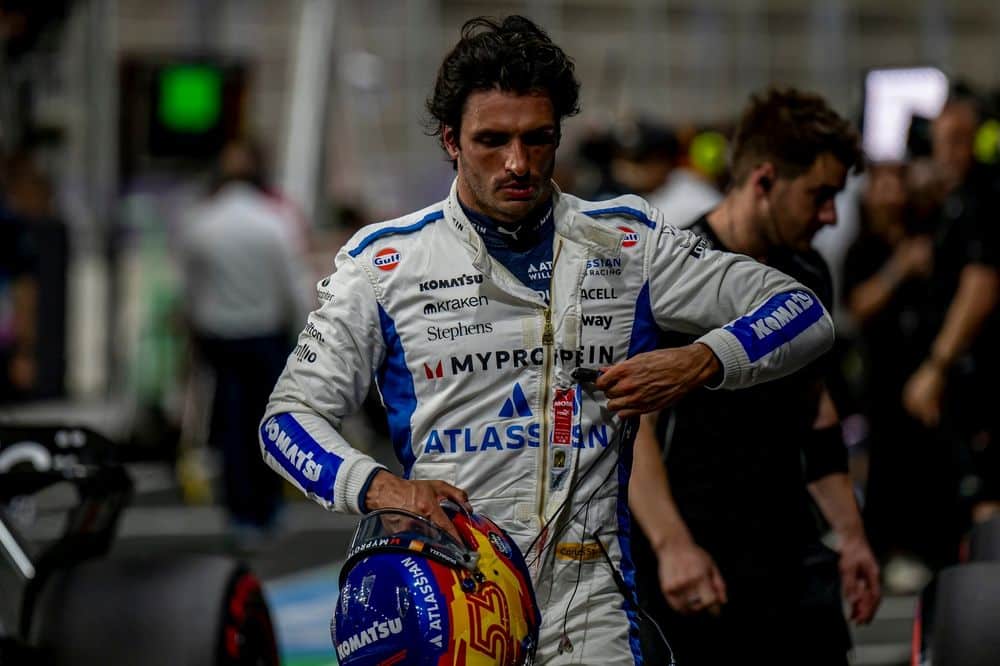
The FIA annulled the penalty imposed on Carlos Sainz for a collision with Liam Lawson during the 2025 Dutch Grand Prix, held on August 31 in Zandvoort, Netherlands. The decision followed a formal review request from the Williams team, which presented new evidence, including 360-degree camera footage and driver statements, concluding that the incident occurred after a safety car restart on lap 27, when both drivers vied for position in Turn 1. Sainz, then in eighth, attempted an outside overtake, but a momentary loss of control by Lawson’s RB car contributed to the contact, causing tire punctures and position losses for both. Initially, stewards blamed Sainz, issuing a 10-second penalty and two superlicense points, but the review deemed it a shared racing incident, removing the points without altering the race result, as the time penalty was served. This reversal underscores the importance of post-race evidence in ensuring fair FIA rulings in a competitive 24-race season.
The crash disrupted a promising race for Sainz, who was gaining ground post-safety car, and Lawson, defending the inside line. Both Williams and RB suffered from unscheduled pit stops, dropping them out of the points. Oscar Piastri’s McLaren dominated with a flag-to-flag victory, but the incident stole headlines for challenging the stewards’ initial visibility.
- Evidence included footage not broadcast live, only accessible post-race.
- Sainz’s statement clarified the legitimacy of his move, denying reckless contact.
- RB representatives joined the virtual hearing, ensuring balanced analysis.
The review adhered to FIA regulations, allowing challenges when significant new elements emerge.
Turn 1 clash highlights restart dynamics
Zandvoort’s Turn 1, known for its banking and tight layout, set the stage for a contact that altered race trajectories in the seventh-to-eighth-place battle. Sainz accelerated to pass Lawson, who held the inside line post-safety car, but the RB car suffered a “snap” – a brief loss of grip – veering slightly outward and hitting Sainz’s left-rear wheel. This caught the Spaniard off guard, as he aligned his Williams alongside, within 2025 overtaking guidelines.
Initial stewards ruled Lawson had the “right to the corner” as the leading car, pinning blame on Sainz for the risky outside move. However, new footage showed Lawson’s unintended drift, making the incident mutual. This spared Sainz from accumulating superlicense points, now at just two, well below the 12-point suspension threshold.
Last chance to be in the audience for our Virtual Q&A with Carlos 💻
— Atlassian Williams Racing (@WilliamsRacing) September 13, 2025
RSVP now ⬇️
The lap 27 restart intensified battles, with drivers chasing quick gains on a high-speed, narrow circuit. Zandvoort’s dunes and layout favor aggressive defenses but demand precision to avoid such clashes.
- Lawson’s “snap” stemmed from rapid corner transitions, common in high-downforce setups.
- Sainz dropped roughly 10 positions after a forced pit stop, finishing 13th, 17 seconds behind Lawson in 12th.
- The FIA noted such momentary losses don’t warrant one-sided penalties in clean racing.
These split-second moments shape Formula 1 outcomes.
Post-race evidence reshapes initial ruling
Car-mounted cameras, including Sainz’s 360-degree and Lawson’s rear view, offered critical angles unavailable during live broadcasts. These revealed the RB car’s subtle deviation, backing Sainz’s claim of a non-reckless move. Williams filed the review on September 4, post-Italian GP, arguing the evidence met the FIA’s “new and relevant” criteria.
The virtual hearing, held with Zandvoort’s steward panel and neutral observers, concluded neither driver was predominantly at fault, labeling it a racing incident. The 2025 FIA regulations emphasize post-event analysis for ambiguous cases, promoting fairer calls under race-time pressure.
Williams’ strategy speeds up penalty reversal
The Grove-based team swiftly compiled evidence within a week, contesting a ruling that threatened Sainz’s superlicense. Team principal James Vowles called the initial verdict “at most a racing incident,” and the successful appeal removed the two points, aiding Sainz in a season where consistency is key amid no recent podiums.
RB defended Lawson but agreed to the joint review, avoiding escalation. The process showcased inter-team collaboration for rule clarity in a packed 24-race calendar. Sainz, relieved, noted the move aimed to regain ground lost during the safety car.
- Review filed on September 4, analyzed by September 12 per FIA timelines.
- Hearing included statements from both drivers and team engineers.
- Decision announced on September 13, aligned with the 2025 race schedule.
This procedural win boosts Williams’ confidence in future disputes, prioritizing technical evidence.
Championship and superlicense implications
With the annulment, Sainz keeps his superlicense clear of excessive points, focusing on upcoming races without suspension risks. The drivers’ championship, led by Piastri, sees tight mid-grid battles where such incidents cost valuable points. Williams, improving with its 2025 car, views the reversal as a chance to build momentum on technical tracks like Zandvoort.
Lawson, an RB rookie, gains experience from the episode, unscathed by penalties but reminded of defensive precision needs. Formula 1’s 24-race season demands balanced rulings to maintain competitive integrity.
The 2025 overtaking guidelines prioritize inside lines, but this case tests their real-world application. Teams now closely monitor post-race footage for appeals.
- Sainz holds two superlicense points, valid for 12 months per FIA rules.
- The incident cost both drivers roughly 10 potential championship points.
- The São Paulo GP in November offers Williams a recovery opportunity.
These factors sustain competitive balance, emphasizing consistent performances.
Zandvoort’s battles test rule boundaries
The Dutch circuit, with 72 laps and a challenging layout, saw multiple safety car periods, amplifying incidents like Sainz and Lawson’s. Turn 1 demands precise traction post-restart, where aggressive moves heighten risks. The FIA uses such events to refine protocols, ensuring penalties reflect shared responsibilities.
Sainz, known for bold overtakes, adapted to Williams’ new car, but the clash highlighted narrow-track risks. RB praised Lawson’s resilience, continuing despite damage.
- Zandvoort averages 2.5 safety car deployments per GP in recent years.
- Turn 1 accounts for 15% of recent Formula 1 contact incidents.
- 2025 rules limit excessive lateral defensive moves.
These dynamics enhance the sport’s spectacle, balancing speed and safety.