
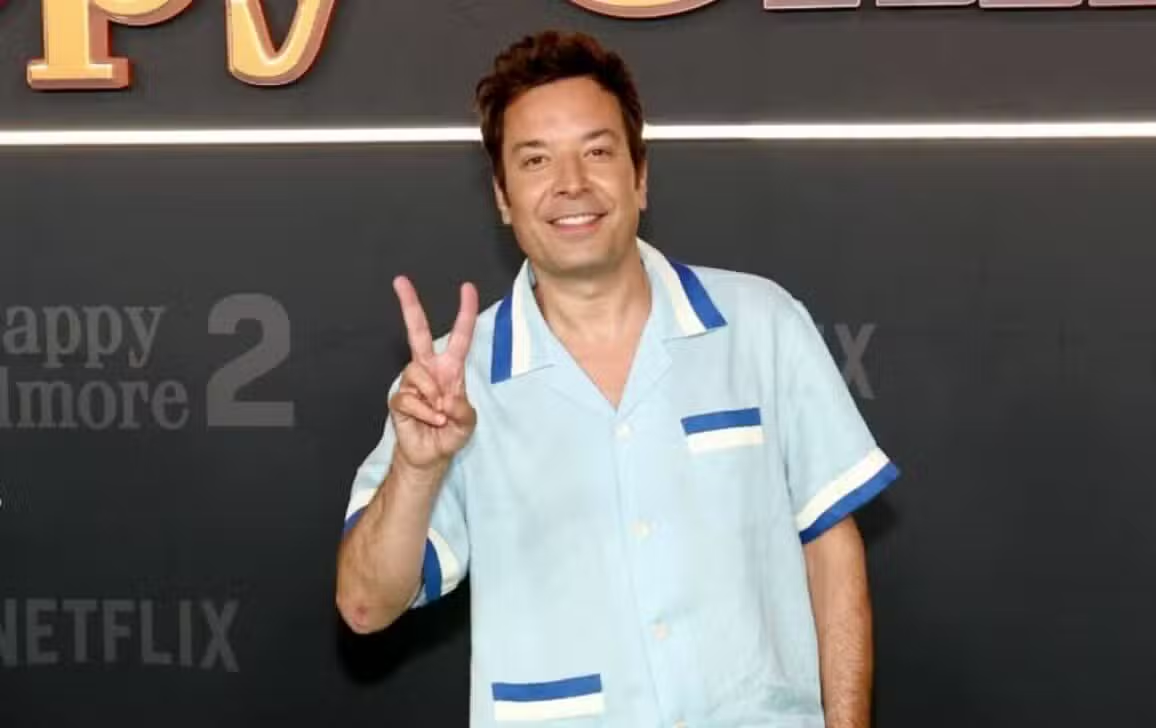
Jimmy Fallon kicked off The Tonight Show with a bombshell that caught the audience off guard. The host, known for his lighthearted humor, dove straight into the controversy dominating headlines: the indefinite suspension of Jimmy Kimmel’s show by ABC. “The big news is that Jimmy Kimmel was suspended by ABC after FCC pressure, leaving everyone thinking ‘WTF,’” he said, blending disbelief with levity. Fallon, who typically steers clear of deep political dives, seized the moment to defend his colleague without hesitation.
The ABC decision hit like a bolt from the blue, following Kimmel’s comments on the reaction of Donald Trump’s supporters to the assassination of conservative activist Charlie Kirk, which occurred on September 10 at Utah Valley University. Kimmel had questioned the rush to politicize the incident, suggesting MAGA supporters were deflecting attention from the suspect, Tyler Robinson, before the FBI’s full investigation. That remark, aired on September 15, sparked a firestorm, especially from FCC Chairman Brendan Carr, a Trump appointee, who called the comments “repugnant” and hinted at regulatory actions against the network.
Fallon didn’t stop at defense. He shared receiving dozens of messages from family mistaking the two Jimmys, adding a personal touch. “I woke up to 100 texts from my dad saying, ‘Sorry they canceled your show.’ Hey, that’s not me. That’s Jimmy Kimmel,” he quipped, drawing laughs from the audience. Behind the humor was a clear message: Kimmel is “a decent, funny, and caring guy,” and Fallon expressed genuine hope for his swift return to the air.
- Key reasons for Kimmel’s suspension: comments on politicizing Kirk’s assassination; Carr’s FCC pressure; Nexstar and Sinclair affiliates pulling the show.
- Fallon’s initial reaction: public confusion between the hosts; personal defense rooted in friendship and professional admiration.
- Incident context: Kirk, 31, was a Turning Point USA figurehead; suspect Robinson still under investigation with no confirmed political affiliation.
- Immediate fallout: protests outside ABC’s Los Angeles studio; support from musicians’ and actors’ unions.
Regulatory pressure speeds up ABC’s decision
ABC, owned by Disney, announced the suspension on September 17, hours after Carr, in a conservative podcast, suggested local affiliates pressure the network. Nexstar Media Group, owner of dozens of ABC stations and facing a billion-dollar acquisition pending FCC approval, acted first, replacing the show with reruns and Kirk tribute specials. Sinclair Broadcast Group followed, demanding Kimmel publicly apologize and donate to the victim’s family.
Disney executives, including CEO Bob Iger and Dana Walden of Disney Entertainment, made the call in an emergency meeting, prioritizing regulatory stability amid sensitive mergers and acquisitions. The network owns eight local channels subject to FCC licenses in key markets like New York and Los Angeles, amplifying the stakes. Critics, including FCC Democratic Commissioner Anna Gomez, accused the administration of using regulatory weight to suppress critical voices, likening it to authoritarian tactics abroad.
Fallon addressed the absurdity without overdoing it. He vowed to cover Trump “as usual,” but what followed was sharp satire exposing contradictions. The monologue shifted to a mock coverage of Trump’s three-day UK trip, interrupted by an offscreen voice turning criticisms into forced praise. This five-minute bit served as a metaphor for the veiled censorship many now fear haunting late-night shows.
Trump’s trip, concluded on September 16, included meetings with King Charles at a Windsor Castle banquet and trade talks in London. Yet, massive protests marked the itinerary, with demonstrators projecting images of Trump alongside Jeffrey Epstein on the castle walls, alluding to the president’s past ties to the financier convicted of pedophilia in 2019. Fallon wove these details into his humor, balancing levity with subtle critique of “expression limits.”
Fallon’s satire exposes contradictions in Trump coverage
Fallon began the UK trip segment with feigned enthusiasm. “President Trump just wrapped his three-day UK trip, and he looked incredibly elegant,” he said, pausing for an offscreen voice to add: “As always, his tie was the perfect length, his face a natural color, and his hair outshone any Hollywood star’s.” The audience roared, recognizing the exaggeration as a mirror to the pressures Kimmel faced.
This approach let Fallon navigate the tricky terrain of political satire without losing his accessible style. He noted the London protests, where thousands marched with anti-Trump immigration policy signs, but the voiceover cut in: “He was greeted as a hero, revitalizing Atlantic alliances with unmatched charisma.” The gag underscored how free speech, a late-night comedy staple, now seems under government scrutiny.
In a more serious aside, Fallon reflected on fans’ messages worrying about the future of late-night shows. “A lot of people are anxious about not being able to say what they think without censorship risks,” he admitted, echoing concerns from hosts like Seth Meyers and Stephen Colbert on their shows the next day. Meyers, on Late Night, aired Trump clips defending “free speech” while celebrating Kimmel’s suspension, creating an ironic contrast. Colbert, whose own show was canceled by CBS in July for questionable financial reasons, called the move “blatant censorship” and tied it to his case, suggesting a pattern of targeting critics.
Jon Stewart, in a surprise Daily Show appearance, went for extreme satire, feigning subservience to “dear leader” Trump in a 23-minute monologue. “Tonight, we are all Jimmy Kimmel,” he declared, warning that yielding an inch to an autocrat leads to endless concessions. Fallon, less political by nature, found a middle path in satire, but his message resonated: comedy won’t bow easily.
- Key elements of Fallon’s satire: offscreen interruptions turning critique to praise; jabs at Trump’s appearance; Epstein allusion via Windsor projections.
- Other hosts’ connections: Colbert ties to his cancellation; Stewart uses subservient satire; Meyers highlights Trump’s free speech hypocrisy.
- Trump’s trip details: royal meetings; 5,000-protester London marches; $10 billion trade deals.
- Underlying themes: censorship risks in broadcasting; FCC’s role in local licenses; solidarity among late-night comedians.
Political and Hollywood reactions amplify debate
Kimmel’s suspension spilled beyond studios into Capitol Hill. Senate Minority Leader Chuck Schumer called the FCC’s pressure “despicable and against democratic values,” comparing it to tactics in China and Russia. Senator Chris Murphy suggested Kirk’s assassination is a pretext for a campaign against dissenters, while Representative Ro Khanna quipped this is the “first administration to make comedy illegal.” On the Republican side, voices like Nancy Mace defended the move, arguing the First Amendment doesn’t protect “insensitive statements” in national tragedies.
In Hollywood, support for Kimmel was unanimous and vocal. Ben Stiller called the suspension “wrong” on social media, and Severance’s Adam Scott labeled it “absurd and terrifying.” David Letterman, at a journalism festival, lamented the state of media: “It’s managed media, ridiculous and dull.” Conan O’Brien, a former late-night host, warned the move unsettles “right, left, and center.” Even the American Federation of Musicians’ president, Tino Gagliardi, accused the administration of attacking free speech, citing impacts on production bands and crews.
Fallon, closing his monologue, avoided grim forecasts, focusing on his friendship with Kimmel. The two have swapped appearances on rival shows, like an April Fool’s prank in 2023, and Kimmel joined Fallon’s Password game show in 2024. This closeness lent authenticity to his defense, turning the segment into a rare vulnerable moment for the NBC host. The 400-person Rockefeller studio audience gave a standing ovation, signaling shared public concerns.
The case also reignited debates about the FCC’s role in entertainment content. Carr, on Fox News, praised the affiliates’ action as “unprecedented” and vowed more changes to the “media ecosystem” under Trump. He even flagged The View as a potential target, citing equal-time rules for political candidates. Gomez countered that the First Amendment bars the FCC from dictating broadcast content. Analysts estimate the suspension will cost ABC millions in viewership, as Kimmel draws 2.5 million weekly viewers, outpacing rivals in younger demographics.
Late-night solidarity strengthens comedy’s bonds
Other hosts used their platforms to shield Kimmel. Meyers, in his A Closer Look, showed Trump clips posing as a free speech champion while attacking journalists, crafting a hypocrisy mosaic. “It’s a privilege to call Jimmy Kimmel a friend,” he said, vowing to keep the format “as we’ve always done.” Colbert, in an emotional monologue, sang a “We Are the World” parody retooled as “We Are All Jimmy Kimmel,” linking his CBS exit to a broader silencing plan.
Stewart, with his surprise return, devoted the entire episode to the issue, interviewing Nobel journalist Maria Ressa, a global voice against authoritarianism. “With an autocrat, you don’t give an inch,” he warned, referencing the children’s book If You Give a Mouse a Cookie in Kimmel’s context. Fallon, less political in routine, found satire as a middle ground, but his message echoed: late-night comedy won’t bend easily. Protests continued on September 18 outside Disney’s Burbank headquarters, with hundreds demanding Kimmel’s return and transparency in the decision.
The ACLU issued a statement condemning the action as an “unconstitutional plan to silence critics,” noting Nexstar’s $6.2 billion merger was vulnerable to intimidation. Trump, back in the U.S., posted on Truth Social hailing the suspension as “great news for America” and urged NBC to fire Fallon and Meyers, calling them “total losers” with “horrible ratings.” This escalation personalizes the feud, turning a studio spat into a cultural battle.
Fallon closed the show with guests like Jude Law and Jonathan Groff, but the monologue’s buzz dominated online, with clips going viral in hours. Users shared satire snippets, using hashtags like #FreeKimmel and #LateNightUnited. The episode hit 3.2 million streaming views initially, a high for The Tonight Show in months. This traction shows how comedy, even under pressure, mobilizes audiences to defend core principles.
- Forms of host support: satirical monologues with interruptions; expert interviews on freedom; musical parodies and contrasting clips.
- Hollywood figures involved: Stiller, Scott, Letterman, O’Brien; actors’ and musicians’ unions.
- Affected viewership numbers: Kimmel’s 2.5 million weekly viewers; estimated $5 million loss for ABC.
- Carr’s proposals: license reviews for shows like The View; focus on “equal opportunity” rules.
- Political responses: Schumer and Murphy condemn as antidemocratic; Mace defends First Amendment limits.
Kirk’s legacy and incident ramifications
Charlie Kirk, killed at 31, was a right-wing youth icon, founding Turning Point USA in 2012 to mobilize conservative students. His death during a campus speech shocked the MAGA movement, with Trump issuing condolences and vowing thorough investigations. Suspect Robinson, 28, remains detained with no clear motives released, but Kimmel questioned the early depoliticization narrative, citing MAGA supporters’ online posts.
That critique, seen by 2.8 million in the original broadcast, split opinions: conservatives called it “sick,” while progressives praised its boldness. The FCC, under Carr, acted swiftly, unlike its inaction in past misinformation cases. Analysts see the episode as a test for regulatory independence, especially with mergers like Nexstar-Tegna, valued at billions, at stake.
Fallon, in his bit, sidestepped the assassination details, using Trump’s UK trip as a comedic hook. But the Epstein mention, via Windsor projections, revived old scandals, with British protesters using lasers to display 2002 photos. Trump, during the royal banquet, ignored outside jeers, signing defense deals injecting $15 billion into U.S.-UK partnerships. Fallon turned these facts into punchlines, like Trump’s hair “outshining Conrad’s in The Summer I Turned Pretty,” a niche reference delighting film fans.
The debate has gone global, with European outlets highlighting the contrast between Trump’s visit and U.S. domestic turmoil. In Brazil, portals like UOL and G1 covered the case, tying it to media and power discussions. Fallon, with his approach, kept the focus on the humanity behind the controversy, reminding viewers that Kimmel is not just a host but a father and friend who deserves his stage.