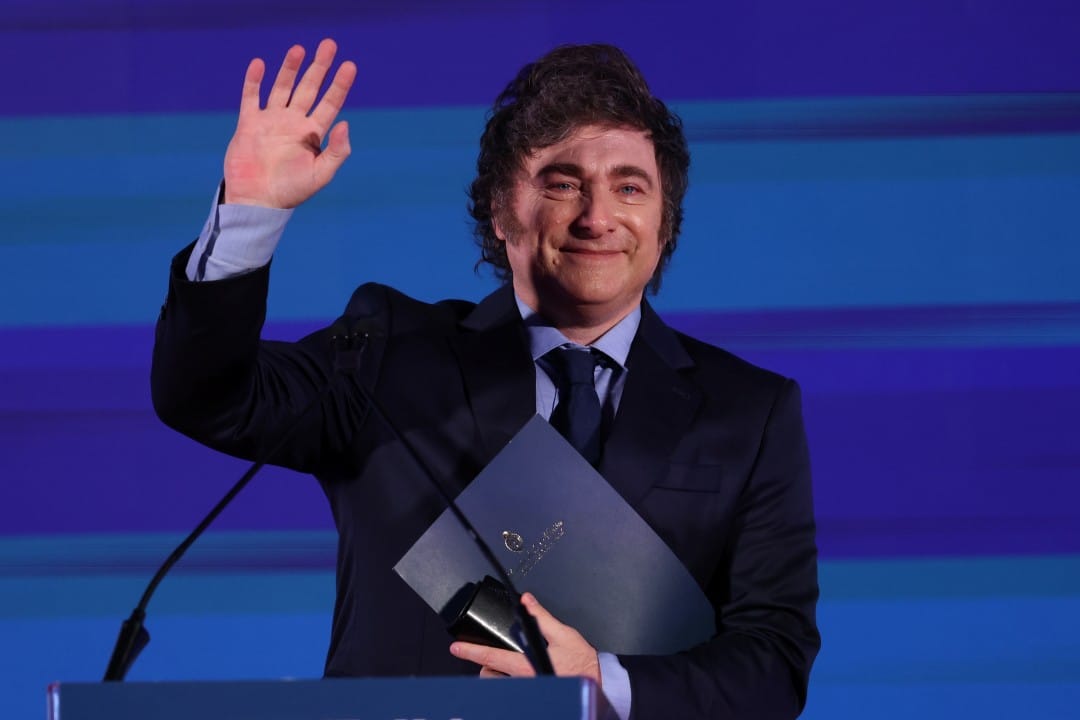
Milei wins 40.8% of the vote and expands her base in the Argentine Congress in legislative elections


President Javier Milei secured an expressive victory in this Sunday’s (26) legislative elections in Argentina, with the La Libertad Avanza party reaching 40.84% of the national votes for the Chamber of Deputies. The election, held nationwide, renewed 127 seats in the Chamber and 24 in the Senate, providing the government with greater stability in Congress. The preliminary count, with 90.9% of polling stations tallied, showed the ruling bloc winning 64 seats in the Chamber and 12 in the Senate.
This achievement comes amid recent economic challenges, including a currency crisis averted by external interventions, and reflects support for the austerity agenda promoted by Milei since 2023. The result strengthens the president’s position to push forward with fiscal reforms and public spending cuts.
Peronism, represented by the Fuerza Patria coalition, came in second with 24.5% of the votes and 31 deputies, while smaller forces such as Provincias Unidas and the Frente de Izquierda obtained percentages below 6%.
Performance by provinces
La Libertad Avanza prevailed in 16 of Argentina’s 24 provinces, reversing previous trends in key districts. In Córdoba and Mendoza, the party garnered over 45% of the votes, consolidating its influence in the country’s interior.
In the capital Buenos Aires, the result was a tight race, with the government achieving 41.53% against 40.83% for the opposition. This performance is surprising after the local defeat in September, when Peronism won by 13 points.
Governor Axel Kicillof, from Fuerza Patria, voted in La Plata and emphasized the need for dialogue with the national Executive. He arrived at the polling station with his wife and briefly interacted with voters before speaking to the press.
External support and exchange rate stability
The Milei government faced economic turbulence before the election, with peso depreciation and persistent inflation. In September, an intervention by the United States Treasury stabilized the exchange rate through currency purchases and a swap agreement valued at up to 40 billion dollars.
This measure, negotiated directly with President Donald Trump, prevented a larger crisis and allowed focus on the electoral campaign. Analysts note that external backing contributed to voter confidence in fiscal management.
At the Libertador Hotel in Buenos Aires, party supporters celebrated the results with controlled euphoria, gathered in the same venue used in 2023. Minister Guillermo Francos announced the initial figures at 21:17, reinforcing the narrative of continuity.
Parliamentary renewal in detail
Congressional composition changes from December 10, with La Libertad Avanza raising its Chamber bench to 94 deputies, above the minimum 86 needed to sustain presidential vetoes. In the Senate, the ruling bloc will hold 13 renewed seats, expanding options for alliances.
- The alliance with PRO, led by Mauricio Macri, held 74 seats in the Chamber and 13 in the Senate before the election.
- Peronism loses ground, dropping to 31 deputies and 6 senators in the renewal.
- Smaller forces, such as Provincias Unidas, gain 5 seats in the Chamber and 3 in the Frente de Izquierda.
These adjustments facilitate the approval of deregulation projects and public spending reductions, central to Milei’s agenda. The president avoided lengthy speeches on voting day, limiting himself to photos with activists upon leaving the polling station at a university in Buenos Aires.
Low turnout marks the election
More than 12 million voters, or 34% of the total, abstained from voting, recording a 66% turnout rate—the lowest since 1983. This abstention exceeds the 29% in the 2021 legislative elections and 26% in the 2023 presidential race.
The electoral authority attributes the figure to the unprecedented use of the single paper ballot, which reduced costs but increased queues at some polling stations. No serious incidents were reported during the day.
Former president Cristina Kirchner, under house arrest for a corruption conviction, was excluded from the voter registry by the National Electoral Chamber. Her six-year sentence, upheld by the Supreme Court, prevented participation in the process.
Cabinet changes and next steps
Following the election, the government plans to reshuffle the cabinet, with confirmed departures in the Ministry of Foreign Affairs and Justice. Chancellor Gerardo Werthein is leaving office, and Minister Mariano Cúneo Libarona has announced his resignation.
Patricia Bullrich, from Security, and Luis Petri, from Defense—elected to the Senate and Chamber, respectively—will also leave the Executive. Bullrich stated that the party keeps doors open to allies who share the vision for change.
Milei arrived at the polling station without initial speeches, contrasting with his 2023 approach, and was escorted after interacting with supporters. The focus now shifts to negotiations in the new Congress, aiming to pass budget cuts and structural reforms.
Dispute in Buenos Aires
The province of Buenos Aires, with one-third of the electorate, was the main campaign focus. The government reversed September’s defeat, where it lost by a wide margin to Fuerza Patria.
Kicillof, the local governor, emphasized his availability for negotiations with the Executive, mentioning unanswered daily contacts. He arrived 20 minutes early and posed for photos with voters.
The national result reflects polarization between Milei’s bloc and a disarticulated Peronism since the end of Alberto Fernández’s term in 2023. Other provinces, such as Santa Fe, recorded clear victories for La Libertad Avanza, with margins above 40%.
The victory solidifies the party as the main political force, paving the way for advances in the economic agenda over the next two years of the term.