NASA reveals Voyager probes cross wall of fire at 50,000 °C in solar heliopause


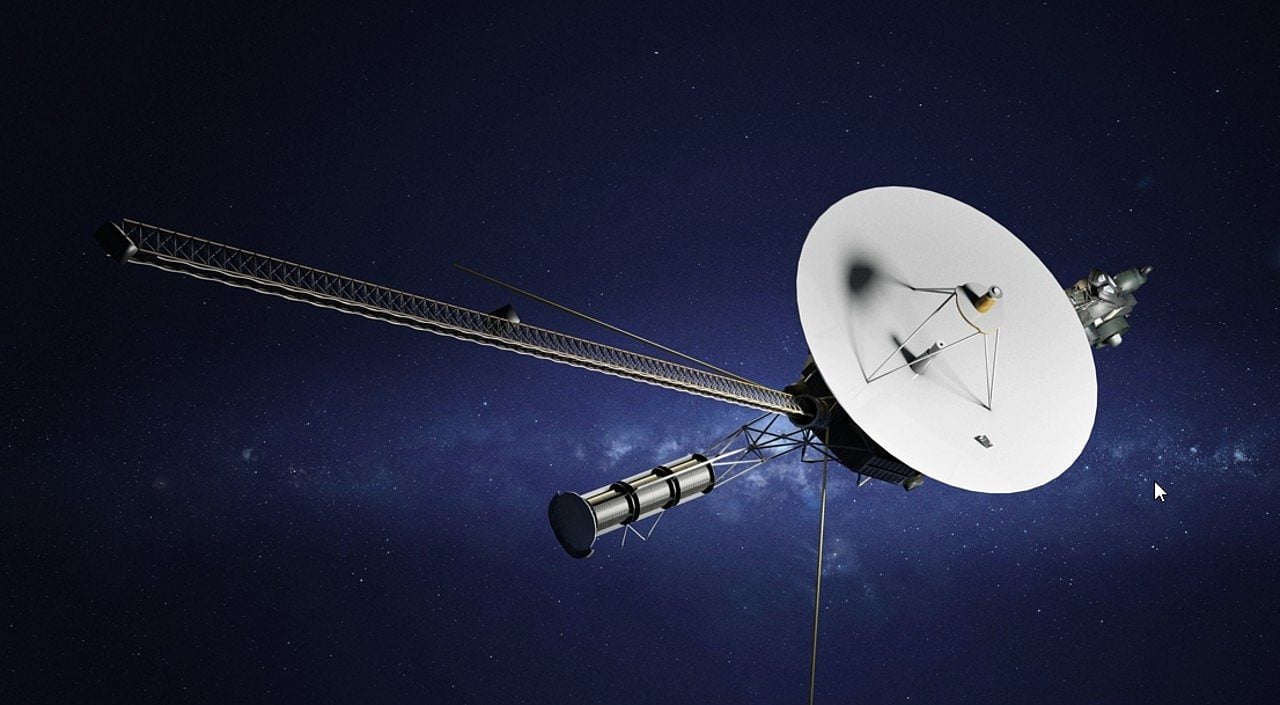
The Voyager 1 and Voyager 2 probes, launched by NASA in 1977, detected a region of superhot plasma in the heliopause, the solar system’s border with interstellar space. This zone records temperatures between 30,000 and 50,000 kelvin, equivalent to around 30,000 to 50,000 degrees Celsius. The data, collected during crossings in 2012 and 2018, reveals a warmer environment than predicted by previous models.
The heliopause marks the point where the solar wind loses strength in the face of the interstellar medium. The probes continue to send information from distances greater than 24 billion kilometers from Earth. This barrier, nicknamed the “wall of fire” in reports, does not damage ships due to the low particle density.
- Abrupt increase in interstellar plasma density
- High temperatures due to compression of charged particles
- Magnetic field with orientation similar to that inside the heliosphere
Heliopause as solar boundary
The heliosphere forms a protective bubble created by the solar wind, which expels charged particles from the Sun. This structure extends for billions of kilometers and blocks part of the galactic cosmic rays. At the heliopause, the solar wind collides with interstellar plasma, generating turbulence.
The Voyagers crossed this border and recorded unexpected variations. Voyager 1 entered interstellar space in 2012, followed by Voyager 2 in 2018. The instruments measured denser, hotter plasma just beyond the boundary.

Voyager probe discoveries
The Voyager missions revealed that interstellar plasma near the heliopause reaches temperatures of 30,000 to 50,000 kelvin. Previous models estimated values between 15 thousand and 30 thousand kelvin. This difference arises from the compression of particles in the transition zone.
The spacecraft detected magnetic connections between the interior and exterior of the heliosphere. The magnetic field maintains a similar direction, indicating complex interactions. Additionally, they observed variable plasma flows and shock waves.
The data shows that the region acts as a filter against cosmic radiation. High-energy particles lose strength when interacting with the solar wind. This protection benefits planets like Earth.
Hot zone characteristics
The “wall of fire” refers to the layer of plasma heated by collisions between solar and interstellar winds. Despite extreme temperatures, the low density prevents significant heat transfer to the probes.
Particles move at high speeds, increasing the average kinetic energy. Rare collisions occur in a near-perfect vacuum. Voyager passes through the area without thermal damage.
- Intense mixing of particlessolar and galactic
- Compression zones that raise temperatures
- Low density that preserves the integrity of the ships
- Dynamic variations in energy and magnetic flux
Interstellar plasma measurements
Voyager 2 provided direct data from the plasma instrument, unlike Voyager 1, whose equipment failed earlier. Records indicate double density outside the heliosphere. Temperatures reach 50 thousand kelvin in thin layers.
These observations confirm theories about magnetic reconnection. Field lines reorganize, releasing energy. The process heats the local plasma.
Implications for space exploration
The discoveries adjust models of the heliosphere and prepare future missions. Probes like the proposed Interstellar Probe plan to map the region with modern instruments. Voyager data guides anti-radiation strategies.
The ships operate on limited power from nuclear generators. NASA teams turn off instruments to extend the mission. Voyager 1 and 2 continue transmitting from record distances.
Legacy of the Voyager missions
Launched almost 50 years ago, Voyager expands knowledge about the interstellar medium. They record cosmic rays and magnetic fields beyond the Sun. Discoveries like the hot zone redefine cosmic boundaries.
The probes carry golden discs with sounds and images of Earth. They represent potential contact with external civilizations. Accumulated data influence studies of exoplanets and stellar heliospheres.