3I/Atlas recorded shining in the sky and suffers a loss of 16% of mass near the Sun, indicates Loeb


The interstellar comet 3I/Atlas recorded a loss of around 16% of its total mass during its close approach to the Sun. Astrologist Avi Loeb, from Harvard University, examined deep space images and identified possible fragmentation of the object. The phenomenon occurred recently, with data captured by specialized observatories.
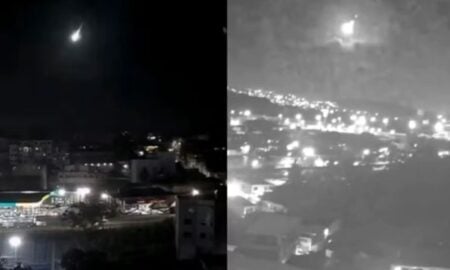
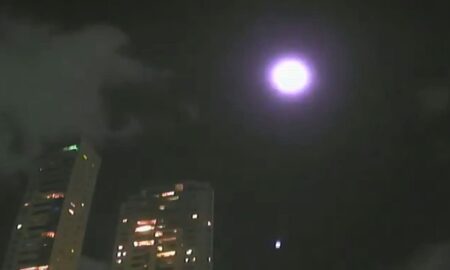
Images show 3I/Atlas shining brightly in the sky with no visible tail. Loeb suggests that solar heating caused the partial disintegration. Alternatively, the behavior indicates the possibility of an unnatural origin.
- Estimated loss: 16% of the original mass.
- Absence of tail: observed in recent captures.
- Alternative hypothesis: artificial structure.
Behavior observed in images
Astrophotographic cameras recorded 3I/Atlas crossing the sky with high brightness. The object maintained an interstellar trajectory without significant changes in shape.
Loeb analyzed data collected in November 2025. The images reveal ejections of material consistent with cometary activity.
Natural explanations for yearmalias
Astronomer Jason T. Wright of Penn State challenged Loeb’s hypotheses. He claims that 3I/Atlas’s jets and orbit follow patterns of interstellar comets.
Comets present diversity in composition and behavior. The 3I/Atlas exhibits predictable characteristics for objects of origin outside the solar system.
Wright highlights that ejections occur due to the sublimation of ice. The absence of a tail results from low dust production.
Trajectory and composition details
The 3I/Atlas entered the inner solar system on a hyperbolic route. Its speed exceeded solar escape at specific points.
Spectroscopy indicates the presence of carbon monoxide and cyanide. These compounds activate with solar heat.
The estimated initial mass was billions of tons. The loss represents a significant fraction of the core.
Astronomical community responses
Observatories monitor the object since its initial detection. December data will provide confirmation on completeness.
Wright reinforces that interstellar comets vary in thermal responses. The 3I/Atlas follows the porous core model.
Visual recording and captures
Photographs from Chuck’s Astrophotography show tailless glow. The object appeared in multiple long exposures.
Deep images reveal diffuse halo around the nucleus. This emission indicates the release of volatile gases.
Lost mass analysis
Loeb calculated the reduction based on brightness and albedo. The ejected mass forms a temporary cloud.
The dispersed material did not form a structured tail. Particles follow ballistic trajectory.
Continuous monitoring
Terrestrial telescopes follow 3I/Atlas in real time. Infrared observations measure surface temperature.
Data accumulated until November indicate sustained activity. The core maintains a reduced diameter.