Biggest eclipse of the century will darken the sky for 6 minutes; see when and where to observe

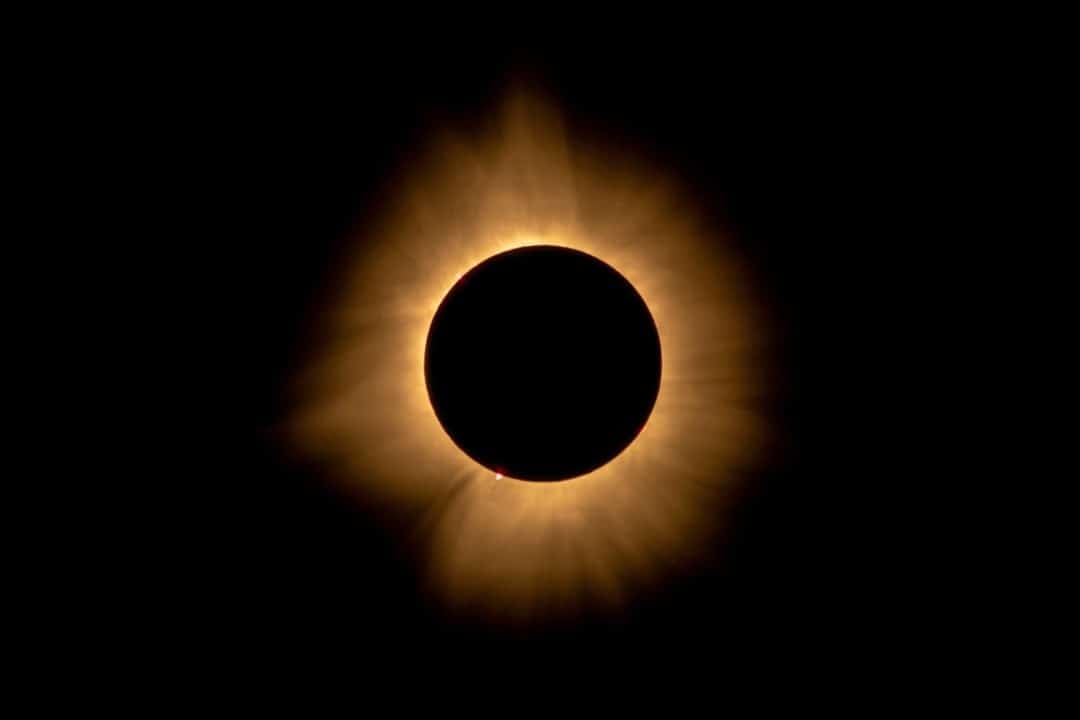
On August 2, 2027, the largest solar eclipse of the 21st century will turn day into night for up to 6 minutes and 22 seconds. The phenomenon, confirmed by NASA, will be visible mainly in the Eastern Hemisphere, with totality in ten countries, such as Egypt and Spain. The exceptional duration results from the Moon being at perigee, its closest point to Earth.
The total strip, 258 km wide, will cover 2.5 million km². Astronomers highlight the rarity of the event, which surpasses the 2024 eclipse, with 4 minutes and 28 seconds. The phenomenon will attract scientists and observers to cities like Luxor, Egypt.
- Countries in the range of totality: Spain, Morocco, Algeria, Tunisia, Libya, Egypt, Sudan, Saudi Arabia Ascensorio, in Mexico, on April 8, 2024, lasted 4 minutes and 28 seconds.
Phenomenon details
An eclipse occurs when the Moon aligns between the Earth and the Sun, casting a shadow that blocks sunlight. In 2027, the Moon will be closer to Earth, increasing its apparent size and prolonging its coverage of the Sun. The phase of totality will begin after 11 am (Brasília time) and will last more than 3 hours in total.
The event will mobilize scientific expeditions, especially in Luxor, where the solar corona will be visible. Bright stars and planets will also be visible in the darkened sky.
Where to watch
Totality will be restricted to a narrow band crossing:
- Europe: Spain (Cádiz, Malaga).
- Africa: Morocco, Algeria, Tunisia, Libya, Egypt, Sudan.
- Asia: Saudi Arabia, Yemen, Somalia. Nearby regions, such as parts of Europe and Asia, will see the eclipse partially.

Why is it so long?
The 2027 eclipse will be the longest of the century due to three factors:
- Proximity of the Moon to Earth (perigee).
- Greater distance from Earth to the Sun, reducing the apparent size of the Sun.
- Favorable geographic location on the earth’s surface. This rare combination allows for longer-lasting coverage of the Sun. For comparison, the longest eclipse ever recorded, in 1955, lasted 7 minutes and 8 seconds.
Scientific importance
The phenomenon offers a unique opportunity for studies of the solar corona and space weather. Scientists plan expeditions to collect data in accessible urban areas such as Luxor and Cádiz. Visibility in populated regions increases scientific and tourist interest.
Observing a solar eclipse requires care. Specific protective glasses or telescopes with solar filters are essential to avoid eye damage. Authorities recommend planning trips in advance, as cities in the totality band are expected to receive a large influx of visitors.
Eclipses history
Total solar eclipses are rare in specific areas, occurring on average every 18 months globally. The next eclipse of similar duration is scheduled for 2186, lasting 7 minutes and 29 seconds, visible from South America. Until then, the 2027 event will be the greatest celestial spectacle of the century.