Largest American aircraft carrier enters Latin waters and worsens friction with Nicolás Maduro’s regime

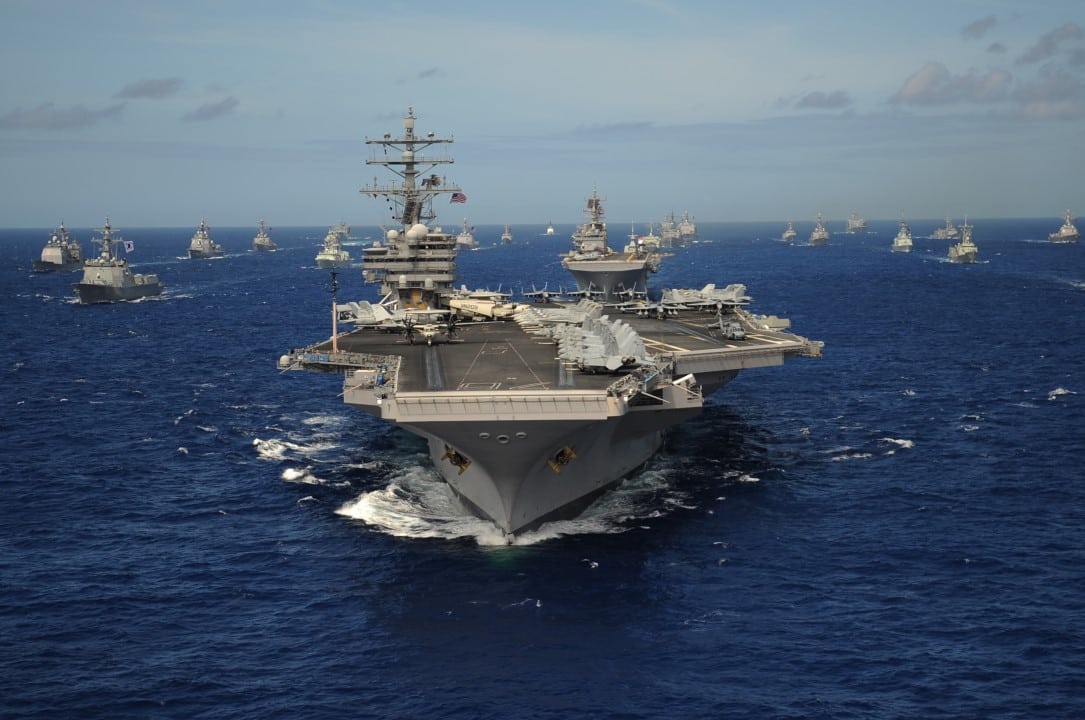
American authorities confirmed this Tuesday (11) the arrival of the USS Gerald R. Ford aircraft carrier strike group in the United States Southern Command area, which covers the Caribbean and parts of Latin America. The ship, the largest and most modern in the world, adds to an already robust fleet in the region to intensify actions against drug trafficking. The move comes amid worsening relations between Washington and Caracas, with President Donald Trump accusing the Venezuelan government of facilitating drug trafficking.
The Pentagon described the reinforcement as a measure to detect and dismantle transnational criminal organizations. Commissioned in 2017, the Gerald R. Ford carries more than 5,000 sailors and dozens of aircraft, including F-35 fighter jets. This naval presence represents the largest concentration of American forces in the Caribbean since the invasion of Panama in 1989, according to analyzes by defense experts.
Since September, the United States has carried out at least 20 air and naval attacks against suspected trafficking vessels in the Caribbean and the Latin American Pacific. These operations resulted in the deaths of more than 75 people, including alleged members of gangs such as the Tren de Aragua and the Cartel de los Soles, linked to the Nicolás Maduro regime.
Capabilities of the USS Gerald R. Ford
The USS Gerald R. Ford measures 333 meters long and displaces around 100 thousand tons. Equipped with advanced technology such as electromagnetic catapults for aircraft launches, the ship can operate up to 75 aircraft simultaneously.
Its nuclear propulsion allows for years of autonomy without refueling, making it ideal for long-term missions.adas. The strike group includes three destroyers, such as the USS Bainbridge and USS Mahan, which provide anti-aircraft and anti-submarine defense.
This configuration increases US air power projection capabilities in the region, enabling constant surveillance and rapid responses to threats. Naval authorities emphasize that the focus remains on maritime targets, with no mention of land actions.
Context of the anti-drug operation
The American campaign against drug trafficking gained momentum in August, when Trump doubled the reward for information on Maduro to $50 million. The Venezuelan leader denies involvement and classifies the accusations as a pretext for intervention.
Since then, more than 10,000 American troops have operated in the Caribbean, with bases reactivated in Puerto Rico. B-1 bombers and MQ-9 Reaper drones complement patrols, covering 100% of Venezuela’s coastal routes in real time.
- Main targets include ports and airstrips used by the Venezuelan military to export cocaine.
- Gangs such as the Colombian ELN were also targeted in coordinated actions.
- Drug recovery exceeds 5 tons, according to preliminary data from the Department of Defense.

Caracas response to the naval presence
Nicolás Maduro ordered a massive mobilization of Venezuelan armed forces, including civilian militias and Russian equipment such as Igla-S missiles. In a statement, he warned that any incursion would result in armed resistance from millions of citizens.
Internal documents reveal urban guerrilla plans with obsolete anti-aircraft weapons, but adapted for asymmetric scenarios. Maduro appealed to Celac for collective defense of the Caribbean, but the summit in Bogotá rejected threats of force without citing the US directly.
The escalation includes American sanctions on Maduro’s allies, such as army officers. Analysts note that Caracas’ response aims to unite regional support, but faces internal logistical limitations.
Regional tensions extend to Colombia
Relations between the US and Colombia have soured in recent weeks, with Trump calling President Gustavo Petro a drug facilitator. In retaliation, Washington imposed sanctions on Petro, citing failures in border controls.
Petro refuted the accusations as offensive and defended Colombian sovereignty. Geographical proximity to Venezuela amplifies concerns about conflict spillover.
- Sanctions include freezing assets of Colombian officials linked to trafficking routes.
- Bilateral dialogues were suspended, affecting migration cooperation.
- Observers fear the friction will isolate Bogotá from South American allies.
American reinforcement in the Caribbean
U.S. Southern Command has reactivated the Roosevelt Roads naval base in Puerto Rico for long-term logistics. This facility, abandoned since the Cold War, now houses squadrons of F-35s and MH-60 helicopters.
The operation involves cooperation with allied navies, such as the Dominican, which recovered drug shipments from sunken ships. The Pentagon estimates that the flow of cocaine into the US has decreased by 20% since the patrols began.
Security experts point out that the naval siege puts pressure not only on drug traffickers, but also on senior officials in Caracas. However, critics in the US Congress question the legality of the actions without formal approval.
The presence of Gerald R. Ford signals Washington’s sustained commitment to hemispheric security, while Maduro reinforces coastal defenses with 5,000 portable missiles. The dynamics could evolve with diplomatic negotiations or new rounds of maritime confrontations, keeping the region on high alert.