X5.1 flares from the Sun drive aurora borealis to southern Europe, including Italy, this week

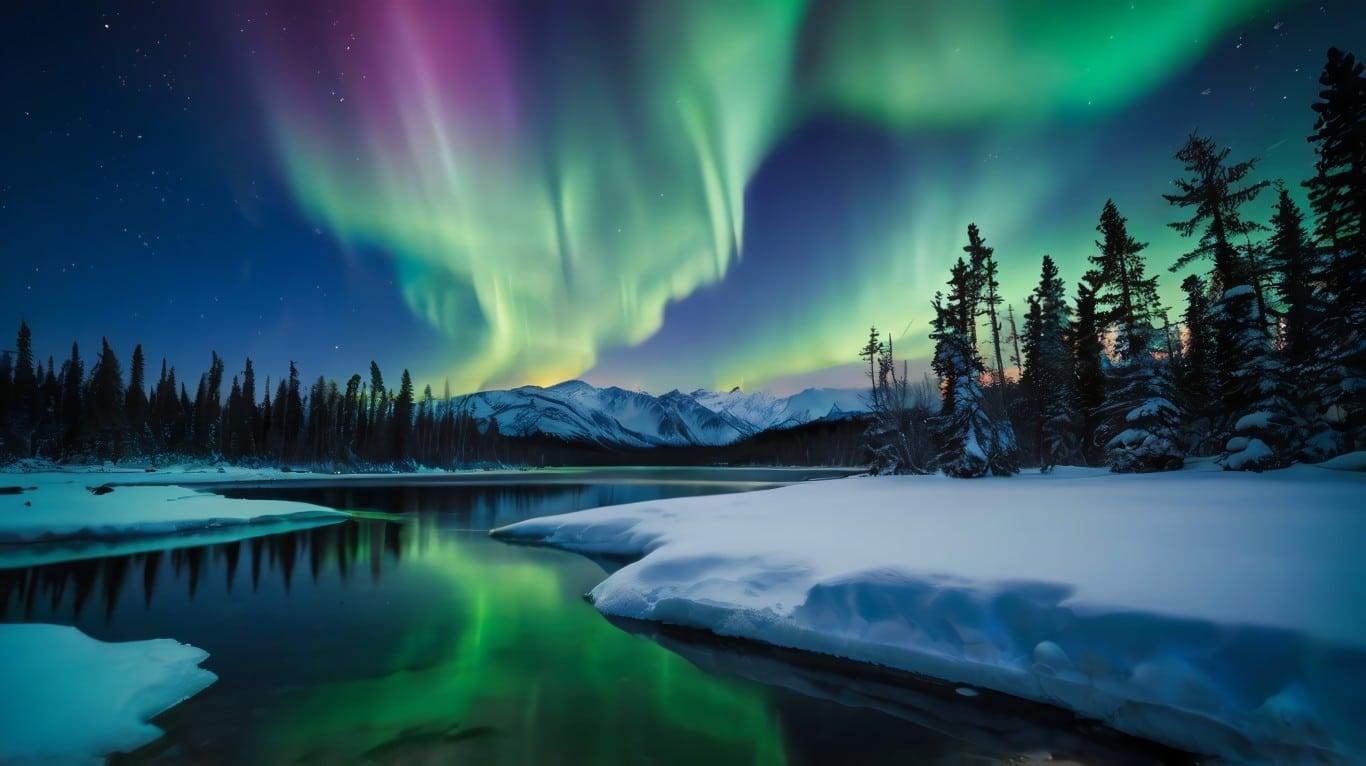
Intense solar activity caused the emission of charged particles that reached Earth on the night between November 11 and 12, 2025. Macchia solare AR4274, responsible for class X flares, generated two plasma waves that interact with the Earth’s magnetic field. This phenomenon occurs due to the maximum phase of the 11-year solar cycle, with peaks of eruptions recorded in recent days.
The initial impact weakens the planet’s magnetic shield, while the second phase may extend the auroras to mid-latitudes. Experts have been monitoring the event since the flares on November 9 and 10, which released clouds of plasma towards Earth.
Visibility depends on clear skies and low light pollution, with peak visibility expected between 4am and 6am on Tuesday.
- Expected Kp index: 7 or higher, allowing auroras in regions such as Lombardy and Sardinia.
- Predominant colors: Green and pinkish, resulting from the excitation of oxygen in the atmosphere.
- Estimated duration: Up to 48 hours, with possible repetition if new flares occur.
‘Golden Pegasus’ — Russian astronomers capture video of MAJOR solar flare
— RT (@RT_com) November 11, 2025
Today’s X5.16-class solar flare is the strongest since October 2024
While effects of solar flares on health are disputed, they can jam radio comms – which it did across Europe and Africa pic.twitter.com/EYQTPwRHuW
Origin of solar activity
The macchia solare AR4274 appeared a few days ago and has already produced multiple flares, including an X5.1 this Monday. This type of eruption releases energy equivalent to billions of atomic bombs, propelling plasma at speeds of millions of kilometers per hour. The phenomenon is part of solar cycle 25, which reaches its maximum in 2025 with an increase of 115 average sunspots.
These coronale mass ejections travel for 1 to 2 days to the planet, merging into a “cannibale CME” that amplifies the effects. Observatories such as NASA recorded the event in real time, confirming the Earth’s trajectory.
Mechanism of the Northern Lights
Solar particles collide with atoms in the thermosphere, at about 100 km altitude. Oxygen emits green light at low altitudes and red in upper layers, while nitrogen contributes blue and purple tones. This process follows magnetic field lines, concentrating at the poles but extending south during strong storms.
Potential impacts on infrastructure
Geomagnetic class G3 storms can induce currents in electrical transmission lines. In 1989, a similar event caused a blackout in Quebec for nine hours, affecting millions of residents. GPS systems face deviations of up to 10 meters, impacting aviation and maritime navigation.
Satellites in low orbit suffer increased drag, requiringof corrective maneuvers. Power grid operators in the US and Europe have activated preventative protocols, monitoring fluctuations in real time.
- High voltage networks: Risk of overloading transformers.
- Radio communications: Interference on short waves for up to 30 minutes.
- Polar planes: Deviations routes to avoid high radiation.
Observation forecasts in Italy
The peak occurs in the early hours of November 12, with greater chances in the north and islands such as Sardinia. Forecast applications indicate a 70% probability of visibility in rural areas, far from cities. Photographers recommend cameras with high ISO to capture subtle tones.
In past events from 2024, auroras were seen even in Rome during G4 peaks. Favorable weather conditions, such as the absence of clouds, raise expectations for tonight.
Ideal regions for sighting
Elevated locations without artificial light offer the best views in Sardinia. Mountainous areas in northern Italy, such as the Alps, facilitate observation due to their proximity to the magnetic pole. Groups of astronomers organize vigils in national parks to record the phenomenon.
History indicates that multiple flares prolong activity, with a new wave possible within 48 hours. Enthusiasts prepare equipment to document variations in real time.
The event reinforces theinterconnection between Sun and Earth, with continuous monitoring by space agencies. Updates will come as Plasma progresses.