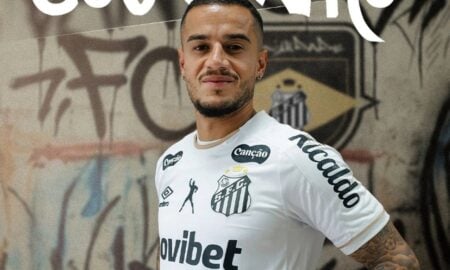
Neymar rejected 100 million euros from Real Madrid in 2013 and opted for Barcelona and MSN trio Por Jeronimo Santos
4 min de leitura
 |
Neymar Júnior’s decision in May 2013 reconfigured the European football scene. At 21 years old, the then Santos striker turned down a proposal of more than 100 million euros from Real Madrid. His choice was made by rival Barcelona, which closed the transfer for 88 million euros and secured the athlete for a sports project focused on his development.
The athlete prioritized playing alongside Lionel Messi at Camp Nou, beginning a phase of great achievements in his career and for the Catalan club. Intense negotiations lasted for months, with the Spanish giants competing to sign the young Brazilian talent.
Siga o Mix Vale no Google e veja nossas notícias primeiro
The negotiations with Santos lasted around six months, involving simultaneous proposals from the two biggest clubs in Spain. Player representatives visited Madrid and Barcelona to evaluate the structures offered by each institution. Real Madrid’s proposal included salary bonuses and tax benefits, but Barcelona’s style of play, focused on possession, weighed in on the final decision.
Barcelona presented a detailed integration plan, focusing on technical development within the first team.
Millionaire rejection and choice for Camp Nou
Real Madrid sought to sign Neymar with a robust financial offer, exceeding 100 million euros. The Meringue club saw the striker as a future counterpoint to Lionel Messi, already a Barcelona icon.
Despite the significantly higher prices offered by Real Madrid, the Brazilian showed a preference for the Catalan projectto the. The player admired Messi and Barcelona’s style of play, the famous tiki-taka, which perfectly aligned with his speed and dribbling ability.
- Real Madrid proposal: Over 100 million euros.
- Final value of the transfer to Barcelona: 88 million euros.
- Duration of negotiations with Santos: January to May 2013.
The influence of play style and adaptation
The playing philosophy introduced by Johan Cruyff at Barcelona was a decisive factor for Neymar. The Camp Nou environment would offer a more gradual adaptation for the striker coming from South American football.

The choice of player also avoided an immediate direct confrontation with Cristiano Ronaldo, Real Madrid’s main star at the time. Its integration aimed to optimize its offensive characteristics within a consolidated system.
MSN attack formation and field performance
The offensive trio known as MSN (Messi, Suárez and Neymar) was consolidated in 2014, with the arrival of Uruguayan Luis Suárez. The three strikers debuted together in a classic against Real Madrid.
Neymar scored the winning goal in that match, setting the tone for the chemistry that would form in the attack. The partnership resulted in precise passing exchanges and an offensive volume unprecedented in the history of football.
The trio’s performance was overwhelming, with impressive numbers in all competitions. The 2014-2015 season was marked by the conquest of the Triple Crown, with 122 official goals scored by the attack.
MSN’s goal average between 2014 and 2017 reached 0.81 per game. In 450 matches during the period, the three players scored 364 goals.
Impact of partnership and individual evolution
Neymar’s time at the Catalan club consolidated his position as one of the best players in the world. During his four years in Spain, he played 186 games and scored 105 goals. The striker also distributed 76 assists in the period.
The partnership with Messi was fundamental in improving his finishing in reduced spaces. Furthermore, training with Suárez helped to improve his tactical positioning on the field. The Brazilian’s constant evolution culminated in his transfer to PSG in 2017 for 222 million euros.
The legacy of the 2013 decision in European football
Neymar’s option for a collective project and a specific style of play in 2013 influenced other clubs. The success of the MSN trio raised global offensive standards and demonstrated the effectiveness of formations with creative wingers in attack.
Young taleFootball players have come to consider a club’s philosophy and sporting project as a crucial factor in decision-making. The selection of the Brazilian had a direct impact on the tactics and strategies adopted by the main European teams in the following years.