

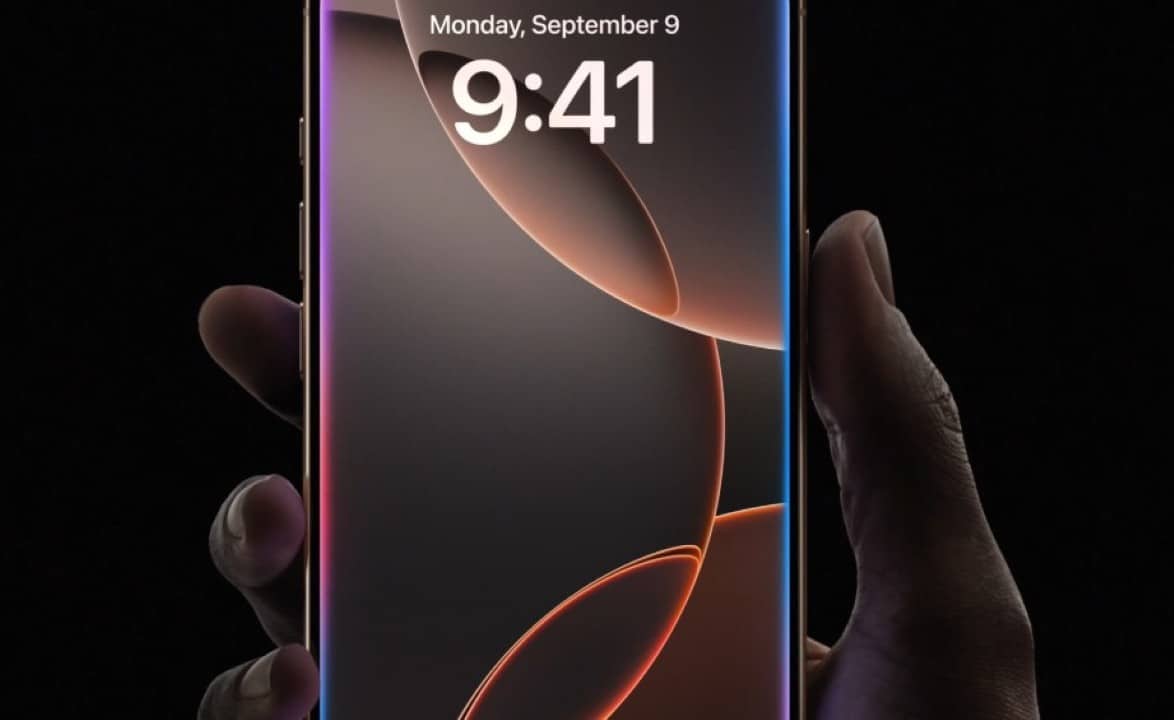
Apple prepares the launch of the iPhone 17e for early 2026, with a focus on an affordable design. The model will maintain the 6.1-inch OLED panel from the iPhone 14, also used in the iPhone 16e. The main change lies in the thinner edges around the screen, achieved by tweaking the chassis without changing the main component. Essa strategy aims to reduce production costs.
The iPhone 17e appears as an economical option in the Apple smartphone line. Ele arrives months after the iPhone 17 family, launched in September 2025. Analistas expects shipments of around 8 million units in the first six months of 2026.
Supply chain sources indicate that BOE will supply the majority of the panels. Samsung Display and LG Display complement the supply. Essa supplier division reflects the efficiency approach adopted by the company.
Evolution of accessible design
The reduction in the edges of the screen represents a subtle visual update. The Apple adjusts the fit of the panel to the frame to achieve this effect. The notch for the Face ID remains, unlike the Dynamic Island on premium models.
This choice avoids expensive redesigns of the TrueDepth camera. The process keeps mass production efficient. The result offers a more modern look without raising the base price.
Reports from August 2025 mentioned possible Dynamic Island, but recent updates rule this out. The strategy prioritizes accessibility over advanced features.

Display technical specifications
The 6.1-inch OLED panel operates at a 60Hz refresh rate. Ele uses LTPS TFT technology, incompatible with variable rates such as ProMotion on the iPhone 17. The resolution is 2532 x 1170 pixels, with 460 ppi.
Maximum brightness reaches 1200 nits for HDR. The contrast is 2,000,000:1, guaranteeing deep blacks. Esses values equal the iPhone 16e.
- Fixed refresh rate at 60Hz to save battery.
- HDR support with brightness of up to 1200 nits.
- Resolution of 2532 x 1170 pixels at 460 ppi.
- 2,000,000:1 contrast for vivid images.
This configuration balances performance and cost.
The display does not receive Always-On, exclusive to superior models. Apple focuses on durability with Gorilla Glass or equivalent. Initial Testes show stability in varying environments.
Suppliers and scale production
BOE takes over the main volume of OLED panels. The Chinese company produced the majority for the iPhone 16e. Samsung and LG cover the rest, ensuring diversification.
This partnership dates back to 2023, with BOE gaining Apple certification. Production begins at the end of 2025 to meet the schedule. Volumes projected exceeds 20 million annually in previous years.
Choosing LTPS avoids challenges in LTPO manufacturing. BOE has not yet mastered mass variable rate panels. Isso keeps the iPhone 17e competitive in price.
Factories in Ásia operate extended shifts. Qualidade undergoes strict inspections from Apple. Initial Lotes arrives at suppliers in December 2025.
Comparison with previous models
The iPhone 17e evolves from the 16e, launched in February 2025 for US$599. Ambos share the A18 processor, but rumors point to A19 in the new one. The 48-megapixel rear camera remains.
Unlike the iPhone 17, with a 6.3-inch 120Hz screen, the 17e prioritizes compression. The notch persists, while flagships have used Dynamic Island since 2022.
16e shipments reached 20 million in the first year. 17e follows a similar pattern, focusing on emerging markets.
- iPhone 16e: Notch, 60Hz, A18, US$599.
- iPhone 17: Dynamic Island, 120Hz, A19, US$799.
- Key difference: Bordas fine on 17e at no extra cost.
This table highlights the economic position.
The compact design appeals to users with smaller screens. Bateria and autonomy equal predecessors.
Position in Apple’s portfolio
The iPhone 17e occupies the entry-level niche in the 2026 line. Ele complements the iPhone 17, Air, Pro and Pro Max. Lançamento in February or March 2026 aligns with annual events.
Analysts like Ming-Chi Kuo confirm the schedule. Mark Gurman, from Bloomberg, reinforces the accessibility strategy. Apple ships 247 million iPhones in 2025, a record driven by the 17 line.
Markets like China and the USA drive sales. The e-series model accounts for 10% of the total. Atualizações annuals remain relevant.
Starting prices are US$599, with no confirmed rate adjustments. Global Disponibilidade follows standard.
Release and availability details
The iPhone 17e enters test production in April 2025. Encomendas opens in January 2026. Lojas Apple receives stocks in February.
Versions include 128GB, 256GB and 512GB. Cores vary in black, white, blue and pink. Acessórios as compatible cases and chargers arrive simultaneously.
iOS 19 software updates support the hardware. Recursos of A19 AI integrates into the ecosystem. Suporte for six years guaranteed.
Regions like Europa and Ásia receive simultaneously. Operadoras offer financing plans.
Subtle hardware innovations
In addition to the edges, the chassis has aluminum reinforcements. Resistência IP68 water equals flagships. Sensores proximity optimizes the notch.
Stereo speaker enhances spatial audio. Conector Lightning persists, with USB-C in testing. Memória RAM goes up to 6GB.
These adjustments elevate everyday usability. Testes show 5% higher energy efficiency than 16e.
Apple integrates recycling into 95% of materials. Embalagem minimalist reduces environmental impact.



