

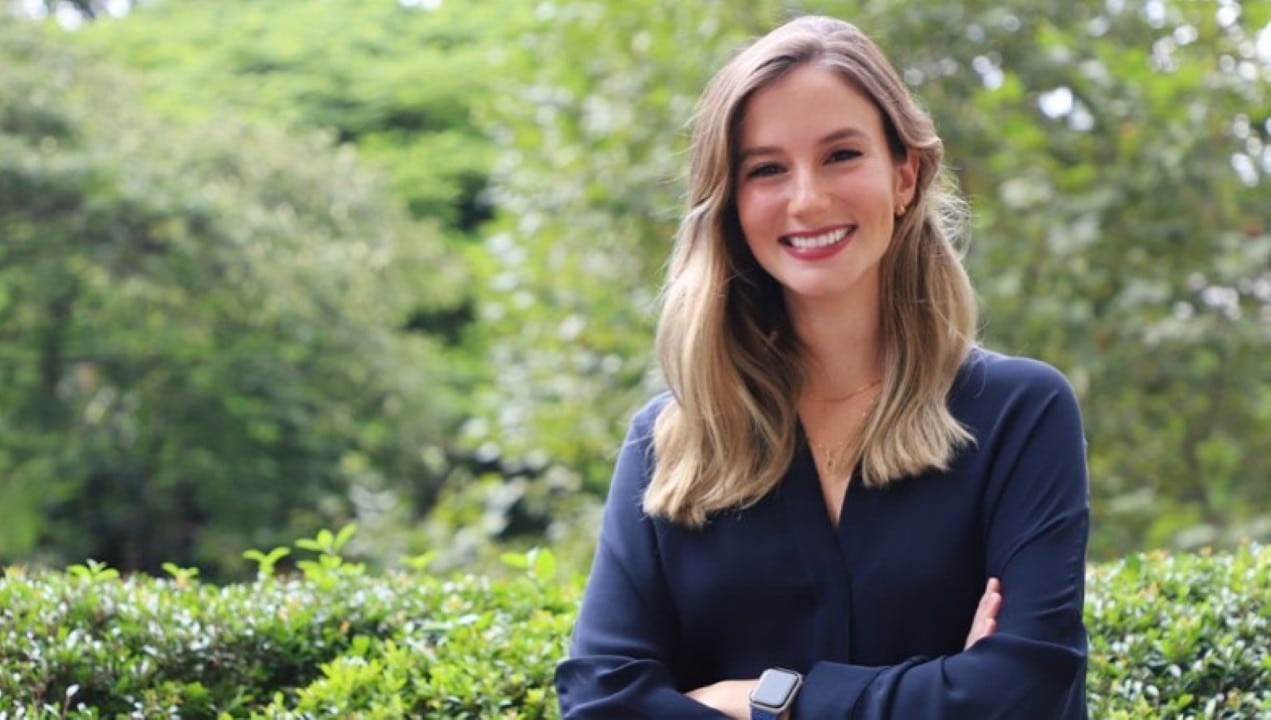
Brazilian Luana Lopes Lara, 29 years old, co-founder and director of operations at Kalshi, assumed the title of the youngest self-made billionaire woman in the world, with an estimated net worth of US$1.3 billion. The achievement came after the prediction markets platform announced, on December 3, 2025, an Série E investment round of US$1 billion, raising its valuation to US$11 billion in Nova York. Essa appreciation placed Luana ahead of Lucy Guo, 31 years old, co-founder of Scale AI, and singer Taylor Swift in the Forbes ranking, highlighting her trajectory without family heritage.
Born in Belo Horizonte and based in Joinville, Santa Catarina, The duo, who met at Massachusetts Institute of Technology (MIT), identified the potential for regulated betting on real events such as elections and Oscars, turning an academic idea into a global business.
The growth of Kalshi reflects the boom in prediction markets, with notional trading volume reaching US$5.8 billion in November 2025, eight times higher than in July. The platform, regulated by Commodity Futures Trading Commission (CFTC), processed US$1.97 billion in the 2024 US elections alone, capturing 62% of the global market share.
Luana, a former dancer with Teatro Bolshoi, swapped the stage for algorithms at the age of 18, after winning medals in mathematics and astronomy Olympiads. Sua persistence, forged in 14-hour daily training, propelled Kalshi through regulatory battles and expansions.
Initial trajectory marked by discipline
Luana grew up in a stimulating home, with a mathematics teacher mother and an electrical engineer father, which fostered her aptitude for numbers from an early age. Em Joinville, she was part of the renowned Escola of Teatro Bolshoi, where she faced intense routines of classes and rehearsals, culminating in professional presentations at Áustria, such as in “O Lago dos
At the age of 17, Luana won gold in Olimpíada Brasileira of Astronomia and bronze in Olimpíada Catarinense of Matemática, paving the way for her entry into elite universities. Ela passed the entrance exams for Harvard, Yale, Stanford and UFRJ, but chose MIT, where he graduated in computer science and mathematics in 2019.
His university summers included internships at firms such as Bridgewater Associates, from Ray Dalio, and Citadel, from Ken Griffin, where he absorbed market forecasting concepts. Essas experiences convinced her that binary events could revolutionize accessible trading.
The transition from dance to technology required adaptation, but the resilience acquired on stage proved vital. Luana described ballet as training for constant rejection, a lesson applied to entrepreneurship.
Foundation and regulatory challenges of Kalshi
Kalshi emerged in 2019 as a regulated exchange for real event contracts, allowing “yes” or “no” trading on future outcomes. Luana and Tarek faced two years of CFTC scrutiny, gaining federal approval in November 2020 and launching in July 2021, initially focused on economic indicators.
In 2023, the company sued the CFTC to authorize election contracts, a 2024 victory that coincided with the $1.97 billion peak in volume during the US presidential election. Essa battle positioned Kalshi as a trailblazer, offering the first legal US election betting in over a century.
Early investors like Y Combinator and Andreessen Horowitz recognized the model. In June 2025, a US$185 million round raised the valuation to US$2 billion; in October, $300 million took it to $5 billion. The US$1 billion Série E, led by Paradigm, consolidated the jump to US$11 billion.
Co-founder Tarek Mansour, who grew up in Líbano during conflicts, complements Luana’s vision with compliance expertise. Juntos, they expanded to 140 countries, integrating partnerships like with Robinhood.
Accelerated growth and platform innovations
Since launch, Kalshi has processed billions in trades, focusing on parleys – betting combinations – that have driven engagement in sports. By 2025, annualized volume reached US$50 billion, with NFL bets totaling US$1.1 billion and daily peaks of US$42 million during election events.
Luana, as COO, leads product strategy, emphasizing the creation of a “new class of regulated assets”. The platform covers Oscars, weather, economic reporting and now European sports as Premier League, adding $500 million in volume by 2025.
Expansions include AI integration for predictions and support for crypto assets, attracting institutional users. No Brasil, negotiations at local events grew 150% per year, with times adjusted to the local zone, such as openings at 10am in Brasília.
Kalshi prioritizes transparency, processing US$10 million in trades in the first month and doubling active users via partnerships with fintechs. Rivais like Polymarket, valued at $9 billion, tripled volume to $4.3 billion in November, but Kalshi maintains compliance leadership.
- Monthly volume: US$4 billion in 2025.
- Market share: 62% in global prediction markets.
- Users: Expansão for 140 countries since 2024.
- Revenue: Initial $40 million from VCs as Sequoia.
Competition and positioning in the global market
The prediction markets sector has expanded 300% since 2021, driven by elections and advances in AI. Kalshi competes with Polymarket, which raised US$2 billion via the NYSE in October 2025, making its founder Shayne Coplan a billionaire at age 27. Apesar Furthermore, Kalshi leads in regulated volume in the US, with 80% of negotiations in sports betting.
Luana and Tarek, both with 12% equity, share the status of self-made billionaires. Forbes highlighted the partnership as essential to overcome obstacles, including the suite against regulators. In 2025, signings like Donald Trump Jr. as a strategic advisor, they reinforced the global presence.
Innovations such as deposits in local currencies have reduced barriers in emerging markets. The platform attracted an initial $40 million from investors like Charles Schwab and Henry Kravis, focusing on compliance to attract institutions.
Competition stimulates advances, with Kalshi investing in accessibility. Unregulated Plataformas face risks, while Kalshi emphasizes predictability in a volatile industry.
Regulatory challenges persist in international expansions, but approvals like the CFTC’s pave the way. Analistas projects valuation to double by 2026, with a focus on sports and AI.
Recognition and impact for Latino entrepreneurs
Luana entered Forbes 30 Under 30 in Finanças in 2022, as the only Brazilian in the category. Sua story, from immigrant to pioneer, inspires Latinos, showing how MIT networks and determination build empires. In a post on X in June 2025, she celebrated the US$185 million round, crediting the team.
The co-founder defines success as the union of logic and ambition, from ballet to markets. Sua journey highlights the importance of persistence in competitive environments, influencing debates about diversity in tech.
In Joinville, Escola Bolshoi celebrated the achievement in Instagram, noting approvals in Harvard and Stanford. Perfis on X, as @sceniuslatam, chronicle their transition, from Olympic medals to US$11 billion in valuation.
The impact extends to prediction markets as a tool for global uncertainties. Luana credits ballet for “persistence with grace”, a lesson applied to Kalshi.



