

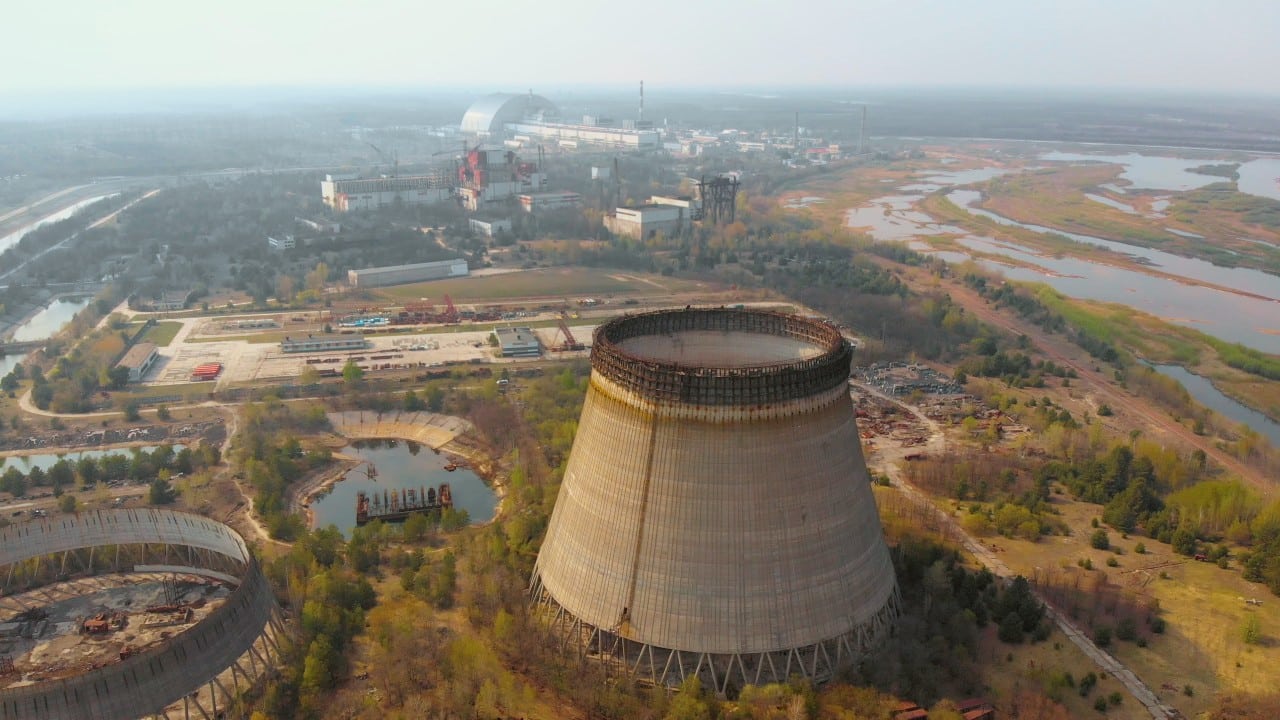
Agência Internacional of Energia Atômica (IAEA) announced that the protective structure in Chernobyl, in Ucrânia, no longer fulfills its main function of containing radioactive waste. The Novo Confinamento Seguro (NSC), damaged by a drone strike on February 14, 2025, has lost essential safety capabilities. The agency’s recent inspection, carried out last week, identified degradation in the steel structure installed in 2019.
Ukrainian authorities attributed the incident to Russian forces, who denied involvement. The impact caused a fire in the external coating, without raising radiation levels in the immediate surroundings. The IAEA maintains a permanent team on site to monitor the situation during the conflict.
IAEA Director General Rafael Mariano Grossi emphasized the need for comprehensive repairs to prevent worsening. Níveis radiation remains stable, but the integrity of the shelter requires urgent intervention. The agency plans to support restoration actions in 2026.
Technical assessment reveals confinement flaws
The IAEA mission concluded that the NSC has lost its primary confinement capability. The drone hit the ceiling, creating an opening that compromised the isolation of radioactive particles. Temporary Reparos have been applied, but do not restore full protection.
Support structures and monitoring systems were not permanently damaged. The agency verified stability in November 2025 inspections. However, continued exposure to external elements accelerates corrosion.
The estimated cost for recovery could exceed 100 million euros, according to preliminary reports. Financiamento would come from international donors via Fundo of Proteção of Chernobyl. The IAEA recommends modernizing sensors for early risk detection.
Historical context of the nuclear disaster
On April 26, 1986, an explosion in reactor number 4 released radioactive material onto Ucrânia, Belarus, and Rússia. Mais of 30 deaths occurred immediately in Pripyat, a neighboring city. Exposição affected thousands, increasing cases of cancer and birth defects.
The 30km exclusion zone remains restricted. The original sarcophagus, erected in 1986, was replaced by the NSC to last 100 years. The structure allows for the safe dismantling of waste, financed by 45 countries with 2.1 billion euros.
The Russian-Ukrainian conflict, which began in 2022, exposed the site to Russian occupation for a month. Subsequent Ataques highlight vulnerabilities in nuclear facilities. The IAEA has sent 188 shipments of equipment since then.

Role of the NSC in radioactive containment
The Novo Confinamento Seguro is the largest mobile structure on land, with an arch measuring 108 meters high. Projetado for 256 km/h winds and heavy snow, it covers the destroyed reactor. Sua installation, completed in 2019, facilitated cleaning operations.
- Isolation of cesium-137 and other volatile isotopes.
- Controlled ventilation to avoid dust accumulation.
- Remote monitoring of structural integrity.
- Access for robots in nuclear fuel dismantling.
The February damage exposed flaws in defenses against drones. Especialistas from the IAEA suggests reinforcement with anti-aircraft barriers. The structure now relies on secondary layers for partial containment.
Initial repairs focused on the ceiling, using water injection to extinguish fires. However, internal moisture threatens accelerated corrosion. The agency plans assessments in May 2026 to prioritize interventions.
Persistent environmental and health impacts
Radiation from 1986 contaminated soil and water for decades. Estudos of Organização Mundial of Saúde indicate 4 thousand extra cases of cancer in Europa. Na Ucrânia, malignant thyroid rates rose 10-fold in exposed areas.
Continuous monitoring detects 0.1 to 0.3 microsieverts per hour in the zone. The recent damage has not altered these off-site levels. However, indoor dust can disperse in strong winds.
Populations in Belarus report 20% more genetic abnormalities. Programas decontamination removed 99% of surface residue. The IAEA supports training for local detection teams.
War worsens access to medical supplies. Doadores international institutions provided 35 million euros for environmental resilience. Visitas Tourists, permitted with guides, follow strict protocols.
Restoration measures underway
Ukrainian technicians applied temporary sealants to the impact site. The IAEA coordinated shipments of materials in December 2025. Planos include replacement of damaged panels by the end of 2026.
The Banco Europeu for Reconstrução and Desenvolvimento allocated extra funds. Colaboração with 45 nations accelerates logistics. The agency emphasizes physical protection against aerial threats.
Weekly inspections check stability. Nenhum structural collapse is predicted. The restoration aims to extend the lifespan beyond 2129.
IAEA recommendations for safety
The agency proposes updates to emergency protocols. Treinamentos for 200 employees focus on responding to attacks. Integração of AI in monitoring predicts degradations.
- Moisture control to prevent rust.
- Corrosion program with monthly sampling.
- Modernization of automatic sensors.
- Simulated evacuation exercises in the area.
These actions strengthen the global resilience of nuclear sites. The IAEA seeks treaties to prohibit attacks on facilities. Cooperação with the UN advances in 2025 resolutions.
The conflict in Ucrânia damaged electrical substations in eight regions. The IAEA assessed 10 sites in December, identifying risks to reactor cooling. Fornecimento uninterrupted power is crucial to prevent overheating.
At Zaporizhzhia, another nuclear site, personnel rotation was blocked. The agency has sent weekly missions since 2022. Recent Ataques have caused blackouts, raising operational tensions.
Ucrânia depends on imports for 30% of its energy. Cumulative Danos cost billions in repairs. The IAEA recommends diversifying sources to mitigate vulnerabilities.



