NASA confirms unprecedented 2025 observation of newly identified 3I Atlas comet, promising key solar system insights

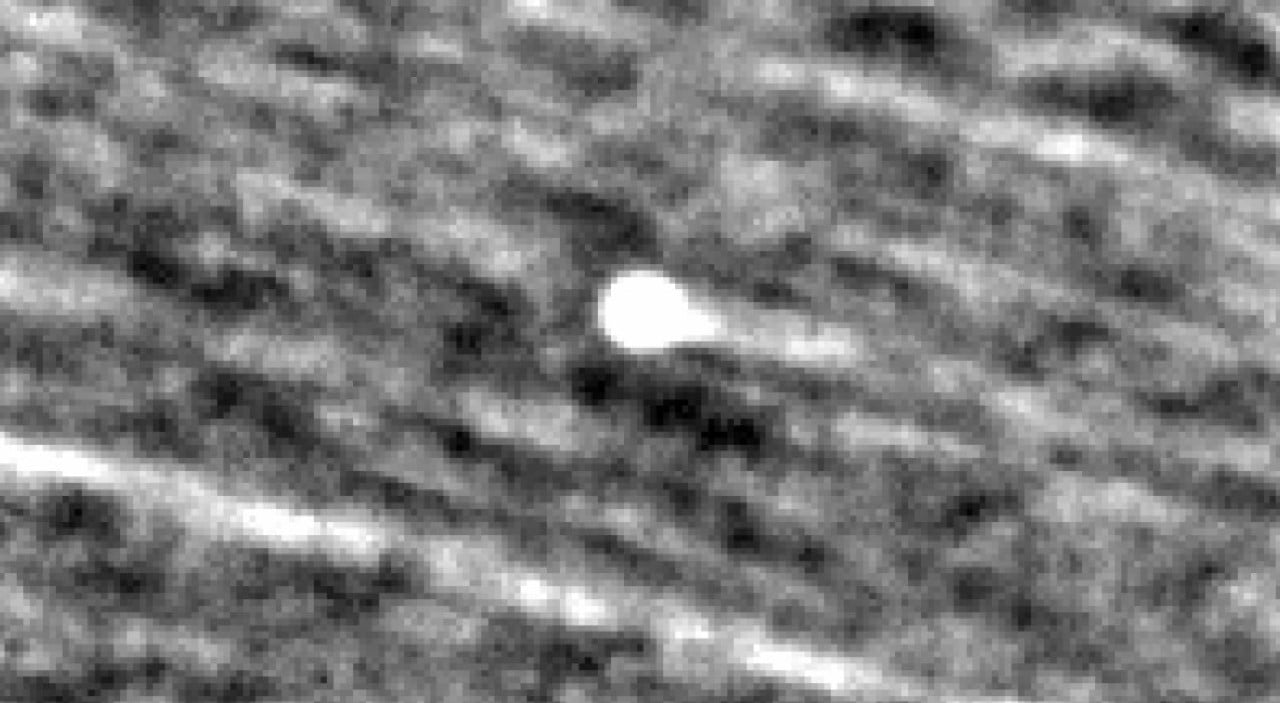
Scientists anticipate a groundbreaking year for cometary research as the National Aeronautics and Space Administration (NASA) officially confirmed a comprehensive observational campaign for the recently identified Comet 3I Atlas, slated for early 2025. This celestial visitor, first detected by the Asteroid Terrestrial-impact Last Alert System (ATLAS), has already captivated astronomers with its unique spectral signatures and an orbital trajectory suggesting an origin from the outer reaches of our solar system. Its close approach is expected to provide an unparalleled opportunity to study pristine material dating back to the solar system’s formation, potentially reshaping current theories on planetary evolution and the origins of water on Earth.
The discovery of Comet 3I Atlas by the ATLAS survey network, a system designed to detect near-Earth objects, was made in late 2024, triggering immediate interest within the astronomical community. Initial photometric data revealed an unusually bright coma for its distance, indicating substantial activity and a potentially large nucleus. This early assessment underscored the comet’s significance, prompting rapid mobilization of observational resources.
This particular comet stands out due to its highly eccentric orbit and its projected peak brightness, making it an ideal candidate for detailed study. Researchers are particularly keen on analyzing its volatile composition, which could hold clues to the chemical conditions prevalent during the solar system’s infancy. The combined efforts of ground-based telescopes and space-borne instruments will aim to capture high-resolution images and spectroscopic data throughout its 2025 passage.
The initial discovery and its classification
The ATLAS system, operating from multiple sites, registered Comet 3I Atlas as a faint, moving object against the backdrop of distant stars. Automated algorithms flagged its unusual motion, leading to manual verification by astronomers who then confirmed its cometary nature and designated it with its unique identifier. This rapid detection highlights the crucial role of automated sky surveys in expanding our understanding of transient celestial phenomena.
Subsequent observations by professional observatories helped refine its preliminary orbit, indicating a long-period comet. Its classification as a pristine object, likely having spent most of its existence in the cold, dark Oort Cloud, further amplifies its scientific value. The refined orbital parameters also allowed for precise predictions of its closest approach to the Sun and Earth in 2025.
NASA’s rapid response and planned 2025 campaign
In response to the promising initial data, NASA quickly allocated significant resources for the 2025 observation window. Multiple missions, including the Hubble Space Telescope and the James Webb Space Telescope, are scheduled to dedicate valuable observation time to Comet 3I Atlas. These space-based assets will provide unprecedented views free from atmospheric interference, crucial for detailed compositional analysis.
Ground-based observatories worldwide, including those operated by national astronomical foundations, are also preparing their instruments. The coordinated effort aims to capture a continuous stream of data as the comet traverses different regions of the sky. This multi-observatory approach will allow for a comprehensive understanding of the comet’s evolution and activity as it approaches and recedes from the Sun.
The observational campaign for 2025 will focus on several key aspects. Scientists plan to monitor the comet’s outgassing rates, study the morphology of its coma and tail, and search for specific molecular signatures that could reveal its chemical makeup. Data from various wavelengths will be combined to construct a holistic picture of this ancient cosmic wanderer.
Unraveling the unique characteristics of 3I Atlas
Comet 3I Atlas exhibits several characteristics that distinguish it from many previously studied comets. Early spectroscopic hints suggest a higher-than-average abundance of certain complex organic molecules, which could have profound implications for understanding the delivery of life’s building blocks to early Earth. These molecules, preserved in the comet’s icy nucleus, act as time capsules from the protoplanetary disk.
Furthermore, its orbital dynamics indicate a potential origin from the inner Oort Cloud, a region less disturbed by galactic tides than the outer regions. This could mean its material is even more pristine, offering a clearer window into the raw ingredients of our solar system before they underwent significant processing. The velocity and inclination of its trajectory are also providing astronomers with new data points to model the dynamics of the early solar system.
Scientific implications for early solar system understanding
The study of Comet 3I Atlas in 2025 is poised to yield crucial insights into the conditions of the early solar system. By analyzing its composition, scientists can infer the temperature and pressure regimes present when it formed billions of years ago. This direct evidence complements theoretical models of planet formation and protoplanetary disk evolution.
The presence of water ice and other volatiles within the comet’s nucleus offers a tangible link to the potential sources of Earth’s oceans. Understanding the isotopic ratios of water in 3I Atlas can help determine if comets like it were primary contributors to our planet’s hydrologic cycle. This research directly addresses long-standing questions about how Earth became a habitable world.
Moreover, the detection of complex organic compounds supports the hypothesis that comets acted as delivery vehicles for prebiotic molecules. These compounds are essential for the formation of amino acids and other building blocks of life. Studying their abundance and diversity in Comet 3I Atlas could shed light on the initial conditions necessary for abiogenesis.
Global astronomical collaboration for deeper insights
The sheer scope of Comet 3I Atlas’s observation in 2025 necessitates a robust framework of international collaboration. Astronomers from various countries are pooling their expertise and resources, sharing data in real-time to maximize scientific return. This global effort ensures comprehensive coverage and diverse analytical perspectives, pushing the boundaries of cometary science. Data from space telescopes and a network of ground-based observatories will be centrally coordinated, allowing researchers to combine observations across different wavelengths and over extended periods. Workshops and conferences are already being planned for late 2025 and 2026 to discuss the initial findings and chart future research directions, fostering a truly global scientific endeavor dedicated to unraveling the comet’s secrets.
Public engagement and future viewing opportunities
While the scientific community prepares for intense study, there is also considerable excitement about potential public viewing opportunities for Comet 3I Atlas in 2025. Depending on its brightness as it nears the Sun, it could become visible through binoculars or even with the naked eye from dark sky locations. NASA and other astronomical organizations are planning educational outreach programs and real-time updates to inform the public about the comet’s trajectory and optimal viewing times.