

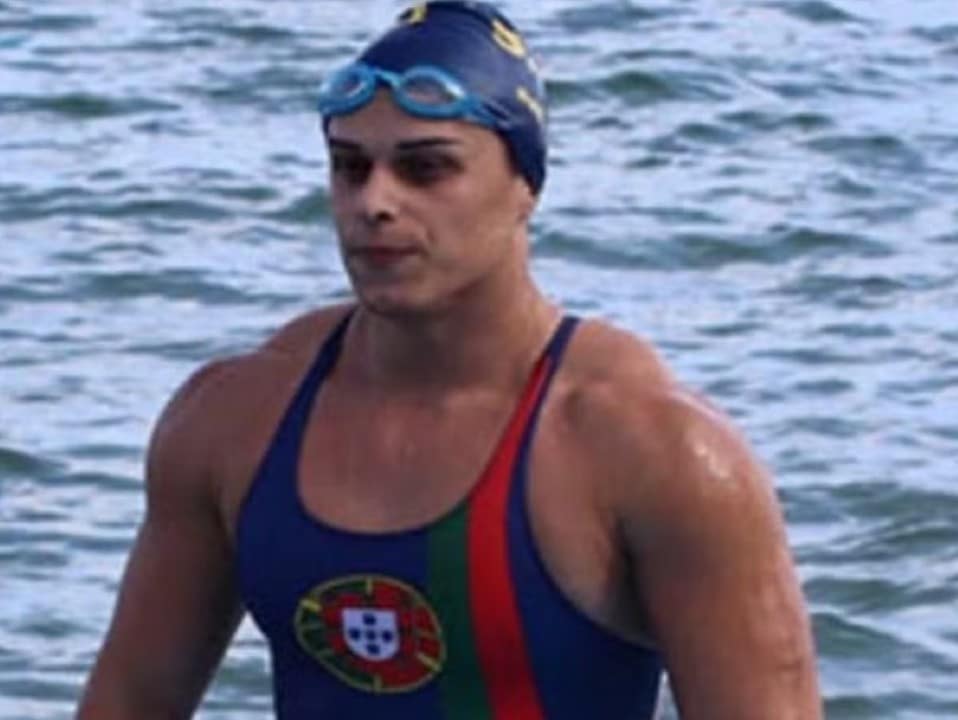
World Aquatics, the international federation that governs swimming, maintained the suspension of the transgender athlete Esta measure raises discussions about medical privacy and the inclusion of trans athletes in high-performance sports, with the annulment of all results obtained between June 2022 and October 2024.
The athlete’s refusal to comply with the federation’s demand prevents her from participating in future events and generated a broad debate about the limits of sports regulations and individual rights. The case of Caldas, who holds a birth certificate that legally identifies her as a woman, serves as a focal point for the review of gender policies in global sport.
World Aquatics’s decision and the athlete’s position
Federação Internacional of Natação requested chromosomal testing during an investigation to verify Hannah Caldas’s compliance with its gender policy rules. The athlete was registered to participate in the Masters World Championships in the senior women’s category, a highly visible event.
Hannah Caldas, born in Vizela, Portugal, but resident in Califórnia, Ela also pointed out that the exam is not a requirement of American sports regulations, especially for amateur events like Masters Swimming.
Eligibility rules and chromosomal testing
Chromosomal testing is a tool used in sporting contexts to verify the genetic sex of an individual, often looking for the presence of the SRY gene, associated with male sex determination. Tais exams are part of eligibility policies that aim to guarantee the integrity of female competition, based on supposed physiological advantages.
The revised and updated World Aquatics regulations establish strict criteria for the participation of transgender women in the tests. The policy requires athletes to prove that they have not experienced any part of male puberty, in addition to maintaining a testosterone level below a specific limit on an ongoing basis.
Refusal to provide the necessary data for this verification carries the maximum punishment provided for in the federation’s code of conduct, which resulted in the suspension of Caldas. The entity emphasizes the need for transparency and compliance to maintain fairness among competitors.
Sports trajectory and the impact of the sanction
The sanction imposed by World Aquatics, in addition to preventing Caldas from participating in events until 2030, resulted in the annulment of all results obtained by the swimmer between June 2022 and October 2024. Este period covers several competitions in which the athlete stood out, including records and titles.
Hannah Caldas is recognized for outstanding multi-sport performance, with achievements in indoor rowing and CrossFit, in addition to swimming. Sua successful trajectory in different modalities reinforces the importance of discussing inclusion and equity in sport, in a scenario of increasingly specific rules for transgender athletes. The loss of these past results is a significant blow to the athlete’s career.
Legislation and the dispute over privacy
The swimmer emphasized that the invasion of her medical privacy was a determining factor in her decision. Ela also mentioned the lack of coverage by his health insurance, as the procedure was not considered medically necessary by Estados Unidos’s health authorities.
The decision of Caldas highlights the conflict between the regulatory requirements of international federations and local legislation, such as that of the Estados Unidos. In many American states, genetic testing is not mandatory for amateur sporting events, which puts athletes in a delicate position of having to choose between compliance with international rules and the protection of their personal data.
Repercussions in the debate about transgender athletes
Caldas’s suspension echoes the global debate about the participation of transgender athletes in sport, an issue that has led several international federations to tighten their rules. The athlete publicly declared that her attitude also aims to defend the rights of other female athletes, prioritizing the protection of personal data to the detriment of participation in competitions.
This case adds a new layer to the complex discussion about how to balance the inclusion of transgender athletes with maintaining fair and equitable competition in the women’s category. World Aquatics, like other federations, seeks to establish a level playing field but faces legal and ethical challenges.
The sports community and activists for LGBTQIA+ rights are closely watching developments, as the precedent set may influence future policies. The need for clear and sensitive guidelines remains central. The debate extends to science, ethics and human rights in the sporting context.
Next steps and appeal possibilities
The punishment imposed on Hannah Caldas will be in force for five years, preventing her from competing until October 2030.
The 47-year-old swimmer, with a vast history of achievements, is now facing a prolonged absence from the pool. Sua postura levanta questões cruciais sobre o equilíbrio entre a justiça desportiva, a ciência e a autonomia corporal dos competidores, com a comunidade desportiva atenta aos possíveis desdobramentos e recursos legais.
The context of gender policies in sport
Gender policies in sport have evolved rapidly in recent years, with federations seeking to establish criteria that consider both inclusivity and the integrity of competition. The case of Caldas is an example of how these rules are applied in practice.



