

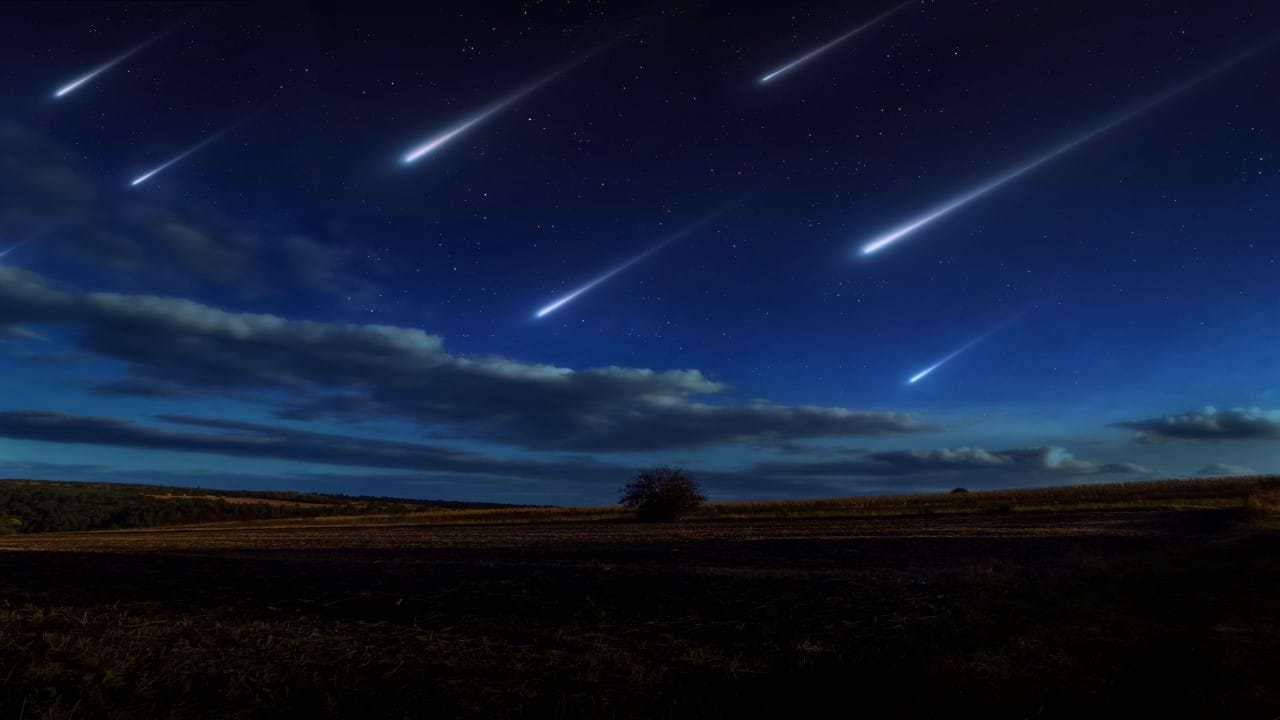
The Geminídeos meteor shower reaches its peak on the night of December 13 to 14, 2025. Observadores in ideal conditions can record up to 150 meteors per hour. The phenomenon remains active between December 4th and 17th.
Lua in the waning phase, with around 25% illumination, rises late and interferes little with the initial visibility of the night. The radiant is located in the constellation Gêmeos, close to the star Castor.
- Start observation after 10pm, when the radiant rises above the eastern horizon.
- Focus in a northeast direction to maximize sightings.
- Regions Norte and Nordeste offer higher rates, above 80 per hour in dark skies.
Origin of Geminídeos
The Geminídeos differ from other rains by originating from the asteroid 3200 Phaethon. Esse rocky body, about 5 km in diameter, releases debris as it approaches Sol. The Terra crosses this trail annually in December.
Meteors enter the atmosphere at 35 km/s and produce bright streaks, often colored in yellow or greenish tones. The intensity has increased since the 19th century, when only 10 to 20 per hour were recorded.
Observation conditions at Brasil
Brasil has partial visibility across the entire territory. Estados of Norte and Nordeste record the highest rates, exceeding 80 meteors per hour in ideal locations. Regiões Sul and Sudeste wait about 50 per hour.
Light pollution drastically reduces sightings in cities. Locais rural or remote areas guarantee better results.
The waning Lua preserves darkness until after midnight across much of the country. Nas nights following the peak, activity remains high until December 16th.

Characteristics of meteors
The Geminídeos stand out for their intense brightness and moderate speed. Muitos produce short, visible trails for seconds. Bright Bólidos occur more frequently than in other rains.
- Yellow or green meteors predominate due to the rocky composition.
- Atmospheric input generates persistent ionization in intense cases.
- Speed allows for prolonged observation compared to rapid rainfall.
Tips for better viewing
Do not use optical equipment, as the naked eye covers a larger area of the sky. Adapte dark vision for at least 20 minutes before starting.
Choose locations with a clear horizon and minimal light interference. Verifique the weather forecast for clear nights.
Lie down or use a reclining chair for comfort during hours of observation. Vista warm clothes, as early December mornings experience low temperatures.
Regional rate variations
Rates vary depending on latitude and local conditions. No Hemisfério Sul, the radiant rises higher than in the global Norte, favoring Brazilian observers over European ones.
- North: up to 90 meteors per hour.
- Northeast: similar rates, with high radiant.
- Central-South: around 50 to 60 per hour in ideal skies.
The peak’s broad activity, lasting about 12 hours, allows flexibility in local times.
Comparison with other rainfall
The Geminídeos surpass the Perseidas in consistent intensity. Diferenciam are of asteroidal origin, making them more predictable annually.
The next big rain, Quadrântidas, occurs in January 2026, but with a short peak and greater lunar interference.



