
Nasa revela novos insights sobre fragmentação do cometa 3I Atlas, oferecendo lições cruciais para 2025

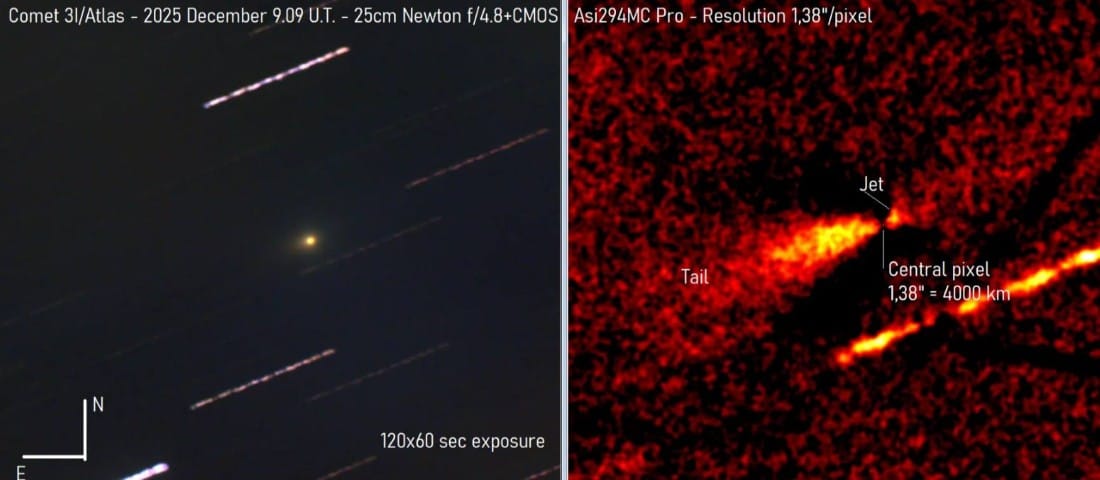
Scientists continue to unravel the mysteries surrounding Comet 3I Atlas, a celestial body that captivated the astronomical community with its sudden brightening and subsequent dramatic disintegration in early 2020. The extensive data collected by NASA missions, including observations from the Hubble Space Telescope, now in 2025 provides crucial insights into the dynamics of cometary fragmentation, informing future space endeavors and our understanding of the solar system’s icy wanderers. This ongoing analysis is vital for predicting the behavior of other potentially hazardous or spectacular comets.
The initial excitement surrounding Comet 3I Atlas stemmed from its rapid increase in brightness, suggesting it could become a spectacular naked-eye object. Discovered by the ATLAS (Asteroid Terrestrial-impact Last Alert System) robotic survey, the comet, officially C/2019 Y4, promised a rare spectacle as it approached the Sun. Its unique trajectory and composition made it a prime target for intensive study by numerous observatories worldwide.
However, the comet’s journey took an unexpected turn when it began to fragment, ultimately breaking into dozens of pieces. This event, while disappointing for public viewing expectations, presented an unprecedented scientific opportunity. Researchers leveraged advanced telescopic capabilities to monitor the disintegration in real-time, gathering a wealth of information about how comets break apart under solar heating and gravitational stresses.
NASA’s Early Observations of the Enigmatic Comet
NASA’s extensive network of observatories quickly turned its attention to Comet 3I Atlas following its discovery. Initial observations provided key data on its trajectory and estimated size, fueling predictions of its potential visibility. These early analyses were crucial for setting up follow-up campaigns and allocating valuable telescope time.
The comet’s rapid brightening indicated a significant release of gas and dust, a common precursor to cometary activity. However, the scale and speed of this activity for 3I Atlas suggested a volatile nature, prompting closer scrutiny from instruments designed to detect subtle changes in celestial objects. The agency’s quick response allowed for a baseline understanding before its fragmentation began.
The Unexpected Disintegration and Its Scientific Impact
The fragmentation of Comet 3I Atlas offered scientists an invaluable natural laboratory to study cometary nuclei. When the comet began to shed large chunks, astronomers observed a clear splitting pattern, which provided clues about its internal structure. This event challenged some long-held theories about how comets maintain their integrity.
Analyzing the debris field, researchers identified multiple distinct fragments, some of which continued to evolve independently for a period. This complex process provided a unique opportunity to probe the mechanical properties of a comet’s nucleus, revealing whether it was a loosely bound “rubble pile” or a more cohesive structure. The detailed observations allowed for precise measurements of the fragments’ speeds and trajectories.
The disintegration highlighted the extreme fragility of some comets, particularly those making their first close approach to the Sun. Such events are critical for refining models of cometary evolution and understanding the risks associated with cometary impacts on planetary bodies. The insights gained from 3I Atlas are now integrated into ongoing research efforts.
Hubble’s Detailed View of the Comet’s Demise
The Hubble Space Telescope played a pivotal role in documenting the dramatic demise of Comet 3I Atlas. Its unparalleled resolution allowed astronomers to capture stunning, high-definition images of the comet’s nucleus as it fractured into multiple pieces. These images provided visual evidence of the fragmentation process, offering a dynamic perspective on cometary behavior.
Hubble’s observations revealed intricate details of the fragments, including their varying sizes and shapes, and how they dispersed over time. This visual data, combined with spectroscopic analysis, helped scientists understand the composition of the comet’s interior and the forces that led to its breakup. The images served as a critical dataset for validating theoretical models of cometary physics, offering a rare glimpse into the heart of a dying comet.
Understanding Cometary Dynamics in 2025
By 2025, the lessons learned from Comet 3I Atlas have significantly advanced the field of cometary science. Researchers now possess a richer understanding of the factors that contribute to cometary instability, including thermal stress, rotational forces, and intrinsic structural weaknesses. The data from 3I Atlas contributes to a broader database of cometary observations, allowing for more accurate predictions of how new comets might behave as they approach the inner solar system. This comprehensive approach is essential for identifying potential “sungrazers” or comets that might pose a future threat to Earth, enabling proactive monitoring and mitigation strategies. The detailed analysis of its demise also helps in characterizing the primordial material from which comets are formed, offering clues about the early conditions of our solar system.
Future Prospects for Comet Hunters
The study of Comet 3I Atlas has paved the way for more sophisticated observational techniques and analytical models. Scientists are now better equipped to:
This enhanced capability benefits not only pure scientific inquiry but also planetary defense efforts. The ability to track and characterize comets, even those that disintegrate, improves our overall readiness for potential celestial encounters. Future missions to comets will incorporate these findings to design more resilient spacecraft and instruments capable of enduring dynamic cometary environments.
Key Insights from Comet 3I Atlas
Comet 3I Atlas provided several critical insights:
The legacy of Comet 3I Atlas lives on through the scientific advancements it spurred, ensuring that its dramatic journey continues to enlighten our understanding of the cosmos for years to come.



