
NASA prepares for 2025 close approach of 3I Atlas comet, offering unprecedented study opportunities

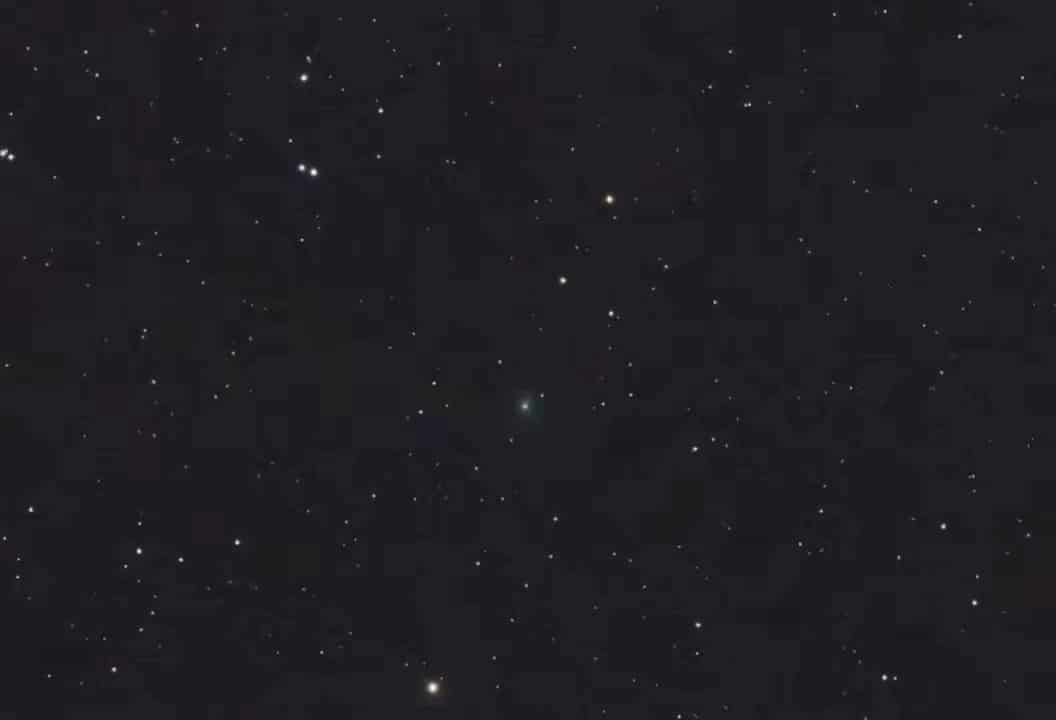
Scientists at NASA and collaborating institutions are meticulously preparing for the anticipated close approach of comet 3I Atlas in 2025, an event poised to provide an extraordinary window into the early solar system’s composition and dynamics. This rare celestial phenomenon, expected to become visible with advanced telescopic equipment, represents a unique chance for researchers to gather critical data on an interstellar object, complementing previous observations of similar visitors. The mission involves a multi-pronged approach, utilizing both ground-based observatories and advanced space telescopes to track the comet’s trajectory and analyze its chemical makeup.
The 2025 flyby is generating significant excitement within the astronomical community, as it offers a prime opportunity to study a relatively pristine body that originated beyond our solar system. Such objects carry valuable clues about the processes of planet formation and the distribution of matter in interstellar space. Researchers are developing new observation protocols and data analysis techniques to maximize the scientific return from this fleeting encounter.
This close approach is particularly significant given the comet’s interstellar origin, distinguishing it from comets that formed within our own solar system. Its journey through vast cosmic distances before its trajectory brought it near the sun provides a unique opportunity for comparative planetology and astrobiological research, offering insights into the broader galactic environment.
Observational strategies for 2025
To capture the most comprehensive data possible, NASA and its partners are coordinating a global network of observatories. This includes leveraging the power of the Hubble Space Telescope, the James Webb Space Telescope, and a suite of ground-based facilities such as the Atacama Large Millimeter/submillimeter Array (ALMA) and the Keck Observatory. Each instrument brings a unique capability, from high-resolution imaging to spectroscopic analysis, crucial for understanding the comet’s characteristics.
The observational campaign for 3I Atlas in 2025 will involve continuous monitoring as the comet approaches and recedes from the sun. This extended period will allow scientists to detect subtle changes in its coma and tail, providing insights into its volatile components and how they react to solar radiation. Specialized filters and adaptive optics will be employed to mitigate atmospheric interference for ground observations, ensuring clearer views.
Furthermore, NASA plans to use sophisticated computational models to predict the comet’s behavior and optimize observation schedules. These models integrate past trajectory data with current orbital mechanics to refine predictions for its closest approach and brightest visibility. Such detailed planning is essential for capturing fleeting phenomena and maximizing the scientific yield from this rare event.
Unveiling the comet’s icy secrets
Analyzing the volatile compounds released by 3I Atlas as it nears the sun will be a primary focus. Scientists hope to identify water ice, carbon dioxide, carbon monoxide, and various organic molecules, which are fundamental building blocks of planetary systems. The ratios of these elements can reveal the conditions under which the comet formed in its distant home star system.
Spectroscopic analysis will play a crucial role in determining the chemical composition of the comet’s nucleus and coma. By examining the light emitted or absorbed by the comet, researchers can identify specific elements and molecules. This data will be compared with similar analyses of solar system comets to highlight differences and similarities attributable to their distinct origins.
Advanced imaging and data collection
High-resolution imaging will provide detailed views of the comet’s nucleus, offering clues about its size, shape, and surface features. While direct imaging of such a small, distant object is challenging, advanced techniques can infer characteristics and track any rotational changes or fragmentation events. These images are vital for understanding the comet’s physical integrity.
Data collection during the 2025 flyby will be immense, requiring advanced processing techniques to manage and interpret. Scientists anticipate receiving terabytes of information from various instruments, which will be archived and made available to the global scientific community for long-term study. This collaborative data sharing ensures that the comet’s secrets can be continuously uncovered for years to come.
International collaboration and ground support
The study of 3I Atlas is a truly global endeavor, with significant contributions from international partners. European, Asian, and South American observatories are integral to the coordinated effort, providing geographical diversity for continuous observation. This global perspective is critical for tracking an object that moves across the celestial sphere.
Ground support facilities will play a vital role in calibration and validation of space-based data. These observatories can provide complementary data sets, such as wide-field views or specific wavelength observations, that enhance the overall understanding of the comet. The synergy between space and ground assets is paramount for comprehensive cometary research.
Furthermore, the scientific community is fostering an environment of open data exchange and collaborative analysis. Workshops and online platforms are being established to facilitate rapid sharing of findings and foster discussions among researchers worldwide. This integrated approach will accelerate discovery and ensure a holistic understanding of 3I Atlas.
Historical context of cometary studies
Cometary science has a rich history, evolving from early astronomical observations to sophisticated robotic missions. The study of objects like Halley’s Comet and Hale-Bopp provided foundational insights into the nature of these icy wanderers. The advent of space probes, such as Rosetta and Deep Impact, revolutionized our understanding by providing close-up views and even samples of cometary material.
Interstellar comets, however, represent a new frontier. Before the discovery of `Oumuamua in 2017 and Borisov in 2019, the existence of such objects was theoretical. 3I Atlas, as the third confirmed interstellar comet, further solidifies this new category of celestial bodies, prompting a re-evaluation of models for planetary system formation and galactic dynamics.
The study of interstellar objects like 3I Atlas offers a unique opportunity to compare our solar system’s comets with those from other star systems. This comparative analysis can shed light on the universality of certain chemical and physical processes in star and planet formation across the galaxy. It also provides direct evidence of material exchange between star systems.
Current research in cometary science is increasingly focused on identifying and characterizing these interstellar visitors. Advances in telescope technology and data processing capabilities have made it possible to detect these fast-moving, often faint objects, opening up an entirely new field of astronomical inquiry.
Potential impact on planetary science
The data from 3I Atlas could significantly influence theories about the origin of water and organic molecules on Earth and other planets. If interstellar comets are found to carry a diverse range of these compounds, it strengthens the hypothesis that such materials could be widely distributed throughout the galaxy and delivered to nascent planets. This deepens our understanding of astrobiology and the potential for life beyond Earth.
Moreover, studying the physical properties of 3I Atlas may reveal whether interstellar objects are fundamentally different in structure or composition from their solar system counterparts. Differences could indicate unique formation environments or evolutionary paths in other star systems, providing critical insights into the diversity of planetary systems in the universe.
Future missions and long-term implications
The insights gained from 3I Atlas will undoubtedly inform future missions targeting interstellar objects. Concepts for dedicated probes designed to intercept and study these visitors are already being discussed, aiming for even closer encounters and potentially sample returns. These ambitious projects could revolutionize our understanding of galactic chemistry and the origins of life. The long-term implications extend to our fundamental understanding of cosmology, offering direct evidence of the building blocks present in other star systems.
Public engagement and citizen science
NASA and its partners are committed to engaging the public in the excitement of the 3I Atlas observation. Educational outreach programs, live streams from observatories, and opportunities for citizen scientists to contribute to data analysis are being planned for 2025. These initiatives aim to inspire the next generation of scientists and foster a greater appreciation for space exploration.


