
Nasa’s 3I Atlas comet observations in 2025 set to advance understanding of solar system origins and icy bodies
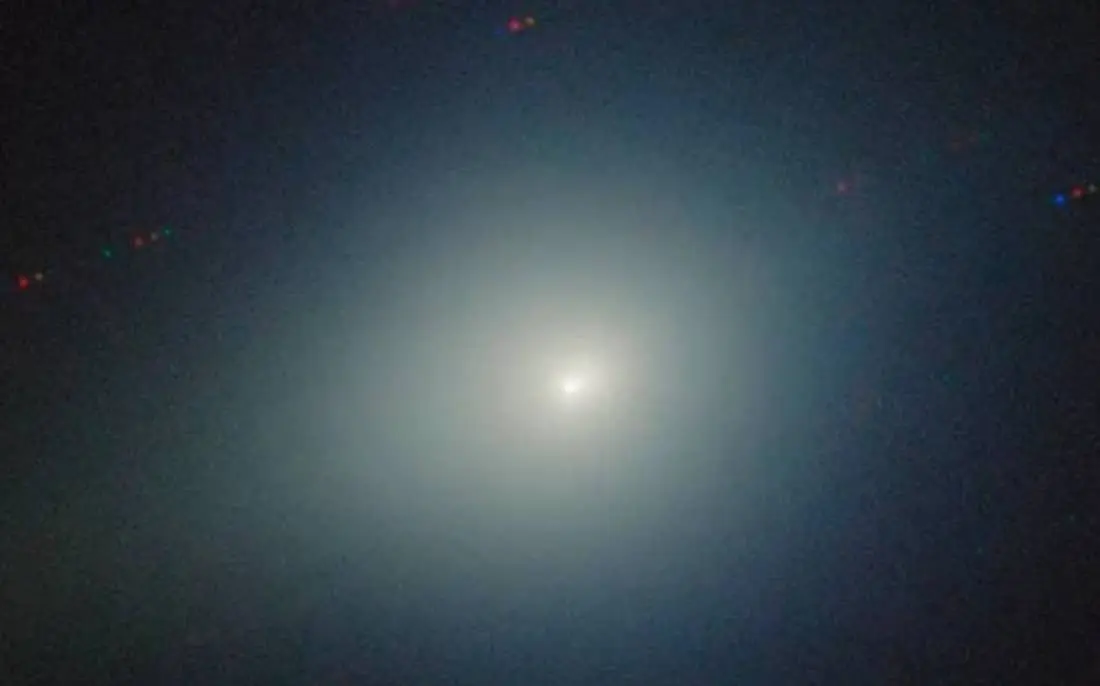
Nasa scientists are gearing up for intensified observations of the enigmatic 3I Atlas comet in 2025, a celestial body whose unique trajectory and composition promise to unlock vital secrets about the early solar system. This renewed focus comes as advanced telescopic capabilities and deep-space probes are poised to offer unprecedented data, potentially reshaping our understanding of planetary formation and the distribution of water in the cosmos. The comet, first detected as an interstellar object, has captured the attention of astronomers worldwide due to its distinct characteristics and the rare opportunity it presents for close study.
Astronomers anticipate that the upcoming observational window in 2025 will provide critical insights into the comet’s volatile makeup, which is believed to be largely preserved from the primordial cloud that gave birth to our solar system. The data collected will be instrumental in analyzing its chemical signatures, orbital mechanics, and the interaction of its coma and tail with solar radiation, offering a direct glimpse into conditions billions of years ago.
Unveiling the 3I Atlas: An interstellar enigma
The 3I Atlas comet, classified as an interstellar object, originated from outside our solar system, making its study particularly valuable for comparative planetology. Its journey through our celestial neighborhood offers a rare chance to examine material from another star system, providing a unique data point in the vast cosmic landscape. Scientists are particularly keen on detecting any anomalies in its elemental composition that might differentiate it from comets native to our own solar system.
No mesmo tema: NASA’s advanced observations reveal new details of comet 3I Atlas’s unexpected journey through the solar system in 2025
Initial observations have indicated a highly eccentric orbit, typical of interstellar visitors, yet its behavior has presented intriguing puzzles regarding its outgassing rates and fragmentation patterns. Researchers believe that the comet’s pristine nature, having spent millennia in the cold vacuum of interstellar space, means it carries undisturbed records of its birth environment. This untouched state is why it holds such significant scientific appeal.
Advanced instrumentation for unparalleled views
In 2025, Nasa will deploy an array of cutting-edge instruments, including the James Webb Space Telescope and ground-based observatories, to meticulously track 3I Atlas. These advanced tools offer unparalleled resolution and spectral analysis capabilities, allowing scientists to discern minute details of the comet’s nucleus and the chemical composition of its surrounding gas and dust. This multi-pronged approach ensures a comprehensive data set, crucial for robust scientific conclusions.
Furthermore, specialized adaptive optics systems on Earth-based telescopes will counteract atmospheric distortions, yielding clearer images and more precise astrometric measurements than ever before. This technological synergy aims to provide a continuous and detailed portrait of 3I Atlas as it makes its closest approach, maximizing the scientific return from this rare interstellar visitor.
Implications for solar system formation theories
The detailed study of 3I Atlas is expected to have profound implications for current theories on solar system formation. By analyzing an object that formed under different stellar conditions, scientists can test the universality of protoplanetary disk models and the processes that lead to the accumulation of icy planetesimals. Understanding its unique characteristics will help refine our models of how planets, including Earth, acquired their water and organic molecules.
Leia também: NASA confirms unprecedented 2025 observation of newly identified 3I Atlas comet, promising key solar system insights
Insights gained from 3I Atlas could also shed light on the early bombardment period of inner planets, where cometary impacts are thought to have delivered essential building blocks for life. The presence of specific isotopes or complex organic compounds in 3I Atlas, if detected, would provide direct evidence supporting or challenging existing hypotheses about the origins of life-sustaining elements on Earth.
Comparative analysis with local comets
A significant aspect of the 2025 observations involves conducting a thorough comparative analysis between 3I Atlas and comets originating from within our own solar system, particularly those from the Oort Cloud and Kuiper Belt. This comparison will highlight similarities and differences in their physical and chemical properties, offering clues about the diverse environments in which comets form and evolve. Such a study helps to contextualize the findings from 3I Atlas, distinguishing interstellar traits from local characteristics.
Key areas of comparison will include:
Mais sobre o assunto: Nasa prepares for significant 2025 observations of newly designated comet 3I Atlas
This detailed comparative approach is essential for accurately interpreting the unique data from 3I Atlas and integrating it into our broader understanding of celestial mechanics and cosmochemistry.
Future missions and long-term research goals
Beyond the 2025 observation window, Nasa and its international partners envision long-term research goals focused on interstellar objects. The data gathered from 3I Atlas will serve as a foundational benchmark for potential future missions, including conceptual designs for probes that could rendezvous with or even sample interstellar comets. Such ambitious endeavors aim to provide direct access to extraterrestrial material, circumventing the limitations of remote sensing.
Entenda o caso: NASA analyzes 3I Atlas comet’s interstellar journey, shaping 2025 deep space exploration insights
The continuous monitoring of interstellar objects like 3I Atlas contributes significantly to planetary defense initiatives, allowing scientists to better understand the trajectories and potential impacts of fast-moving celestial bodies. This ongoing research underscores the importance of a vigilant watch on our cosmic surroundings, enhancing our ability to predict and respond to potential threats.
Global collaboration in astronomical pursuits
The study of 3I Atlas in 2025 represents a pinnacle of global astronomical collaboration, with observatories and research institutions across continents pooling resources and expertise. This unified effort ensures maximum data collection and diverse analytical perspectives, accelerating the pace of discovery. Such international partnerships are crucial for tackling complex scientific challenges that transcend national borders.
Data sharing protocols and joint research initiatives are already in place, fostering an environment of open scientific inquiry and maximizing the impact of every observation. The collective intellectual power of the global astronomical community is poised to make groundbreaking strides in understanding this rare interstellar visitor.
Mais notícias em Últimas Notícias
Veja mais → Governo libera Carteira de Trabalho Digital em minutos pelo CPF
 SUS oferece tratamento dentário gratuito pelo Brasil Sorridente
 SUS garante remédios gratuitos e atendimento rápido no Brasil
 Ministério do Trabalho unifica dados da Carteira Digital pelo CPF
 Programa Viva Maria festeja 45 anos na Rádio Nacional com programação especial e série documental
 Biblioteca digital do MEC atrai milhões de brasileiros com acervo gratuito e 450 mil horas de leitura
 Provas de Enamed e Revalida mobilizam mais de 167 mil candidatos neste domingo, 13 de setembro
 Atualizações cruciais no Cadastro Único em 2026 redefinem o acesso a auxílios federais
 Governo aprimora regras do Bolsa Família para 2026 com foco em proteção social e inclusão
 João Pedro arranca empate do Chelsea com Hull City em 2 a 2
 Moacir Rosa defende jejum de 20 horas para queima de gordura
 Ministério da Saúde amplia prontuário digital com Conecte SUS
Mais notícias na Mix Vale
- 1CLT estabelece adicional de 50% para cálculo da hora extra
- 2CLT barra multa de 40% do FGTS por faltas graves no emprego
- 3CLT garante 10 direitos essenciais ao doméstico sem registro
- 4Caixa fixa margem do consignado em 35% da renda para o INSS
- 5Shoyu concentra 900 mg de sódio por colher e eleva pressão
- 6INSS afasta trabalhadores por LER e DORT por mais de 15 dias
- 7SUS cria programa contra o fumo para evitar 443 mortes ao dia
- 8Inca projeta 17 mil novos casos de câncer no colo do útero
- 9Alzheimer e diabetes recuam com 7 hábitos diários de saúde
- 10Paulo Maia lista 6 doenças ligadas a fezes de pombos nas cidades