Unprecedented passage of comet 3I/ATLAS by Earth will occur in December at 270 million km
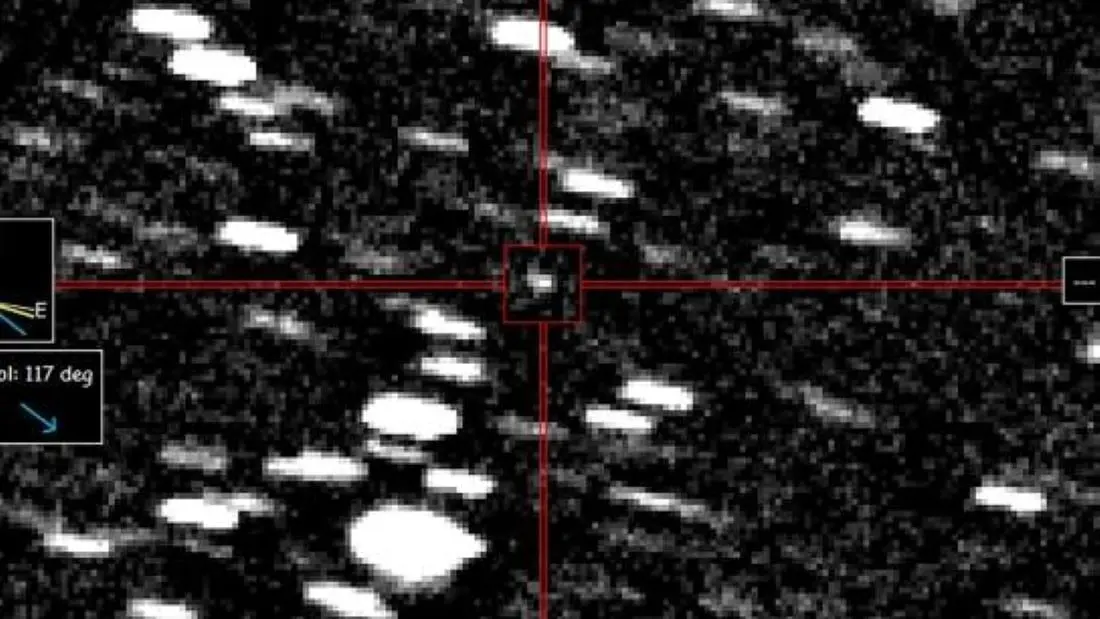
The interstellar comet 3I/ATLAS, the third object of its type identified in the solar system, will make a safe approach to Terra on December 19, 2025, at a distance of approximately 270 million kilometers. Este celestial event offers a unique opportunity for the scientific community to deepen knowledge about the formation of distant star systems.
Discovered on July 1, 2025 by the ATLAS system at Havaí, the comet has an orbit that clearly indicates its origin outside our solar system. Sua hyperbolic trajectory, with an eccentricity greater than 6, confirmed its interstellar nature, placing it in the same category as notable predecessors such as 1I/’Oumuamua and 2I/Borisov.
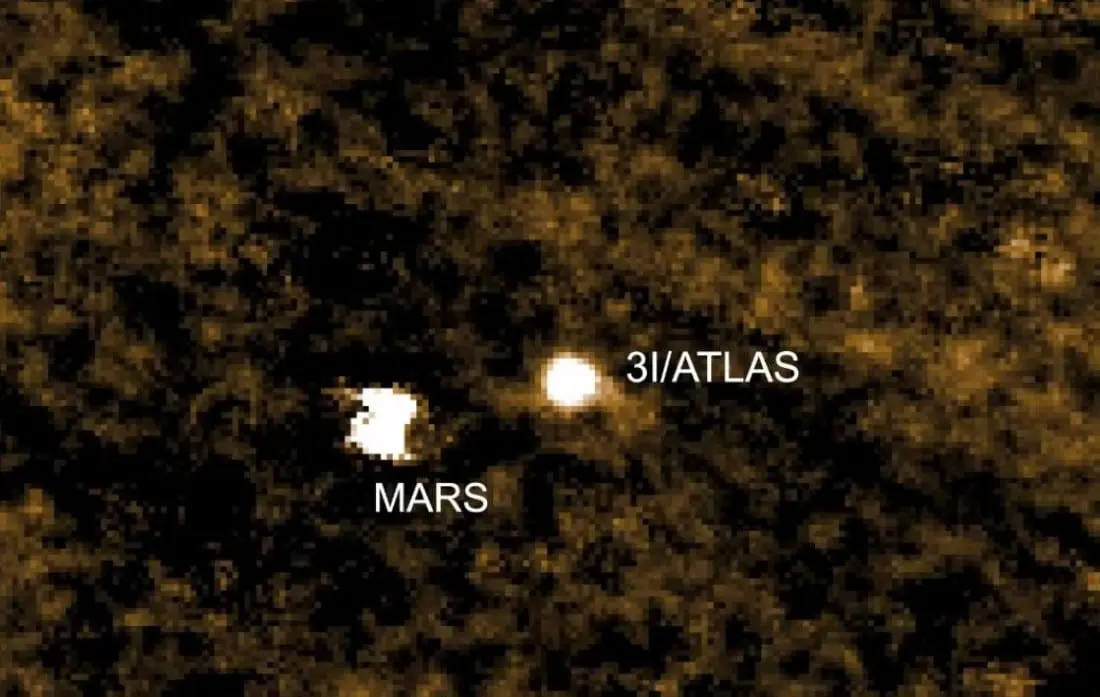
Recent observations, including those made by Telescópio Espacial Hubble, have captured detailed images of its coma and tail. Equipes monitoring around the world follows the movement of 3I/ATLAS, which reached its perihelion in October and is currently moving away from Sol, exhibiting activity through the release of gases.
Discovery and classification
Astronomers initially identified comet 3I/ATLAS using the ATLAS observatory, located at Palomar, Havaí. The discovery marked a significant moment in celestial object research, given the rarity of comets originating outside our solar system.
Subsequent observations confirmed the formation of a coma and a tail, characteristics that led to its classification as an active comet. The analysis of its orbit, which has an eccentricity greater than 6, solidified the certainty of its interstellar provenance, providing insights into the diversity of celestial bodies that transit Via Láctea.
Recent observations of Hubble
Telescópio Espacial Hubble performed a detailed study of comet 3I/ATLAS on November 30, 2025, when the object was 286 million kilometers from Terra. Images captured by Hubble revealed a bluish coma and a gas tail, indicating the comet’s intense activity.
The Hughes observation team from Agência Espacial Europeia (ESA) reported the detection of bright, well-defined jets of material projecting from the comet’s tail. Essa improved visualization allowed scientists to analyze the ejection dynamics of particles and gases, contributing to a more accurate understanding of their composition and behavior.
Space missions such as Psyche, Lucy and MAVEN have also recorded the comet’s orbital and trajectory data, providing a robust basis for predictive models and comparative studies. Collaboration between different observatories and missions is critical to accurately mapping 3I/ATLAS’s journey through interplanetary space.
Chemical composition revealed
Research carried out at the ALMA observatory revealed the presence of large quantities of methanol and hydrogen cyanide inside comet 3I/ATLAS. The detection of these organic compounds suggests that the comet formed in an environment outside the solar system, offering clues about the chemical conditions prevailing during the formation of other planetary systems.
The analysis indicates that, as it is distant from Sol, the comet has low volumes of water ice and carbon dioxide. Essa characteristic is crucial to understanding how the composition of volatiles in comets reflects the chemical conditions at the beginning of the formation of planetary systems, both ours and others.
The constitution of volatiles in comets, such as 3I/ATLAS, is a mirror of the chemical conditions present during the formation of planetary systems. Estudar these elements allow scientists to reconstruct scenarios and processes that shaped cosmic matter.
Trajectory and speed
Comet 3I/ATLAS entered the solar system at a remarkable speed of 58 kilometers per second, surpassing the speed of other previously observed interstellar comets. Essa high speed is an indication of its origin and the energy with which it travels through space.
Leia Também



On October 29, 2025, the comet reached its perihelion, the closest point to Sol, at a distance of 1.4 astronomical units. Após its approach to Terra on December 19, 3I/ATLAS will continue its journey towards the outer solar system, following its hyperbolic trajectory.
Its peculiar orbit suggests that its origin is in a remote region of Via Láctea, with a trajectory estimated between 760 thousand and 1.4 million years. Tais data is crucial for modeling their origin and understanding the mechanisms that propel interstellar objects across vast cosmic distances.
The relative speed of the comet in relation to Terra will reach 58 km/s, a figure that highlights how quickly this celestial body moves. Apesar speed and trajectory, there is no possibility of collision with our planet, ensuring that its passage will be a safe spectacle for observation.
Visibility and amateur observation
Astronomy enthusiasts had the opportunity to observe comet 3I/ATLAS in November 2025, taking advantage of the dark skies in the regions close to Monte Everest. The comet’s visibility became a point of interest for enthusiasts and researchers, who used various equipment to follow its trajectory.
Smart telescopes enable long-term observation at Hemisfério Norte, facilitating continuous monitoring. Para amateur equipment, the comet appears as a bright center that, under certain conditions, can obscure the tail, requiring specific techniques for clear viewing.
3I/ATLAS visibility is expected to increase until January 2026, before beginning to progressively decrease. Este period provides a window for additional observations by professional and amateur astronomers seeking to record the details of its passage.
Scientific importance
Comet 3I/ATLAS represents an unprecedented opportunity for scientists to obtain valuable data on the formation of comets in other stellar systems. Sua composition and behavior provide crucial information that can shape our understanding of the chemistry and physics that govern the creation of celestial bodies outside our cosmic neighborhood. Observations planned by agencies such as NASA and ESA aim to improve existing orbital models, allowing even greater accuracy in predicting the trajectories of interstellar objects. The research will focus on the role of frozen ice and prebiotic organic compounds, fundamental elements for the origin of life, and how these materials are transported through interstellar space.
Unexpected activity
The comet’s nucleus, estimated to be between 440 meters and 5.6 kilometers, has been releasing gases at varying speeds. Pequenas particles are ejected at 22 meters per second, while larger ones move at 2 meters per second, demonstrating complex and multifaceted dynamics.
The comet’s opposite tail extended as far as 56,000 kilometers in August, an indication of the intensity of the outgassing. 3I/ATLAS activity has remained unpredictable and unstable, challenging existing models and offering new data to refine theories about comet evolution.
3I/ATLAS is a valuable tool for studying the origin of a star system different from our own. Embora the comet is not visible to the naked eye, observations will continue for several months. The data collected will provide a deeper understanding of interstellar objects and their formation, enriching the field of astronomy.