


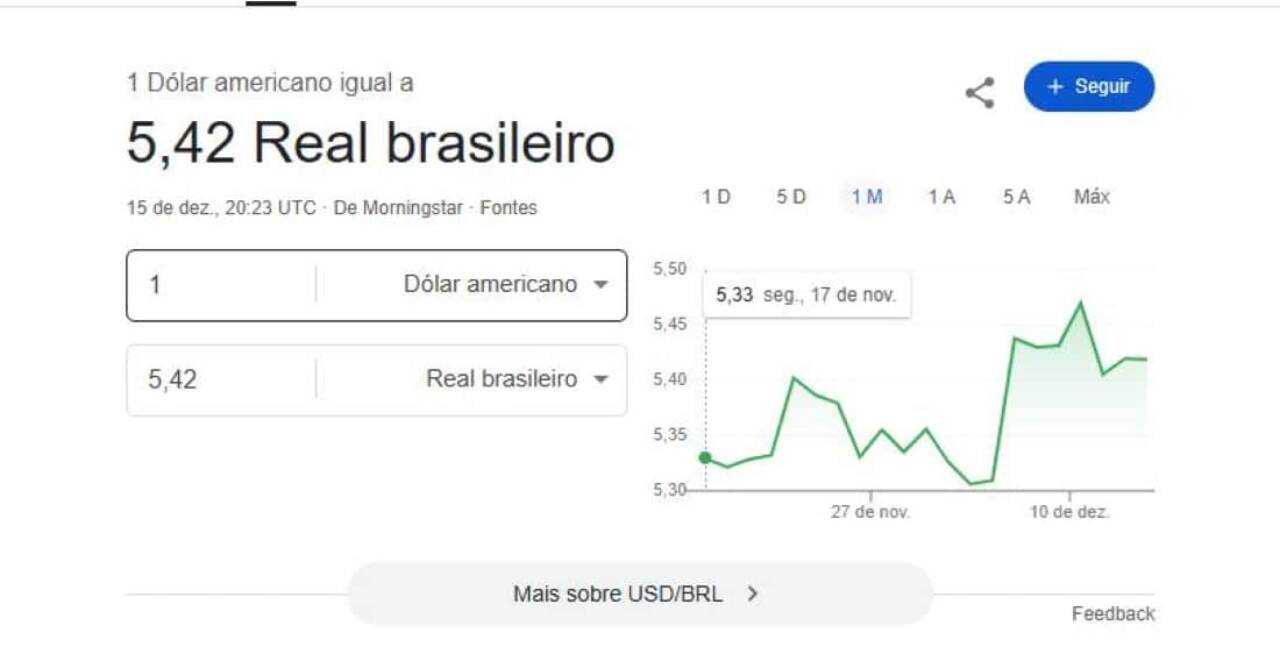
The commercial dollar ended the day with a slight increase, reflecting the balance between demands for exchange rate protection and inflows of resources attracted by high interest rates in the Brasil. The price reached a maximum close to R$5.43 during negotiations, but adjusted to the current closing level. Analistas highlight that the movement occurs in a context of relative stability in the exchange rate throughout December.
- Main variations of other currencies:
- Euro advanced 0.064% against the real, quoted at R$6.3694.
- British pound remained stable, at R$7.2464.
- Japanese yen rose 0.32%, to R$0.0349.
These data show the diversified behavior of foreign currencies in the local market. Trading volume remained in line with the recent average for the period.
Movements in global markets
North American stock markets showed moderate falls this session. The Dow Jones index fell 0.083%, while the S&P 500 fell 0.15% and the Nasdaq registered a drop of 0.54%. Esses results reflect position adjustments by investors in light of expectations about future monetary policies.
In Brasil, shares of exporting companies gained prominence with the higher exchange rate of the dollar. Papéis as well as Vale and Petrobras registered advances, benefiting from greater competitiveness abroad. Outros sectors, such as steel and energy, also showed positive variations in recent trading sessions.
Factors that influence the exchange rate
The Brazilian exchange rate responds to seasonal elements typical of December, including profit remittances by multinationals. Esse flow increases the supply of reais in the market and puts pressure on the local currency. Além In addition, the high interest rate differential maintains attractiveness for investments in Brazilian bonds.
Recent economic indicators point to moderate growth in activity in the country. The IBC-Br, considered a preview of the GDP, influenced negotiations throughout the day. Projeções of the market indicates maintenance of the Selic rate at current levels to control inflation.
Comparison with other currencies
- Australian dollar rose 0.20% against the real, quoted at R$3.5997.
- Swiss franc increased 0.0052%, to R$6.8057.
- Swedish krona gained 0.24%, at R$0.5833.
These variations demonstrate the relative positioning of the real against a wide range of currencies. The market is also observing the performance of Asian currencies, which showed mixed movements.
Short-term outlook
Investors monitor the Boletim Focus, which gathers analysts’ expectations about economic variables. Projections maintain stable estimates for inflation and growth next year. The exchange rate remains sensitive to capital flows and decisions by international central banks.
Trading volume in the spot market remained consistent with previous days. Operadores adjust positions considering the year-end calendar and possible interventions by Banco Central if necessary.
Other related indicators
Volatility indices like the VIX rose 4.00% in the North American session. Esse movement indicates greater caution among global participants. No Brasil, real estate investment trusts and retail stocks showed mixed performances.
The exchange rate for the tourism dollar, used in everyday transactions, followed a similar trend to the commercial one. Viagens and imports directly feel the daily adjustments in the exchange rate.
Recent cumulative performance
In the month to date, the dollar shows moderate variations against the real. The year records fluctuations influenced by domestic political and economic events. Analistas monitor the balance between inflows and outflows of foreign resources.
Asian and European markets closed with mixed results in previous trading sessions. Esses performances contribute to the global scenario that affects the Brazilian exchange rate.



