


Cell phone use while driving remains one of the biggest challenges to road safety in 2025. Distraction caused by smartphones is consistently identified as a major factor in global traffic accidents.
Recent surveys reveal that more than 70% of drivers consider smartphones to be the main risk agent on the streets, surpassing other concerns such as crime.
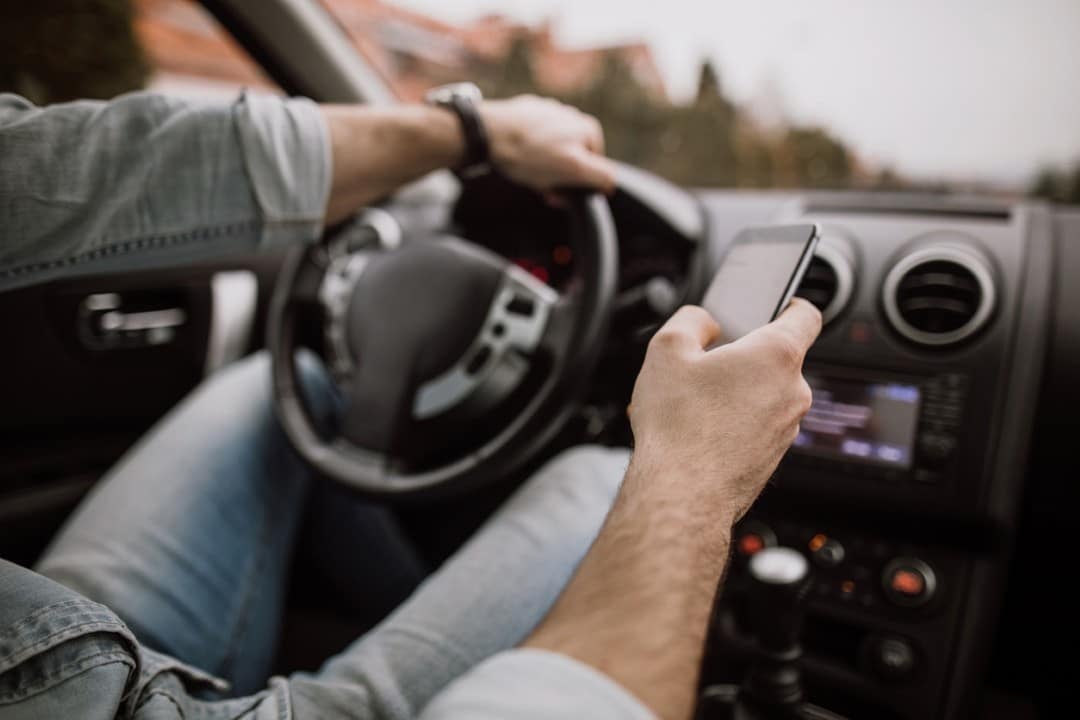
Manipulating the device compromises attention and drastically increases reaction time. Especialistas warn that the brain’s processing capacity is divided, diverting focus from the road environment.
Distraction and reaction time behind the wheel
Cell phone interference with cognitive capacity results in significant delays in decision making. The time to apply the brakes or perform an evasive maneuver can increase by more than 50% when the driver is distracted, crucial to avoiding collisions.
The visual and cognitive distraction generated by the smartphone causes the brain to ignore much of the environment. Mesmo a vibration diverts concentration, causing the driver to miss crucial details of the road.
Increased risks in different modes
The behavior of using a cell phone while traveling is not just restricted to car drivers, but extends to various road users. Motoristas of cars are often caught typing messages. Motociclistas and cyclists, who are more vulnerable, also replicate this behavior. Pedestres cross streets with their eyes fixed on the screen, oblivious to movement, increasing the chances of being run over. Esta chain of risky behaviors creates a scenario of collective vulnerability, where the distraction of one impacts the safety of many.
Penalties and enforcement in 2025
Traffic legislation has adapted to combat the misuse of cell phones while driving, with penalties that vary in severity. Falar on a cell phone without speakerphone results in fines and points.
Active manipulation of the device, such as typing messages, is a serious offense, with substantial fines and license suspension for repeat offenses.
Studies show that checking or typing texts while driving increases the risk of accidents by up to 400%, equivalent to driving under the influence of substances. Autoridades intensify inspections.
The post-use cognitive impact
Even after ending a call, the driver’s cognitive capacity may remain altered for several seconds. Esse “residual effect” keeps the mind processing the interaction, diverting focus from the direction.
Innovations and challenges in vehicle connectivity
Technological advances in vehicles seek to integrate smartphones in a safer way, offering systems for using applications and calling via voice commands. Dispositivos “hands-free” minimizes handling, but the mere presence of the system still challenges safety.
Despite innovations, navigation applications demand constant visual attention for real-time updates. Olhar to the screen to confirm directions takes your eyes off the road for critical moments, increasing the likelihood of incidents.
Consequences in emergency scenarios
Cell phone distraction has direct effects in situations that require a quick response. A common scenario is a delay in reacting to the green traffic light, hindering the flow.
This delay can cause irritation among other drivers, leading to risky behavior.
On high-speed roads, unexpected obstacles can go unnoticed by a distracted driver.
Lack of immediate response increases the risk of rear or side collisions, especially at busy intersections.
Accident prevention initiatives
Governments and road safety entities intensify educational campaigns to raise awareness about the dangers of distracted driving, focusing on the impact on reaction time.
Traffic authorities reinforce inspections, using technologies to identify and penalize drivers who use their cell phones inappropriately.
Smart alternatives for safe driving
To mitigate the risks associated with cell phone use, several safe alternatives are available, designed to keep the driver focused on the road. Current technology offers practical solutions that minimize the need for manual interaction with the device.
Among the most effective options for safer driving, the following stand out:
– Assistentes voice tools that allow you to process messages and make calls without touching your cell phone.
– Modos of direction on operating systems that mute notifications and redirect focus.
– Integração vehicle that displays essential information on the dashboard, reducing attention diversions.



