
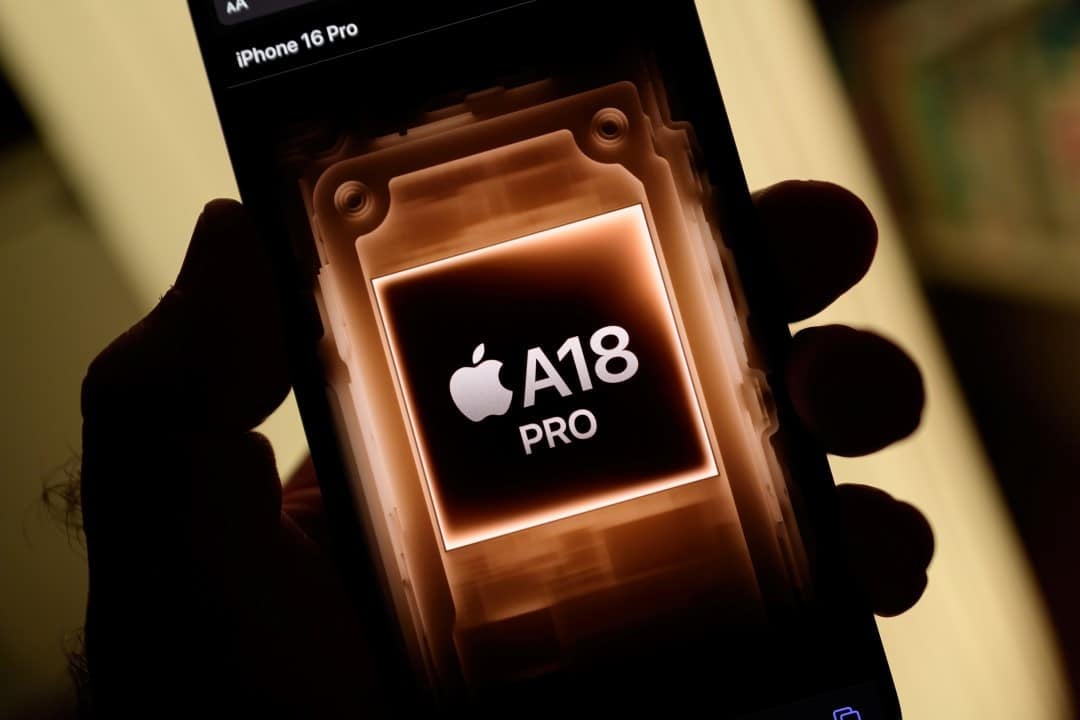
A detailed user-led test released on November 25, 2025, exposed significant divergences in the performance of Apple chips in recent smartphones. The iPhone 16 Pro Max, which incorporates the A18 intensive work.
The analysis compared the two devices under controlled conditions, seeking to assess their capabilities in single-core and multi-core operations. The A18 Pro, when kept at an ideal temperature, recorded 3,630 points in single-core and an impressive 9,638 points in multi-core, demonstrating its robustness in tasks that require continuous processing.
In contrast, the A19 Pro of the iPhone
Chip configurations and the design of iPhones
The A19 Pro chip, integrated into the iPhone Air, is a variant optimized for energy efficiency, with 6 CPU cores and just 5 GPU cores. Essa configuration aims to reduce battery consumption and adapt to the device’s ultra-thin profile, which measures just 5.6 mm thick, but imposes limits on performance under prolonged loads.
In contrast, the A18 Pro, present in the iPhone 16 Pro Max, has 6 complete GPU cores, manufactured using TSMC’s 3 nm technology. Quando assisted by external cooling, such as specific coolers for SSDs, this chip can maintain 90% stability in demanding graphics tests, such as 3DMark Steel Nomad Light, which is an indicator of its capacity.
Impact of cooling on performance
Independent test reports confirm that the phenomenon of thermal throttling impacts the iPhone Air more sharply and quickly. The absence of an internal vapor chamber in the design of the Air causes the A19 Pro to reduce its operating frequencies early in order to prevent overheating, which compromises the gaming and video editing experience.
On the cooled iPhone 16 Pro Max, the A18 Pro sustains peaks for longer. Isso results in up to 40% improvement in continuous performance, according to benchmark analyses, demonstrating the importance of thermal management to extract the maximum potential from advanced processors.
Data collected on platforms such as the Geekbench 6 demonstrates that, in single-core tests, the margin of difference is minimal, with the A19 Pro showing a 1.6% advantage over the cooled A18 Pro.
However, in terms of multi-core, the cooled A18 Pro takes the lead with a margin of 2.6%, a crucial factor for efficiently executing multiple tasks simultaneously and for processing complex data that requires all cores.
The adapted version of the A19 Pro
Apple introduced the iPhone Esta processor variation operates at lower frequencies, a measure necessary to accommodate the 3,149 mAh battery and the device’s exceptionally compact design.
This approach contrasts with the iPhone 17 models Pro and Pro Max, which employ the full version of the A19 Pro, equipped with 6 GPU cores and a vapor chamber for thermal management. Esses high-end models are capable of achieving scores of 4,019 in single-core and 11,054 in multi-core when subjected to forced cooling, highlighting the maximum potential of the chip.
The iPhone Air still offers an impressive user experience in everyday life, highlighted by its 6.5-inch Super Retina XDR screen with 120 Contudo, for heavy loads, thermal throttling can manifest itself after a few minutes of intensive use, limiting performance in more demanding applications.
iPhone 17 Pro thermal innovations
The iPhone 17 Pro models incorporate an advanced vapor chamber that uses deionized water, carefully incorporated into the device’s aluminum chassis. Esta technology is fundamental to the efficient dissipation of heat generated by the A19 Pro, enabling an increase of up to 40% in sustained performance compared to its predecessors, a significant advance for demanding users.
On the iPhone Air, the absence of a similar thermal system imposes the need for software adjustments to manage heat, limiting the A19 Análises point to gains of 15% in single-core and 20% in multi-core for the complete A19 Pro over the A18 Pro, but with cooling, the gap decreases, as seen in the test.
Advantages of A18 Pro in real scenarios
The experiment reinforces the idea that thermal management is a determining factor for high-performance chips, and the iPhone 16 Pro Max, from 2024, employs a 3 nm N3E manufacturing process, similar to the N3P of the A19 In practical use, the cooled A18 The Apple plans evolutions in 2026, but the experiment shows untapped potential in previous models, suggesting that the decision to upgrade should be based on specific needs, balancing between the preference for an ultra-thin design and the demand for raw and sustained power, a common dilemma in the technology market.
Benchmark data analysis
Detailed benchmark results provide a clear view of the differences between chips and their architectures. In single-core tests, the margin between the processors is minimal, with the A19 Pro slightly ahead at 1.6%, indicating similar efficiency for tasks using a single core.
For multi-core, however, the cooled A18



