

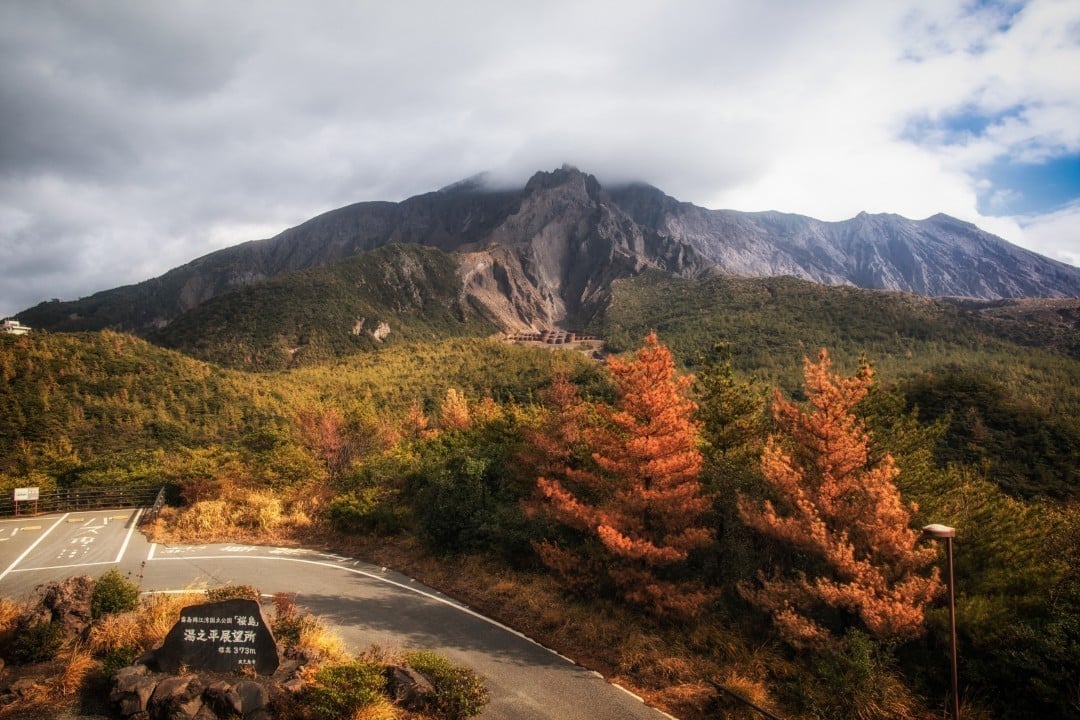
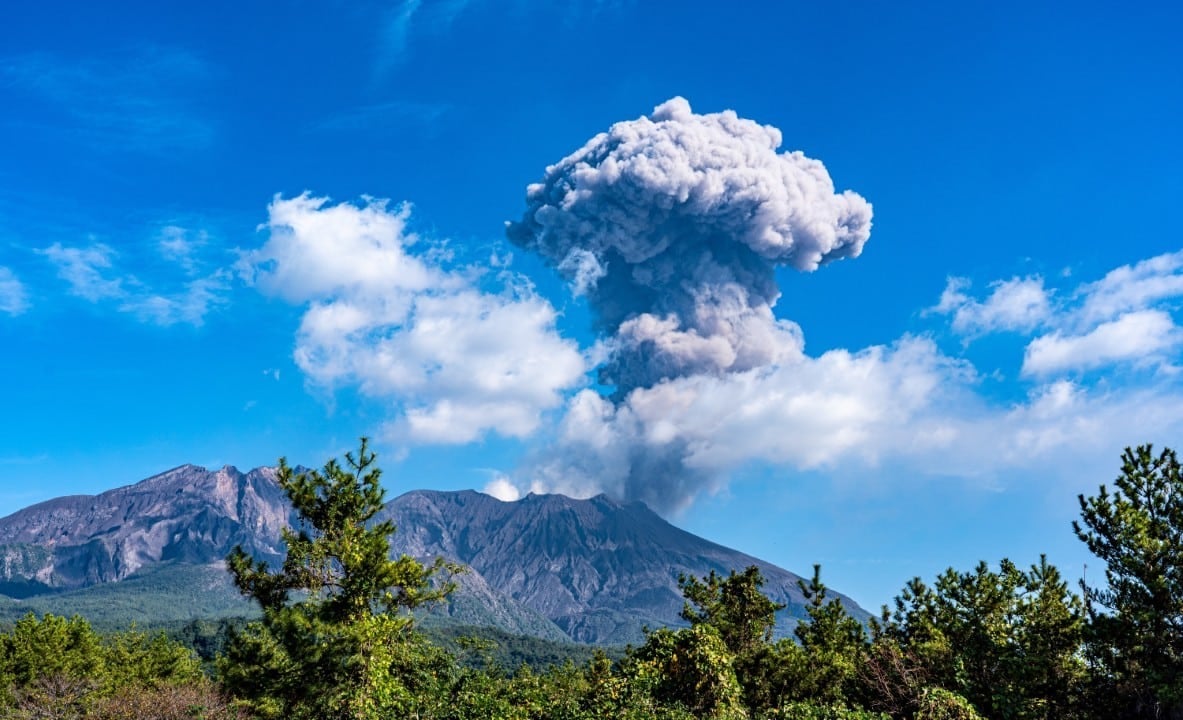
A new explosive eruption was recorded at the Sakurajima volcano, located in the province of Kagoshima, in the south of Japão, on Tuesday morning (9). The event, which occurred at precisely 9:02 am, projected a column of smoke and ash that reached an impressive height of 1,600 meters above the Minamidake crater. Local authorities have confirmed that, so far, there are no reports of injuries or significant material damage.
The volcanic plume, driven by winds, moves in a southeast direction, indicating the possibility of ashfall in urban areas of Kagoshima, as well as in parts of the neighboring province of Miyazaki. The Observatório Meteorológico of the Japão (JMA) issued a specific warning for the day, alerting the population about the potential impacts.
The volcanic alert level for Sakurajima remains unchanged, remaining at level 3 on a scale that goes up to 5.
Details of recent volcanic activity
Authorities confirmed that the eruption occurred exactly in the crater of the Minamidake peak, the most active of the Sakurajima complex, highlighting the constancy of geological activity in the region. The height of 1,600 meters was precisely measured by radar and monitoring cameras, which operate around the clock.
The amount of ejected material was classified as average, and initial observations do not indicate the presence of visible lava at the time of the main explosion. Este scenario is common for the volcano, which frequently features eruptions of ash and rocks.
Ash fall forecast in the region
The predominant wind direction takes the volcanic plume to the southeast, which raises the alert for the central areas of Kagoshima and the coastal regions of Miyazaki, where ash precipitation can be noted. Moradores of these locations received clear guidance to close windows and doors, protecting their homes and indoor air quality, as well as avoiding prolonged exposure to the outdoors. Ash, even in small quantities, can cause respiratory and eye irritation, and make visibility difficult. Além Furthermore, accumulation on roofs can represent a structural risk, depending on the intensity of the fall.
[[_0]
Alert level and access restrictions
Alert level 3, in force for Sakurajima, means that there is restricted access to the mountain and that nearby communities must be prepared for possible localized evacuations if volcanic activity intensifies. Desde 2018, the volcano operates continuously at this level due to its constant and unpredictable activity, requiring permanent surveillance.
Tourists and residents are prohibited from passing checkpoints strategically installed on roads leading to observation points such as Yunohira and other areas near the crater. Esta measure aims to protect human life from possible projections of incandescent rocks or pyroclastic flows, which can occur without prior warning.
History and constant monitoring of Sakurajima
Sakurajima is recognized as one of the most active volcanoes in Japão, recording hundreds of explosive eruptions annually. In 2025, the number of explosions has already surpassed the 300 mark by November, demonstrating the dynamic and persistent nature of its geological activity.
The last eruption with a plume higher than 2,000 meters was observed in October of the previous year, indicating that events of greater magnitude are part of its natural cycle. The responsible authorities maintain a rigorous monitoring scheme 24 hours a day, seven days a week.
This monitoring is carried out through an integrated network of seismographs, high-resolution thermal cameras and soil deformation sensors, which provide crucial data for risk prediction and assessment. The continuous collection of this information allows the JMA to issue accurate and timely alerts to the public.
Security measures and local response
The city of Kagoshima acted promptly, activating the disaster management center shortly after the most recent eruption, coordinating emergency response actions. Equipes specialists are checking the functioning and readiness of anti-ash shelters, which were previously installed in schools and gyms in the region to protect the population in the event of an intense fall of volcanic material.
The local airline implemented adjustments to flight routes to divert aircraft from the path of the volcanic plume, minimizing risks to aviation and ensuring passenger safety. Maritime transport, vital for the connection between Kagoshima and the Sakurajima peninsula, continues to operate normally, but with increased attention and constant monitoring of conditions.
Authorities also reinforce the importance of residents having prepared emergency kits, including masks, protective glasses and basic supplies. Effective communication with the population is a priority, using various channels to disseminate information and safety guidelines. Awareness and individual preparation are considered essential tools for community resilience in the face of volcanic events.
Guidelines for the local community
Observatório Meteorológico of Japão maintains constant alert for the possibility of large volcanic bombs being projected, specifically within a radius of 2 kilometers from the crater. Fluxos Pyroclastics, which are mixtures of hot gases and ash, also pose a significant risk within the same distance.
The population receives real-time updates through an official application and through a siren system strategically installed throughout the region, ensuring that information quickly reaches all those affected. Este integrated communication system is crucial for emergency management.
JMA Alerts and Communication
Volcanology experts say that the current activity, although intense, does not, so far, indicate a change to a higher alert level. The JMA continues to monitor the situation with the utmost attention.



