
Nasa scientists in 2025 unveil new insights from 3i atlas comet breakup data, shaping future interstellar object studies and planetary defense strategies

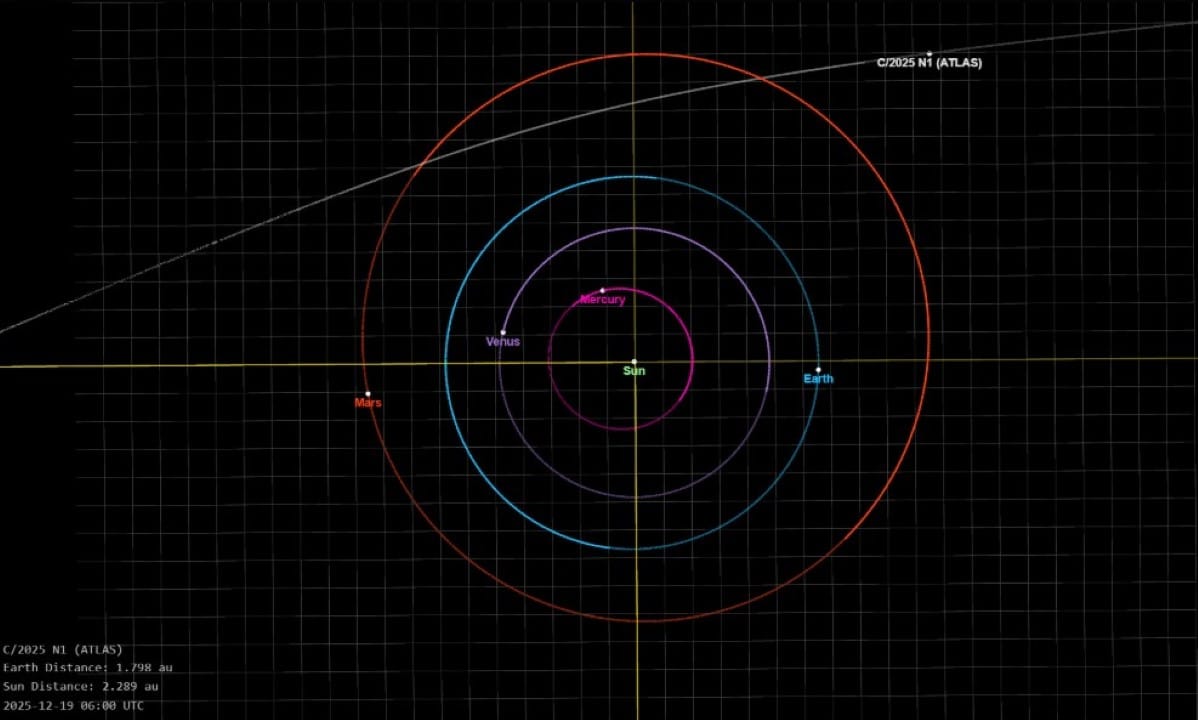
In 2025, new research from NASA is shedding further light on the dramatic disintegration of Comet C/2019 Y4 (ATLAS), commonly known as 3I Atlas, which captivated astronomers worldwide in early 2020. This ongoing analysis provides critical data points that are now influencing how the agency prepares for and responds to future celestial objects, particularly those originating from interstellar space.
The comet’s unexpected breakup offered an unprecedented opportunity to study the internal structure and volatile composition of an interstellar-like object, despite its solar system origin. Its orbital path closely mirrored that of the Great Comet of 1844, suggesting a shared lineage from a much larger parent body.
The latest findings reveal:
– Detailed mechanisms of cometary fragmentation under solar radiation pressure.
– Insights into the density and composition of subsurface ice and dust.
– Improved models for predicting the stability and trajectory of similar comets.
Ultimately, this deeper understanding aims to enhance planetary defense protocols and guide the development of future space missions designed to intercept or study potentially hazardous comets and asteroids.
Unraveling the 3I Atlas enigma
The 3I Atlas comet, initially hailed as a potential naked-eye spectacle, surprised observers by fragmenting into dozens of pieces as it approached the sun in April 2020. This rapid disintegration provided a unique, albeit challenging, dataset for astronomers. Its behavior defied many existing cometary models, pushing scientists to re-evaluate assumptions about the structural integrity of these icy wanderers.
NASA observatories, including the Hubble Space Telescope, captured an extraordinary sequence of images detailing the comet’s demise. This visual record, combined with spectroscopic data, offered a rare glimpse into the core of a comet, revealing layers that would otherwise remain hidden. The sheer volume and granularity of this data continue to be a fertile ground for new discoveries.
Advanced analytical methods in 2025
Scientists in 2025 are employing sophisticated computational techniques and machine learning algorithms to re-examine the extensive data gathered from 3I Atlas. These advanced analytical methods are capable of identifying subtle patterns and correlations that were previously undetectable, offering a more nuanced understanding of the forces at play during the comet’s breakup.
These techniques allow researchers to reconstruct the comet’s internal architecture, mapping out variations in material density and ice-to-dust ratios. Such detailed structural insights are crucial for understanding why some comets endure their journey around the sun while others, like 3I Atlas, succumb to tidal forces and solar heating. The models being refined in 2025 promise to improve predictions for other cometary visitors.
The application of these high-fidelity simulations is not only validating earlier hypotheses but also uncovering entirely new aspects of cometary physics. This ongoing effort by NASA and its international partners represents a significant leap forward in understanding these primordial remnants of the solar system.
Nasa’s evolving interstellar object strategy
The experience with 3I Atlas has directly influenced NASA’s strategic approach to identifying and characterizing interstellar objects, such as ‘Oumuamua and Comet Borisov. The comet’s trajectory and composition, though not truly interstellar, offered a valuable analog for studying objects originating from beyond our solar system, enhancing the agency’s preparedness for future encounters.
By 2025, NASA is investing in enhanced astronomical surveys and rapid-response observation capabilities. These systems are designed to detect faint, fast-moving objects, allowing for quicker analysis and potentially even mission planning should a truly unique interstellar visitor present itself. The lessons from 3I Atlas are integral to these upgrades, ensuring the scientific community is better equipped.
Implications for planetary defense
Understanding the precise mechanisms of comet disintegration is paramount for planetary defense. If a potentially hazardous object were detected, knowing how it might behave under stress from solar gravity or a targeted kinetic impact is vital for mission success. The 3I Atlas data provides a real-world case study for such scenarios, informing NASA’s strategies for mitigating potential threats.
This research contributes to predictive models for how comets might fragment, which could alter impact probabilities or even create multiple, smaller threats. Furthermore, the insights gained into cometary composition could influence choices for future deflection missions, guiding material selection and impact strategies. The ongoing analysis of 3I Atlas ensures that planetary defense remains at the forefront of NASA’s concerns, adapting to new data and evolving threats.
The search for parent bodies and fragments
The orbital similarities between 3I Atlas and the Great Comet of 1844 suggest they originated from a common, much larger parent comet that fragmented centuries ago. This hypothesis drives ongoing observational campaigns in 2025 aimed at identifying other potential fragments within the same orbital stream. Such discoveries could offer further clues about the original composition and history of this cometary family.
Astronomers are utilizing advanced sky surveys and ground-based telescopes to meticulously search for fainter, smaller objects that might be remnants of this ancient breakup. Identifying these fragments would not only confirm the parent body theory but also provide a broader dataset for understanding cometary evolution over millennia. The mystery of the 1844 comet’s progenitor is slowly being pieced together.
This hunt for related objects is a long-term endeavor, requiring persistent observation and sophisticated data analysis. Each potential fragment discovered adds a crucial piece to the cosmic puzzle, enhancing our understanding of how comets evolve and interact with their environment.
International collaboration and future missions
The study of 3I Atlas has fostered significant international collaboration among space agencies and research institutions. This shared effort ensures that the wealth of data is thoroughly analyzed from diverse perspectives, accelerating scientific discovery. Discussions are underway in 2025 for potential joint missions to comets or asteroids, building on the knowledge gained from 3I Atlas to design more effective and targeted probes.


