

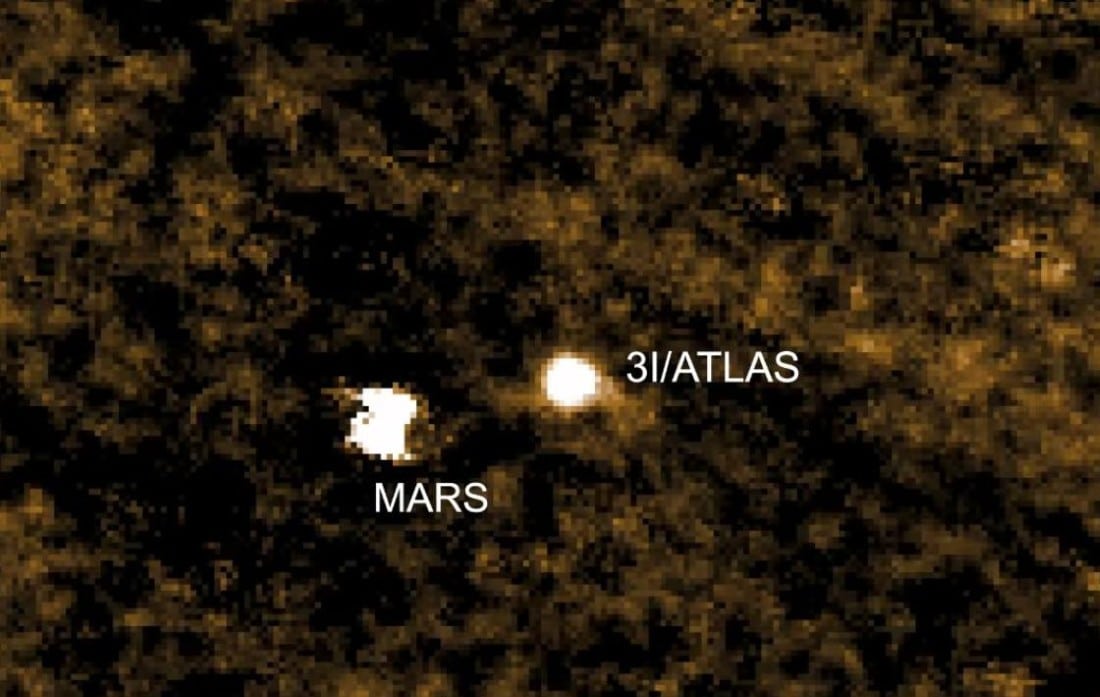
The interstellar comet 3I/ATLAS made its closest approach to Terra on December 19, 2025, passing approximately 270 million kilometers from the planet. Esse event marked the object’s closest point to our world, without any risk of collision, and occurred after perihelion in October.
Discovered on July 1, 2025 by the ATLAS system in Chile, 3I/ATLAS is the third interstellar object confirmed to cross the solar system. Sua hyperbolic trajectory indicates origin outside the gravitational influence of Sol, probably coming from the thick disk of Via Láctea.
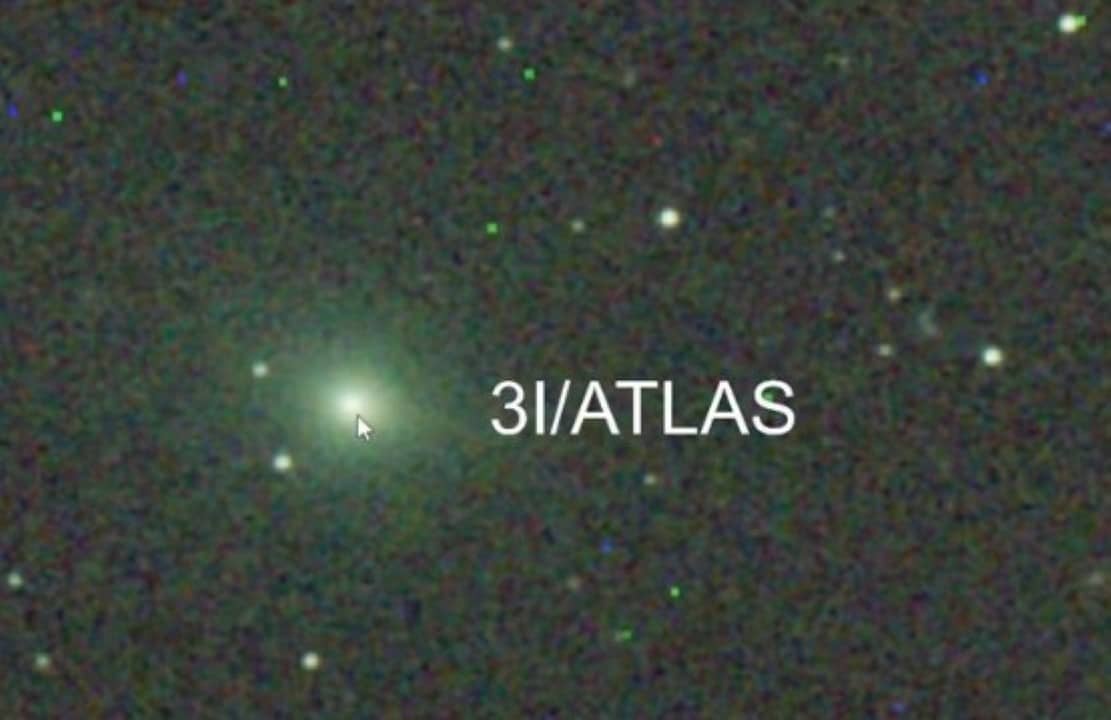
Astronomers from several space agencies followed the comet with telescopes such as the Hubble, which captured detailed images of its coma and tail.
- The object exhibited brighter than expected during the approach to Sol.
- Observations revealed a composition rich in water and possible primitive materials.
- Data collected helps understand comet formation in other star systems.
Now, 3I/ATLAS accelerates towards the outer regions of the solar system, preparing to definitively leave the vicinity of Sol.
Discovery and initial trajectory
The ATLAS warning system detected the comet in July 2025, when it was already within the orbit of Júpiter. Preliminary Análises quickly confirmed its interstellar nature due to the high speed and unbound orbit of Sol.
Pre-discovery observations extended the data into June, allowing for precise trajectory calculations. The object traveled at around 60 kilometers per second in relation to Sol, a typical characteristic of visitors from outside the system.
Ground-based telescopes at Havaí, Chile, and Austrália began immediate monitoring. Essas first images showed a diffuse coma, confirming cometary activity even at great distances.
Approach to Sol and observed surprises
Perihelion occurred on October 29, 2025, approximately 210 million kilometers from Sol, within the orbit of Marte. Nesse period, the comet unexpectedly brightened, surpassing comet-based predictions of Nuvem and Oort.
Satellites such as STEREO-A, STEREO-B, SOHO and GOES-19 recorded the phenomenon. Solar heating caused ice sublimation, expanding the coma and forming a visible tail.
Scientists attribute the extra brightness to the rapid release of gases and dust. Estudos indicate that the core may contain deep layers of water ice activated by radiation.
This activity provided valuable data on chemical composition. Espectroscopia revealed the presence of organic molecules and possible metals, differing from local comets.
Observations with space telescopes
Telescópio Espacial Hubble captured images in July and November 2025, revealing a teardrop shape in the coma and a faint tail. Essas observations helped estimate the core’s size at between 440 meters and 5.6 kilometers.
Missions like Parker Solar Probe recorded the comet between October and November. Instrumentos captured dozens of daily images during the passage.
The Juice probe, on its way to Júpiter, also observed the object in November. Telescópios like James Webb and XRISM detected X-ray emissions, a first for interstellar comets.
This multiwave data allows detailed analysis of the interaction with solar wind. Comparações with 2I/Borisov show similarities in gas release.
Ancient origin on thick disk
Trajectory analyzes suggest that 3I/ATLAS originates from the thick disk of Via Láctea, a region older than the thin disk where Sol is located. Estimativas indicate an age between 7 and 14 billion years, higher than the 4.6 billion of the solar system.
Astronomers from Universidade to Oxford highlight that the comet represents primordial material from another galactic era. Sua composition reflects ancient star formation conditions, with lower abundance of heavy elements.
This origin explains unique characteristics such as high brightness and persistent activity. The object acts as a cosmic time capsule, preserving chemistry from distant planetary systems.
Comparison with previous interstellar objects
3I/ATLAS follows 1I/’Oumuamua, from 2017, and 2I/Borisov, from 2019, as the third confirmed visitor. Diferente of ‘Oumuamua, without cometary activity, it displays clear coma and tail.
Compared to Borisov, it has greater brightness and a more eccentric trajectory. The three objects share hyperbolic orbits, confirming transient passage through the solar system.
- ‘Oumuamua: elongated shape, without visible coma.
- Borisov: prominent tail, composition similar to local comets.
- 3I/ATLAS: intense activity, possible advanced age.
These differences enrich the understanding of the diversity of interstellar bodies.
Data collected during the passage through Terra
The December 19 approach allowed for final detailed observations of Terra. Telescópios terrestrials captured the comet in the constellation of Leão, visible with amateur equipment.
Missions on Marte, such as ExoMars, refined orbital calculations during a close pass to the red planet in October. Precisão increased tenfold with this data.
Radio and optical observations continue until 2026. Cientistas hope to track variations in the coma as the comet moves away.
Final departure from the solar system
After approaching Earth, 3I/ATLAS heads towards the outer regions, accelerating to escape solar gravity. Ele will return to interstellar space, continuing its journey through Via Láctea.
Accumulated data will be analyzed for years, contributing to models of planetary formation. The comet highlights the rarity of such events, with only three detected so far.
Future missions, such as ESA’s Comet Interceptor, are preparing to intercept similar visitors. Essas opportunities expand knowledge about raw materials from other star systems.
3I/ATLAS remains observable for months with professional telescopes. Sua exit marks the end of a single study window.



