

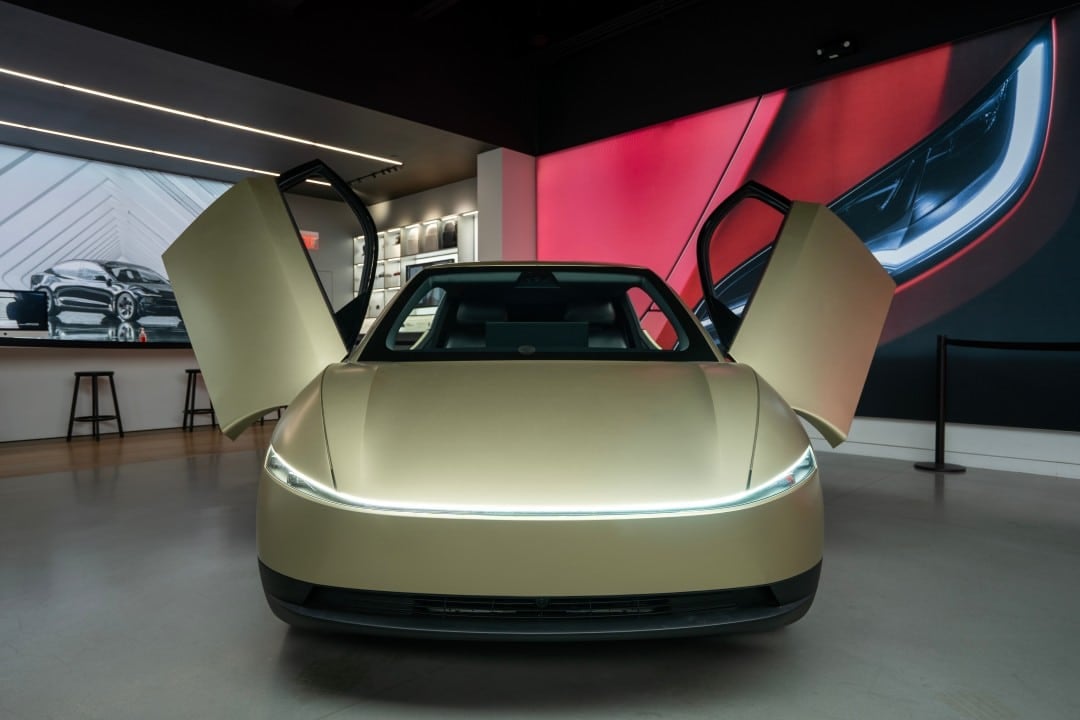
A prototype of the Tesla Cybercab was spotted circulating in the center of Austin, at Texas, marking the first time the autonomous vehicle has appeared on urban public roads. The incident occurred in December 2025, when an enthusiast recorded the robotaxi moving through local traffic. The vehicle had Texas manufacturer plates and a safety supervisor in the driver’s seat.
The Cybercab, designed without a steering wheel or pedals for fully autonomous operation, included temporary adaptations such as side-view mirrors. Essas modifications meet current federal vehicle safety standards in Estados Unidos. The Tesla uses these elements in engineering prototypes for initial testing on open roads.
Mass production of the Cybercab is expected to begin in April 2026 at Gigafactory Texas. Esse sighting indicates that the company is accelerating the validation phase in real traffic conditions.
Modifications to the prototype
The vehicle spotted differed from the models displayed at the event We, Robot in 2024. Aqueles prototypes did not have mirrors or manual controls. The example in Austin incorporated temporary triangular mirrors to comply with regulations.
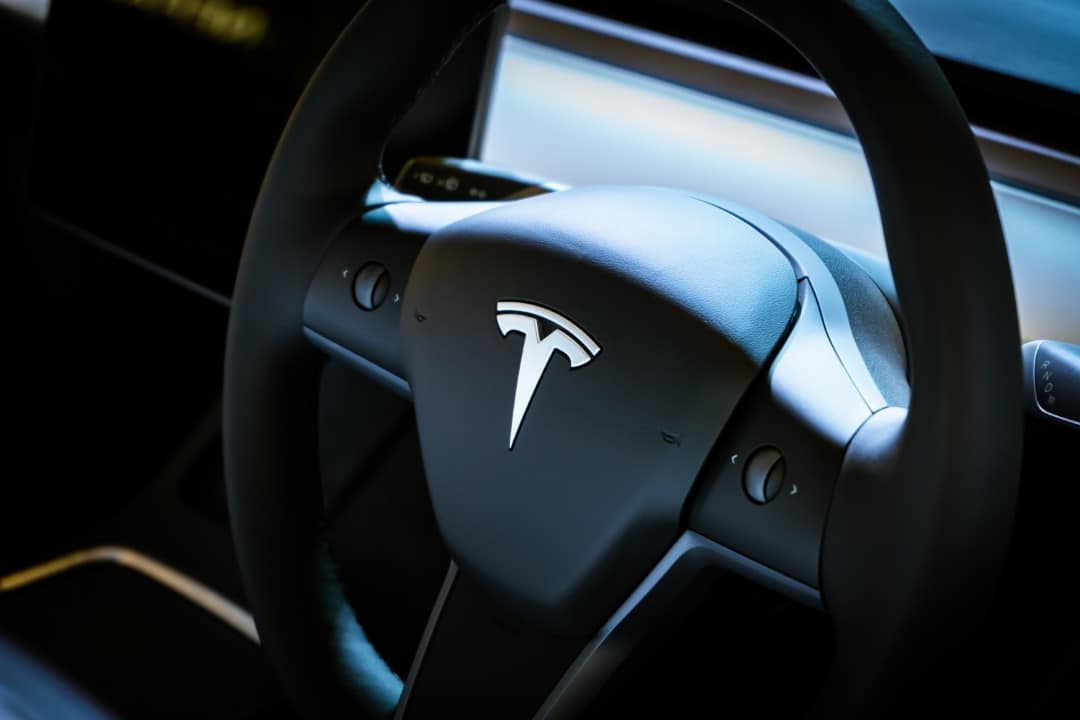
Although not visually confirmed, the presence of the supervisor suggests the installation of a temporary steering wheel. The Tesla has already used removable steering wheels in previous tests on the Gigafactory Texas. Essas adaptations allow data collection in real scenarios without violating current regulations.
- Added side mirrors for FMVSS compliance.
- Human supervisor for monitoring during testing.
- Matte gold finish maintained from the initial prototype.
- Manufacturer plates indicate engineering vehicle.
Reasons for the Human Supervisor
Tesla has been operating driverless Model Y-based robotaxis in Austin since December 2025. However, Cybercab requires a different approach due to the design without manual controls. Normas Federal authorities require mirrors and controls for vehicles on public roads.
The company is pushing for specific regulations for autonomous robotaxis. Enquanto that, prototypes include temporary elements. The supervisor collects qualitative data on driving comfort and smoothness.
These tests stress the Full Self-Driving system in complex urban environments. Engineers observe interactions with pedestrians, cyclists and traffic lights. Data refines the software for safe and enjoyable travel.
Validation phase on public roads
The sighting in the center of Austin represents progress in relation to internal tests at Gigafactory Texas. The vehicle navigated underground garages and busy streets. Essa exposure to real traffic validates performance in unpredictable conditions.
Tesla expands unsupervised testing with Model Y in the city. The Cybercab follows a similar path before being integrated into the robotaxi fleet. Austin serves as the company’s main hub for autonomous development.
With production four months away, teams are working intensely on finalizing the design. The vehicle will gradually replace models like the Model Y in autonomous transportation services. Inicialmente, the focus occurs in Austin and in the region of Baía of São Francisco.
Cybercab Technical Details
The Cybercab has a two-passenger configuration with butterfly doors. The minimalist interior eliminates traditional controls in favor of a central screen. The design reduces components by half compared to the Model 3.
This simplification aims for low costs and efficient production. The Tesla adopts an unboxed manufacturing process for fast cycles. The vehicle integrates inductive charging and advanced cameras for 360-degree vision.
- Butterfly doors for easy access.
- Absence of rear window in the final concept.
- Wide trunk despite its compact format.
- Wheels with optimized aerodynamic coverage.
Preparation for production
Gigafactory Texas has been preparing lines dedicated to Cybercab since 2025. Imagens internals show pilot assembly in progress. The company targets modest initial volumes with rapid ramp-up.
The robotaxi integrates into the Tesla autonomous transport network already operational with Model Y. Testes and Austin accumulate millions of virtual and real kilometers. The Full Self-Driving software evolves with over-the-air updates.
Public validation accelerates regulatory approvals in favorable states like Texas. Tesla collaborates with authorities on specific frameworks for driverless vehicles.
Recent advances in autonomy
Tesla reached milestones with empty Model Y robotaxis in Austin by the end of 2025. The Cybercab represents next generation purpose-built for autonomy.
Differences include the permanent absence of pedals and steering wheel in the production version. Current Adaptações are only for testing purposes. The vehicle prioritizes energy efficiency and reduced cost per kilometer.
These developments position Tesla at the forefront of urban autonomous transportation. The gradual integration into the existing fleet prepares expansion to more cities.
The sighting of Cybercab on public roads reinforces Tesla’s commitment to autonomous mobility. Testes in Austin proceed to refine the system before commercial launch. Production in 2026 marks the transition to the era of dedicated robotaxis.



