

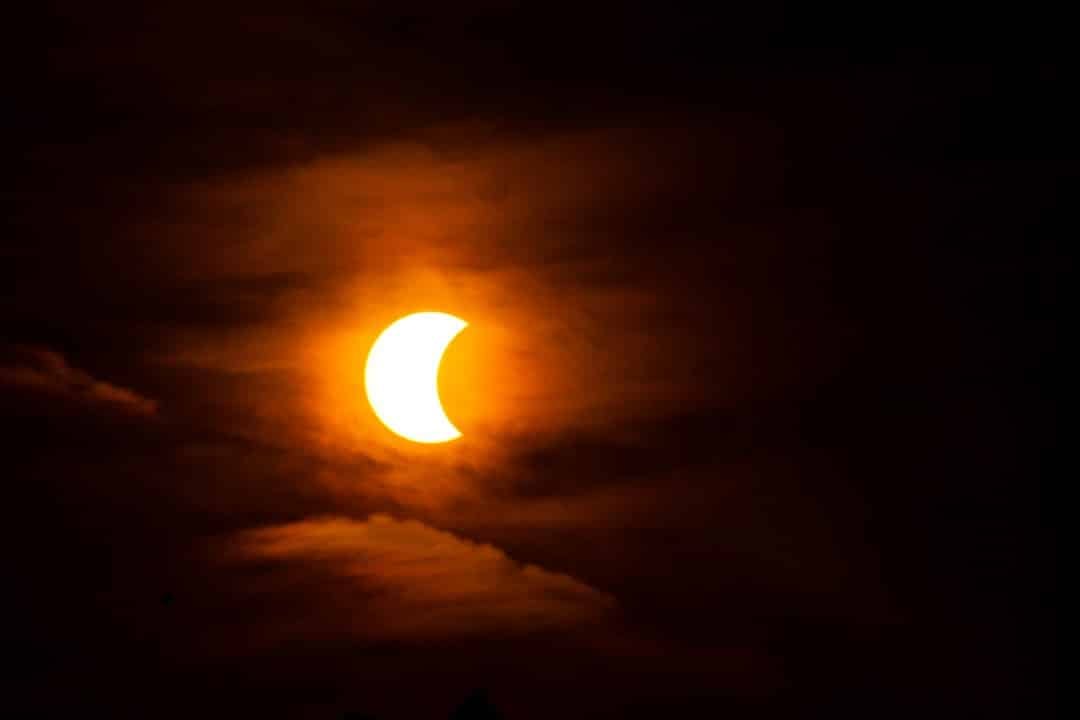
The total solar eclipse scheduled for August 2, 2027 will be the longest of the 21st century, with a maximum duration of totality of 6 minutes and 22 seconds. The Esse phenomenon will occur when the Lua is positioned exactly between the Terra and the Sol, completely blocking sunlight in a narrow band. Totality will be visible in parts of Europa, África and Oriente Médio, while neighboring regions will experience a partial eclipse. Especialistas highlight that the event coincides with lunar perigee, which increases the apparent diameter of Lua and prolongs the period of darkness.
The phenomenon attracts global attention due to the rarity of its prolonged duration and the trajectory that crosses areas of great scientific and tourist interest. Observadores will need to use appropriate eye protection equipment during partial phases.
How does a total solar eclipse occur?
The Lua passes between the Terra and the Sol, projecting a shadow that reaches the Earth’s surface. Essa shadow forms a narrow band called the umbra, where totality occurs. Fora of this band, partial eclipse occurs, with Sol appearing as a crescent. The process involves precise alignment of the three celestial bodies, which is only repeated at specific intervals.
The total phase allows you to see the solar corona, the external atmosphere of Sol, normally invisible. Durante these minutes, the sky darkens like twilight, and bright stars may appear.

Countries and regions with full visibility
The band of totality will cross ten countries: Espanha, Marrocos, Argélia, Tunísia, Líbia, Egito, Na Espanha, cities like Cádiz and Málaga will have totality. Em Marrocos, Tânger and interior regions offer good conditions. The Egito stands out with points like Luxor, where the duration reaches its maximum.
Other locations include Benghazi on Líbia and Jeddah on Arábia Saudita. The width of the band reaches 258 kilometers, covering an area of about 2.5 million square kilometers.
Duration and comparison with previous eclipses
The maximum totality of 6 minutes and 22 seconds surpasses the April 2024 eclipse, which lasted 4 minutes and 28 seconds. Esse record in the 21st century results from Lua at perigee, making its apparent diameter larger. The 2009 eclipse lasted 6 minutes and 39 seconds, but in oceanic or remote areas.
The 15,227-kilometer trajectory begins at Atlântico and ends at Oceano Índico. The event lasts about three hours in total, with partial phases before and after totality.
Preparing for Safe Observation
Observers must wear certified eclipse glasses during partial phases to avoid eye damage. Nunca look directly at Sol without protection. Durante completely, it is safe to remove the glasses, but the moment is brief. Sites specialists offer interactive maps to calculate exact local times.
Cities in the totality band plan events and infrastructure to receive visitors. Condições Favorable weather, especially in the north of África, increases the chances of clear skies.
Scientific importance of the phenomenon
Astronomers use long eclipses to study the solar corona and test instruments. The extended duration of 2027 allows for detailed observations of the solar atmosphere. Historical Pesquisas benefit from these events to understand variations in Sol.
The eclipse reinforces the importance of astronomical education and visual protection.
Impact on affected regions
Countries in the strip are preparing for an influx of tourists and scientists. Infraestrutura tourist attractions in places such as Luxor and Tânger expect an increase in demand. Autoridades provide guidance on security and logistics.
The phenomenon occurs in the morning in many regions, making observation easier.
Other nearby eclipses
After 2027, the next long total eclipse occurs in 2034. Eventos partial or annular eclipses will be visible in other parts of the world by then. The one in 2027 stands out for its combination of duration and geographic accessibility.



