


Scientists have announced the creation of the first two-dimensional continuous map of the surface of Alfvén, the outer limit of the solar atmosphere where material escapes to form the solar wind. The Essa boundary, known as the point where the speed of plasma exceeds magnetic waves, was mapped thanks to data collected by NASA’s Parker Solar Probe probe over several years.
The research combined direct observations of Parker with measurements from other missions, such as Solar Orbiter and spacecraft at the Lagrange L1 point. The results, recently published, show that this surface is not uniform and varies significantly with the 11-year solar cycle.
During six years of observations, the average surface height of Alfvén increased by about 30% as solar activity intensified. The Parker probe, launched in 2018, made multiple passes close to Sol, crossing this boundary on several occasions and providing direct validation of the remote estimates.
- Parker recorded surface crossings in recent perihelia.
- During periods of maximum solar activity, the probe dived deeper below this layer.
- The maps reveal an irregular structure, with protuberances and pointed shapes.
Parker Solar Probe Mission
The Parker Solar Probe represents a milestone in heliophysics exploration by getting closer to the Sol than any other spacecraft. Equipada With instruments like SWEAP, which measures solar wind particles, the probe collected essential data inside the solar corona.
These approaches allowed in situ observations of the sub-Alfvénic region, where the solar magnetic field still dominates. The mission remains active, with record passes in 2024 and 2025, contributing to refining models of the solar atmosphere.
Construction of the new map
The researchers used a remote data scaling technique to estimate the surface shape of Alfvén. Medições of solar wind at greater distances was projected to be close to Sol, and validated by direct crossings of Parker.
In two-dimensional representations in the equatorial plane, colored lines indicate estimates from different sources: black for L1 data, blue for Solar Orbiter, and red for Parker. The coincidence between these curves confirms the accuracy of the method.
Observed variations include a general expansion and greater irregularity during solar maximum. Essas changes directly affect the release of particles that make up the solar wind.
Variations in the solar cycle
The surface of Alfvén expands and becomes sharper with increasing solar activity. In periods of minimum, it presents a smoother shape; already at its maximum, it gains protuberances that the Parker frequently brushed against in its initial passages.
Only in two approaches during peak activity did the probe penetrate deeply below this layer. Essas observations cover the rise of solar cycle 25, which began recently.
The dynamics revealed help explain processes such as magnetic reconnection and turbulence in the corona. Dados future Parker promises even more detailed maps, including variations in latitude.
Scientific implications
Understanding the surface of Alfvén clarifies fundamental questions about the heating of the solar corona, which reaches temperatures millions of degrees higher than the visible surface. Essa boundary defines where the solar wind gains autonomy in relation to the solar magnetic field.
The maps contribute to space weather forecasts, which impact satellites, power grids and communications in Terra. Partículas energy from solar wind can cause interference in technological systems.
The research validates previous theoretical models about the expansion of the heliosphere. Observações direct data from Parker provide unique data for studying particle and wave acceleration in the corona.
Instruments and collaborations
Parker’s SWEAP instrument measured electrons, protons and alpha particles directly in the critical region. International Colaborações integrated data from Solar Orbiter, which observes Sol from intermediate distances.
Spacecraft at point L1 monitor the solar wind reaching Terra, allowing temporal correlations. Essa combination of perspectives has created the most complete portrait of the solar boundary to date.
Researchers highlight that Parker continues to dip into the corona, promising advances in heliisics.
Irregular shape of the border
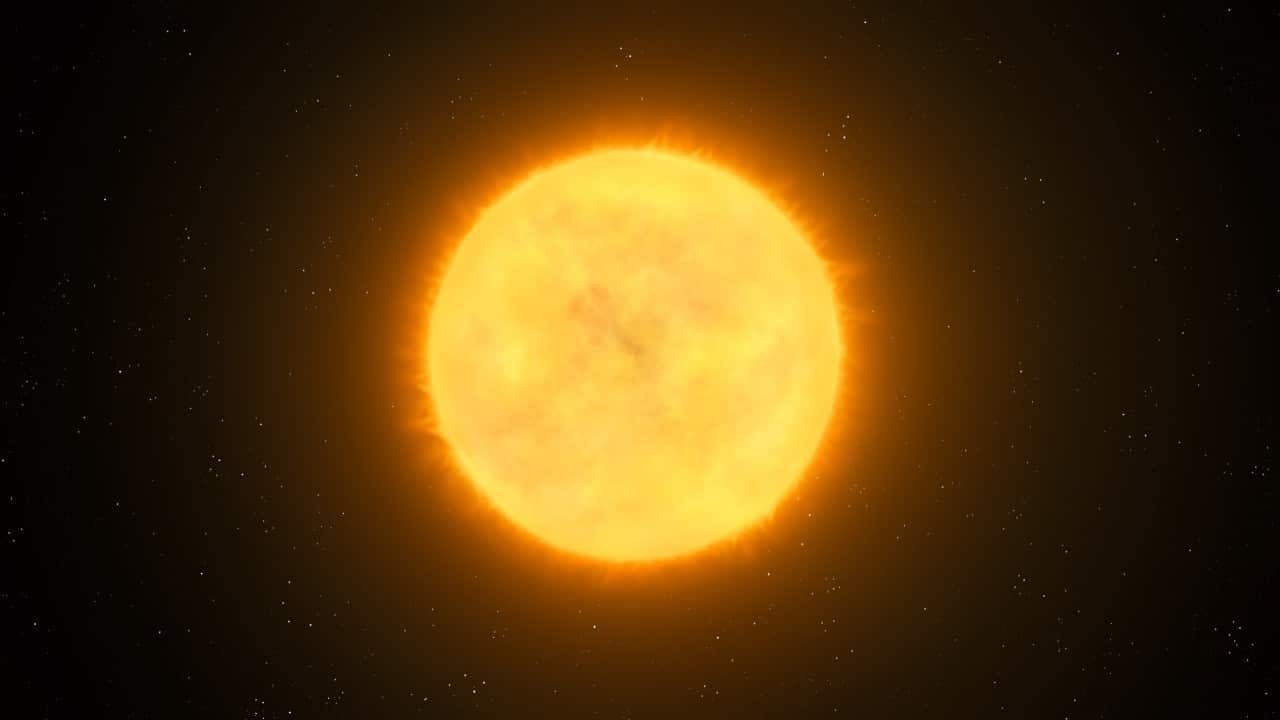
The surface of Alfvén has a spiny and foamy appearance, far from a smooth sphere. Protuberâncias vary with activity, creating a dynamic structure that evolves throughout the solar cycle.
In visualizations, the boundary appears irregular, with protrusions that Parker has crossed in multiple orbits. Essas irregularities reflect turbulence and instabilities in the coronal plasma.
The sharper shape at solar maximum confirms ancient theoretical predictions, now observed directly. Essa complexity influences the origin of structures such as switchbacks in the solar wind.
Space weather applications
Accurate maps of the surface of Alfvén improve models of solar wind propagation through the solar system. Previsões more accurate solar storms protect terrestrial infrastructure and space missions.
Understanding cyclical variations helps anticipate impacts on satellites and astronauts. The constant solar wind carries particles that interact with planetary magnetic fields.
Advances in this area benefit technologies dependent on GPS communications and navigation.



