Brics develops dollarless payments platform and provokes global discussion on financial autonomy

The countries of Brics, a group that includes Brasil, Rússia, Índia, China, África of The initiative, which seeks to reduce dependence on the Western financial system, dominated by the American currency and the Swift, gained strength with the support of leaders such as Brazilian president Luiz Inácio Lula da Silva.
The central proposal revolves around Brics Bridge, an innovative platform that aims to facilitate payments based on local currencies and blockchain technology. Esta movement reflects a growing desire for greater financial autonomy within the bloc, although experts differ on its real viability and potential global impacts.
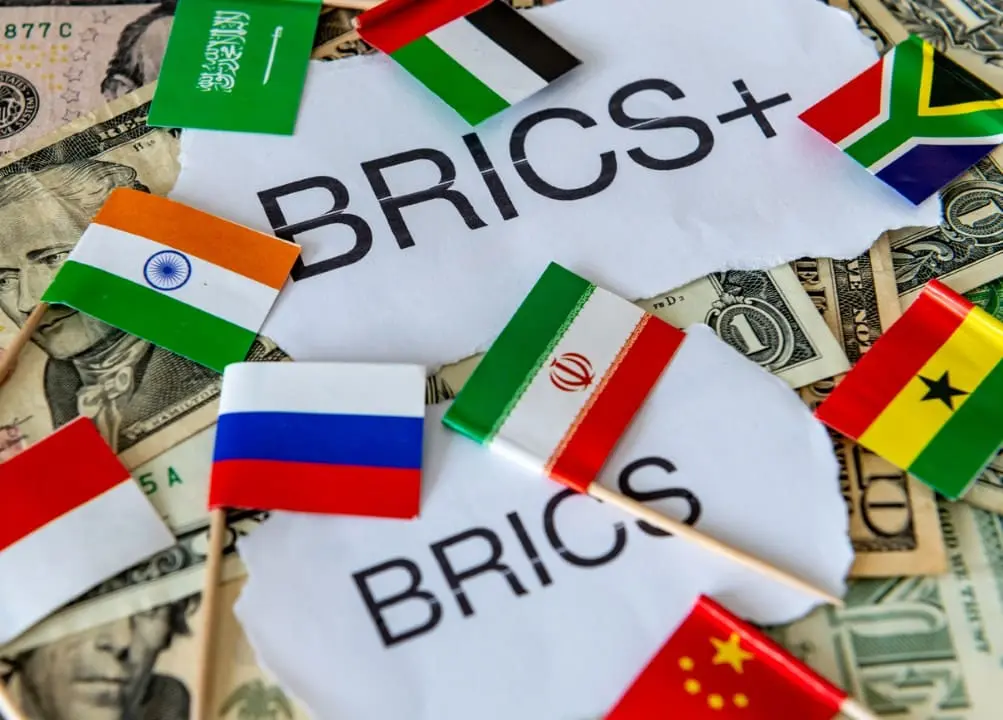
This advance occurs in a scenario of trade tensions with the Estados Unidos, which have signaled the possibility of tariffs against countries that challenge the hegemony of the dollar. Brics, with its proposal, seeks to solidify an alternative path for global trade and finance.
The Brics Bridge project and the search for autonomy
The Brics Bridge platform, which was one of the central themes of the Kazan summit, is the foundation of this new proposal. Rather than creating a single currency, the focus is on cross-border transactions with local currencies, using the security and efficiency of blockchain technology to process payments.
More on this story: BRICS members boost their own currency to reduce dependence on the dollar by 2026
Yuri Ushakov, advisor to Kremlin, highlighted in March 2024 that the system will be “convenient for governments, companies and citizens, as well as free from political pressure”. The mBridge project, precursor to Brics Bridge, has already reached a viable stage, capable of carrying out real transactions, and has the accession of new members, such as Arábia Saudita.
Interests of member countries in dedollarization
Each nation in Brics has specific reasons for promoting the creation of an independent financial system. Rússia, for example, is looking for a mechanism to maintain its global trade after the financial isolation imposed by Western sanctions since 2022.
China, holder of the second largest economy in the world, aims to internationalize the yuan, which currently represents a small portion of global trade compared to the dollar. Brasil, in turn, is committed to reducing transaction costs and strengthening ties with Sul Global partners, promoting economic integration.
The Brazilian experience and the expansion of the model
Brasil already has experience with transactions in local currencies through Sistema of Pagamentos in Moeda Local (SML) in Mercosul. In 2024, the country exported R$3.3 billion to Argentina through the SML, a volume that is still modest given the predominance of the dollar in almost all Brazilian exports.
President Lula’s government sees Brics Bridge as a strategic opportunity to expand this model, promising to reduce currency conversion costs and minimize exposure to external sanctions. However, large-scale implementation requires regulatory adjustments and infrastructure investments.
Geopolitical tensions and the commercial scenario
The Brics proposal comes in a period of increasing friction between the Brasil and the Estados Unidos. In 2025, the US imposed 50% tariffs on Brazilian products, a move interpreted as a response to the rapprochement of Brasil with nations under sanctions.
See Also



Learn more: Brics countries accelerate creation of digital financial system to replace the dollar in transactions
Former president Donald Trump, in November 2024, threatened 100% sanctions against countries that challenge the dollar, intensifying the debate. No Brasil, the opposition criticizes the government’s stance, warning of the risk of isolation on the global stage, while the government defends economic sovereignty.
Economic barriers and technical obstacles
The implementation of Brics Bridge faces significant obstacles, mainly due to a lack of economic synchrony among its members. China, with a substantially larger GDP, dominates intra-bloc trade, generating concerns in countries like Índia, which fears the preponderance of the yuan.
The financial infrastructure of some nations, such as África of Sul, also has limitations that can make it difficult to fully adhere to the system. Além Furthermore, the need for interoperable systems and large investments in blockchain represents a considerable technical challenge.
The volatility of local currencies and trade imbalances between members are other obstacles. Especialistas point out that the absence of a robust compensation mechanism can make transactions more expensive, moving away from the model of references such as the euro, which is based on a banking and fiscal union.
The role of blockchain technology in transactions
Blockchain technology is a central and innovative element of Brics Bridge, enabling secure and decentralized transactions. Isso significantly reduces dependence on Western financial intermediaries. mBridge, tested in 2024, has already demonstrated the ability to process real transactions between central banks.
However, large-scale adoption requires complex regulatory harmonization. Cada country needs to adapt its financial laws, a process that could take years. China’s technological leadership on the blockchain also raises questions about the distribution of influence within the block.
On the same topic: Brics Pay payment system advances to replace Swift with transactions in local currencies
The future of the global payments system
The advance of Brics Bridge signals a change in the global financial balance, with the bloc seeking greater protagonism. The 2026 summit, under Indian leadership, will be decisive for the next steps, as the Brasil continues to balance its position in a scenario of increasing economic polarization.