
Artificial intelligence reduces the spread of fake news about interstellar comet 3I/ATLAS by 94% By Jeronimo Santos
3 min read
 |
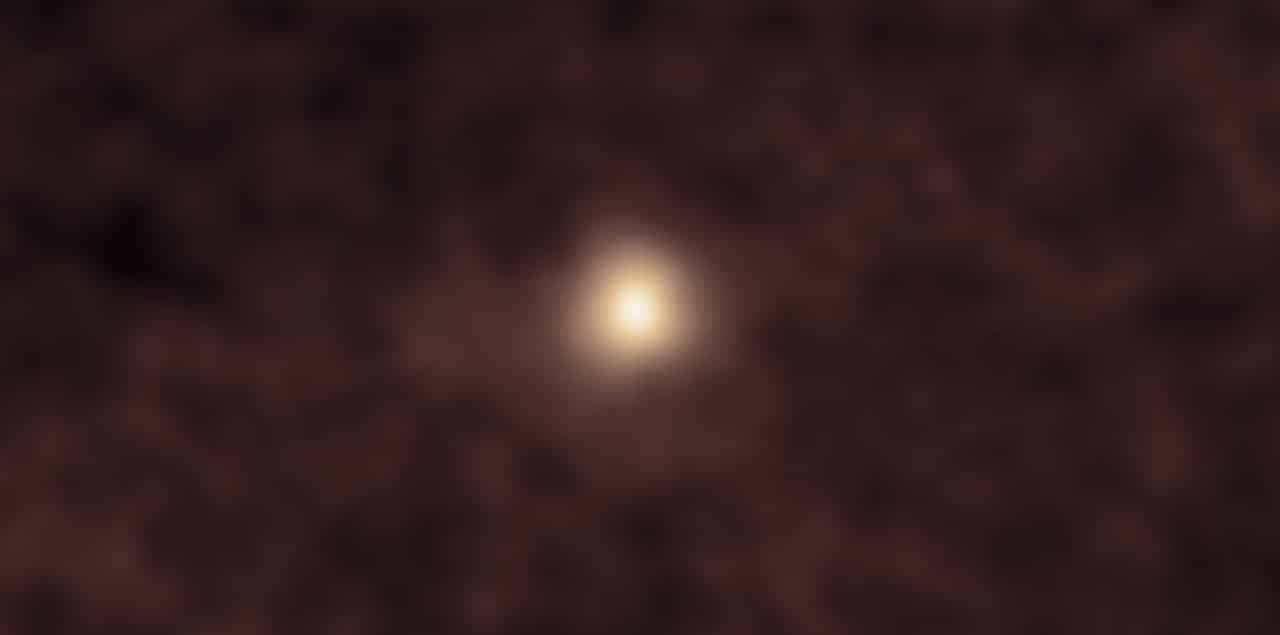
The interstellar comet 3I/ATLAS, discovered in July 2025 by the ATLAS telescope on Chile, generated a wave of misinformation on social media. The news of the presence of an object coming from outside the Sistema Solar provoked more than 12 thousand posts per hour shortly after the official announcement. In just a few months, the volume of content in English on the topic exceeded 5.7 million, many of them mixing scientific facts with unfounded speculation.
The speed at which the news spread fueled conspiracy theories, including claims that the comet was an extraterrestrial spacecraft. Physicist Avi Loeb contributed to the debate by highlighting unusual features of the object, although most observations confirm its natural nature as a comet with typical ice sublimation activity.
Explosion of false content on platforms
The fake posts appeared immediately after publication on Minor Planet Electronic Circular. Muitas of them misinterpreted preliminary data or used manipulated images to suggest artificial origins. Cerca of 62% of misinformation resulted from unintentional misunderstandings, while the remainder involved deliberate misinformation, including deepfakes and artificial voice-generated videos.
Digital platforms amplified sensationalist content, which spread at more than twice the speed of neutral reports. Seis YouTube channels with more than 50 thousand subscribers were responsible for 67% of misinformation, monetizing apocalyptic or conspiratorial narratives about the comet.
AI tool takes action against infodemic
Researchers developed AstroBERT-v2, a system based on artificial intelligence, to detect and combat the spread of fake news about 3I/ATLAS. The tool identifies questionable content and inserts links to verified sources directly below posts.
AstroBERT-v2 achieved 94% detection accuracy, reducing the average duration of fake news to just six hours. In an evaluation with 500 participants, 78% considered the interventions useful, and the level of acceptance of dubious content dropped by 25%.
Combination of AI and community verification
The tool worked in conjunction with community notes on platform X, where 1,042 publications received a valuable seal, resulting in a reduction of more than half in retweets of false content. Essa integrated approach demonstrated effectiveness even in the face of millions of posts related to the comet.
The success of AstroBERT-v2 reinforces the potential of artificial intelligence to assist in moderating information on complex scientific topics. Especialistas highlight that the technology does not replace human verification, but offers essential support in high-speed dissemination scenarios.
Persistent challenges in the digital age
Despite advances, misinformation remains challenging, especially when amplified by algorithms that prioritize emotional engagement. The case of 3I/ATLAS illustrates how rare astronomical events can generate waves of false content on a global scale.
Responsible use of AI, combined with community engagement, can mitigate negative impacts. The episode highlights the importance of reliable sources and rapid verification to preserve the credibility of scientific information.











