
Petrobras and Vale buoy Ibovespa against 2025 year-end dip while dollar gains ground

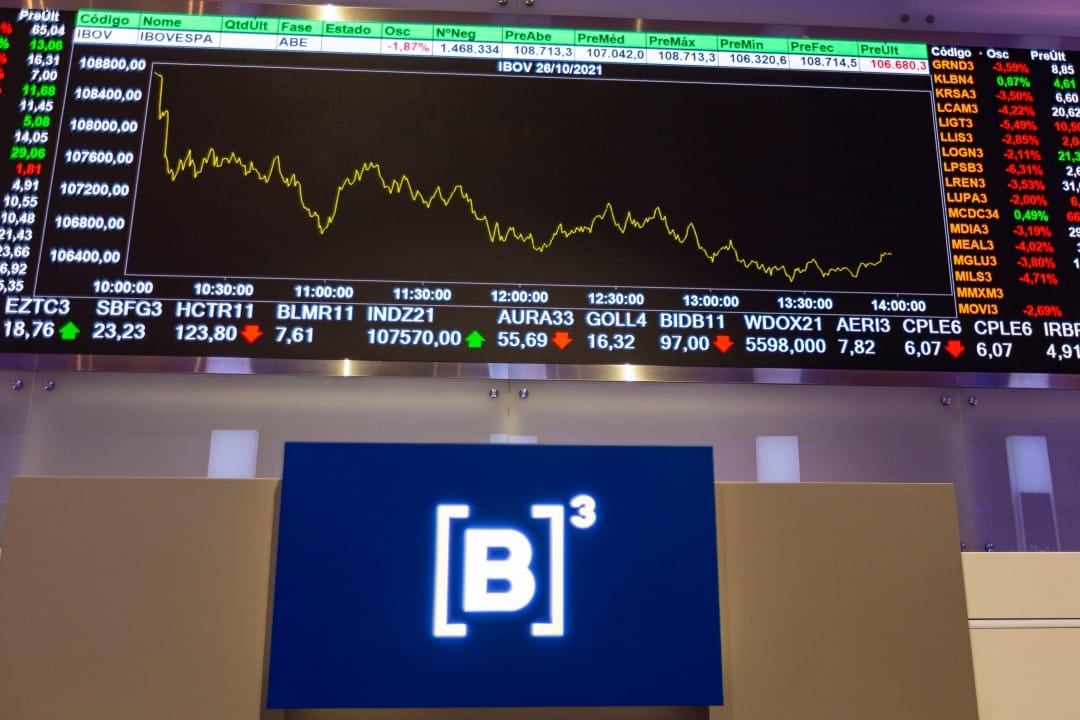
Brazil’s benchmark Ibovespa index opened the trading day on Monday, December 29, 2025, with an initial period of stability, later experiencing a marginal decline. This occurred during the year’s penultimate trading session, a period typically characterized by subdued market activity ahead of the upcoming New Year’s Eve holidays. Investors remained attentive to global cues while navigating reduced liquidity.
The market’s early dynamics were significantly influenced by rising commodity prices across international markets, particularly for crude oil and iron ore. These robust external factors provided a solid boost to key Brazilian blue-chip stocks. Major companies like Petrobras and Vale, heavily weighted in the index, directly benefited from stronger demand and higher prices for their exports.
Concurrently, the U.S. dollar experienced a slight upward trend against the Brazilian real in early trading. This minor appreciation, reflecting a broader pattern of reduced liquidity in global markets, limited pronounced movements in currency and other domestic assets. The holiday season often sees thinner order books, amplifying the impact of even minor shifts.
Market dynamics: Commodities fuel equity gains
The Ibovespa, a crucial barometer for the Brazilian stock market, initially showed resilience as global commodity markets posted gains, directly benefiting major players within the index. This early strength was particularly notable for shares of Petrobras, the state-controlled oil giant, and Vale, one of the world’s largest iron ore producers. Both companies responded positively to higher prices for their respective exports, providing a foundational lift to the broader market. Investors closely monitored these movements, as the performance of these heavyweights often sets the tone for the entire equity landscape. Despite this sectoral support, the market’s overall direction remained susceptible to external pressures.
However, the index struggled to maintain its initial upward momentum as the morning progressed, ultimately facing a slight downturn. By 10:20 AM local time, the Ibovespa had registered a 0.23% decrease, trading around 145,521 points. This modest retreat underscored the cautious sentiment prevailing in a market with thinning volumes, where even strong sectoral performance can be outweighed by broader liquidity concerns. Such conditions frequently lead to amplified reactions to news, making precise market prediction challenging during holiday periods. The overall market activity suggested a wait-and-see approach from many participants.
Currency fluctuations amid holiday season
The Brazilian real faced headwinds against the U.S. dollar, with the greenback rising 0.62% to R$ 5.257 in early morning trading, reflecting a confluence of factors typical for year-end. This uptick in the dollar was largely attributed to the usual reduction in market liquidity experienced globally, as many institutional players and traders scale back their operations for the festive period. Thinner order books resulting from this decreased activity can lead to more volatile price swings on smaller volumes, causing the dollar to strengthen with less resistance. While not an aggressive move, the consistent upward pressure on the dollar signaled a broader trend of cautious capital allocation. Investors sought safety or adjusted portfolios in anticipation of the new fiscal year, further contributing to the real’s depreciation. The reduced trading activity amplified the impact of even minor shifts in supply and demand for foreign exchange, creating an environment where the dollar’s appreciation was more pronounced than usual. Market participants often prepare for such dynamics, adjusting their positions accordingly to mitigate risks.
Inflation expectations revised downward
Domestic economic indicators provided additional context to the market’s movements, with the latest Focus survey from the Central Bank revealing updated inflation expectations. Analysts slightly reduced their projections for the Extended National Consumer Price Index (IPCA) for both 2026 and 2027. These revisions signal a potential easing of future price pressures, offering a more optimistic economic outlook.
For 2026, the median estimate for the IPCA saw its seventh consecutive marginal reduction, now falling to 3.95% from the previous week’s 3.96%. This consistent downward revision reflects a growing consensus among economists regarding the effectiveness of current monetary policies. It also suggests a more optimistic outlook on the central bank’s ability to maintain inflation control.
Similarly, the expectation for the IPCA in 2027 recorded its sixth consecutive cut, moving to a median of 3.75% from 3.76% a week prior. These adjustments underscore the Central Bank’s ongoing efforts to anchor inflation expectations firmly within its target ranges. Such positive developments often lay a clearer path for future interest rate decisions.
Broader economic indicators for year-end
Beyond the Focus survey, other crucial economic data released early in the day offered a comprehensive view of Brazil’s economic health as 2025 drew to a close. These reports provide essential insights into the broader financial landscape that investors navigate, influencing long-term strategies. Understanding these metrics is vital for anticipating market shifts.
The General Market Price Index (IGP-M), often dubbed “wholesale inflation,” was another key metric closely watched by analysts, reflecting costs at various stages of production. For December 2025, the Fundação Getulio Vargas (FGV) reported a negative variation of 0.05%, indicating a deflationary trend in wholesale prices for the month. This specific figure surprised some market watchers.
This December figure led to an accumulated decline of 0.85% for the IGP-M over the entire year of 2025. The persistent negative performance of this index suggests a softening in producer prices, which can eventually translate into lower consumer prices. This trend further supports the central bank’s inflation control efforts, contributing to overall economic stability.
Such broad indicators, alongside the stock market and currency movements, collectively paint a picture of an economy grappling with global influences while domestic policies work to stabilize key macroeconomic variables. The confluence of these factors shapes the decisions of investors and policymakers alike. These analyses are crucial for setting the tone heading into the new year.
Trading volumes and investor sentiment
The reduced trading volumes observed across both equity and currency markets highlighted a typical year-end trend, significantly impacting market dynamics. With many market participants already on holiday, the thinner liquidity conditions often exaggerate price movements. This can make markets more sensitive to even smaller buy or sell orders, leading to swift, unpredictable shifts.
This environment typically leads to more cautious trading strategies, as major institutions often avoid making significant bets that could be disproportionately impacted by the lack of depth in the market. Investor sentiment remains largely watchful, awaiting a return to full liquidity and clearer directional signals in early 2026. This period encourages prudence rather than aggressive positioning.
What to watch in the new year
As 2025 concludes, market participants are already shifting their focus to the economic calendar and corporate earnings reports anticipated in early 2026. They are seeking fresh catalysts and clearer guidance on the trajectory of interest rates, inflation, and global growth. These insights will be crucial for shaping investment strategies in the upcoming year.
Futures contracts and market outlook
Even amidst the general market softness, the shortest-term futures contract, INDG26 (expiring February 18, 2026), showed a marginal gain of 0.04%. This reflected selective optimism among some traders regarding short-term market stability or potential recovery points in the near future. Such small movements can sometimes hint at underlying positive sentiment.



