
Comet 3I/ATLAS generates millions of false posts and AI reduces dissemination in hours By Janderson Luiz
4 min read
 |
The interstellar comet3I/ATLAS, discovered in July 2025 by the ATLAS telescope on Chile, quickly became the third confirmed object coming from outside Sistema Solar. Sua hyperbolic trajectory and extrasolar origin generated immediate scientific interest, but also triggered an avalanche of false information on social media. Pesquisadores logged millions of posts in just a few months, with narratives that ranged from unintentional errors to deliberate misinformation.
Dissemination occurred at an accelerated pace soon after the initial electronic circular publication of Minor Planet Center. Specific Canais on YouTube accounted for much of the sensationalist content, while deepfakes and AI-generated voices amplified unsubstantiated claims. Algoritmos of digital platforms favored emotional materials, allowing alarmist posts to spread faster than reports based on telescopic observations.
Discovery and characteristics of the object
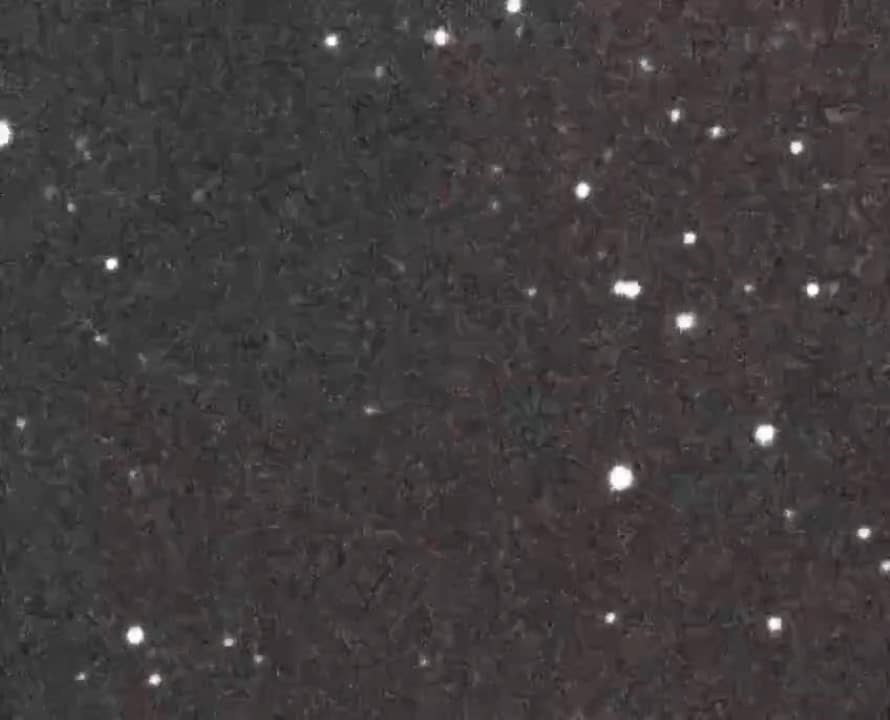
O 3I/ATLASit was identified as an active comet, with an icy nucleus and a coma of dust and gas. Observações from Hubble and other telescopes revealed a composition rich in carbon dioxide and nickel, differing from comets from Sistema Solar.
Its high speed, exceeding 58 km/s upon entering the system, confirmed its interstellar origin. The object passed perihelion in October 2025 and approached Terra in December, without risk of collision.
Speculation about artificial origin arose from interpretations of orbital and compositional anomalies. Astrônomos emphasized that such characteristics can be explained by natural processes in bodies from other stellar systems.
Explosion of online misinformation
The news about the3I/ATLASgenerated more than 12 thousand posts per hour in the first moments. Até October, the volume of content in English reached 5.7 million.
Around 62% of falsehoods resulted from erroneous readings of ephemeris data, without malicious intent. The rest involved deliberate manipulation, including fake videos and apocalyptic narratives.
- Six YouTube channels with more than 50 thousand subscribers accounted for 67% of misinformation.
- Deepfakes appeared in 4% of cases.
- Synthetic voices drove 11% of fake content.
Sensational content spread twice as fast as verified neutral information.
Sources and amplification of falsehood
Social platforms prioritized emotional engagement, regardless of veracity. Certos influencers and public figures contributed to narratives parallel to scientific data.
Manipulated videos simulated expert statements, distorting real research. Imagens fakes and montages went viral, claiming artificial forms or extraterrestrial signals.
Space agencies maintained initial silence on rumors to avoid further amplification. Observações coordinates confirmed typical cometary behavior, with no evidence of technology.
Development of AstroBERT-v2
Researchers created the systemAstroBERT-v2, based on artificial intelligence specialized in astronomical content. The tool detects fake news with 94% accuracy and automatically inserts links to verified sources.
The mechanism reduced the lifespan of pseudonews to about 6 hours. In tests with 500 participants, 78% found the interventions useful.
Conviction in dubious content fell by 25% among recipients. Notas community posts on platforms like X achieved 73% effectiveness across more than a thousand posts.
Results and impact of the intervention
The combination of AI and community participation decreased misinformation retweets by more than 50%. The case of3I/ATLASdemonstrated scalability of automated tools against mass infodemics.
Rare astronomical events remain vulnerable to digital manipulation. Sistemas like AstroBERT-v2 represent progress in combating falsehoods in real time.
The experience reinforces the potential of artificial intelligence as an ally in preserving informational integrity. Observações scientific research continues, focusing on the comet’s composition and trajectory to better understand interstellar origins.
Lessons from the 3I/ATLAS case
The episode exposed weaknesses in the global information space in the face of scientific discoveries. Milhões of posts illustrated the speed of propagation of unverified narratives.
AI tools emerge as an essential resource for mitigating damage at scale. Integração with community moderation increased the effectiveness of countermeasures.
Future research could refine models for specific contexts, such as astronomy. The balance between engagement and veracity remains a challenge for digital platforms.
Advances in automated detection
O AstroBERT-v2processes content in real time, identifying patterns of astronomical disinformation. Sua architecture adapts language models to precise scientific terminology.
Similar implementations are being tested on other conspiracy-sensitive topics. Resultados indicate a significant reduction in the spread of emotional falsehoods.
Collaborations between academics and platforms accelerate the deployment of solutions. The case sets a precedent for quick responses to waves of fake news.
The comet3I/ATLASfollows the exit trajectory of Sistema Solar, offering valuable data on extrasolar materials. Observações continue through ground and space telescopes.
The experience with misinformation highlights the need for public science education. Ferramentas of AI complements human efforts in fact checking.
The episode reinforces the importance of official sources in high-profile events. Avanços technological technologies promise greater resilience against future digital manipulations.











