

The US currency registered a significant devaluation in the first trading session of January, reflecting a combination of macroeconomic factors and the usual reduction in activities after the year-end recess. Investidores followed the movement with caution, given the more contained volume of operations in the financial market.
At the time, the spot currency showed a drop of 0.97%, being quoted at R$5.436 on sale at around 9:58 am. Este performance marked the beginning of foreign exchange operations for the period, with the expectation of a more robust agenda in the following days.
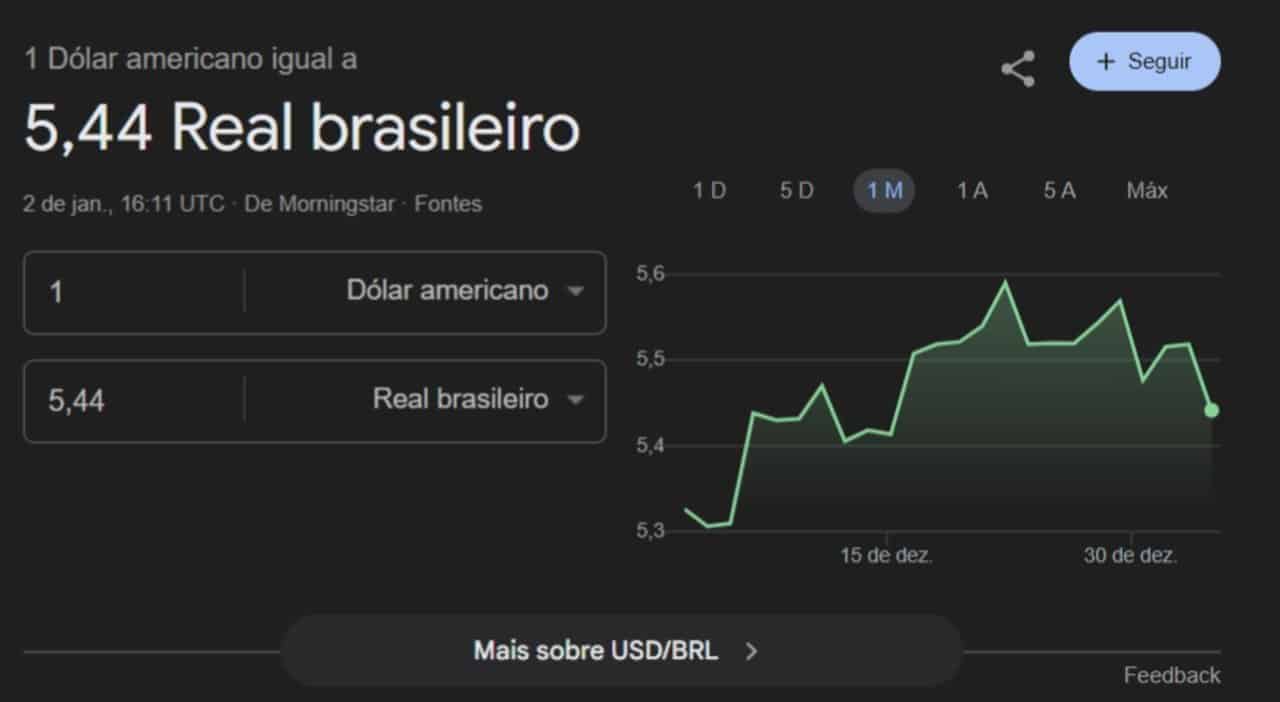
The scenario of lower liquidity, directly influenced by the Ano Novo holiday and the absence of important economic indicators, contributed significantly to the volatility observed in the period. Exchange rate movement is an important indicator for the direction of financial policies.
Market price fluctuation
The closing of the exchange session indicated a notable variation, with the dollar spot ending the day at a lower level. Esta initial oscillation serves as a thermometer for trends that may consolidate over the months of greatest activity in the financial market.
Simultaneously, on B3, the dollar futures contract expiring in February, which currently holds the highest liquidity in the country, also followed the downward trend. Houve a decrease of 0.55%, placing the price at R$5.5490, reinforcing the perception of a less heated market at the turn of the year.
Factors behind appreciation
The economic agenda at the beginning of the year was particularly empty, with little relevant data released both nationally and internationally. Essa The absence of new information tends to reduce the impetus for large bets or divestments by market operators.
Additionally, reduced liquidity is a common phenomenon during this period, with many market participants still in recess or adjusting their strategies for the new cycle. The reduced availability of money for trading amplifies the effect of any movement, however small.
The expectation is that as the agenda fills with inflation reports, employment data and monetary policy decisions, the foreign exchange market will be able to show a more defined direction, leaving the waiting period characteristic of the beginning of the year.
Global scenario and external influences
International events also play a role in shaping the exchange rate of the American currency. The perception of the economic health of great powers and the policies adopted by their central banks directly influence investor confidence in risky assets.
Interest rates in other countries, especially in Estados Unidos, are always a point of attention. An increase can make investments in dollars more attractive, while a reduction can discourage capital entry, affecting exchange flow.
The search for security in times of global geopolitical or economic uncertainty can also lead to a “flight to quality” movement, where investors seek assets considered safer, such as the dollar, changing their price. Surveillance over these factors is constant.
Expectations for the near future
The financial market now turns its eyes to upcoming announcements and developments, looking for clues about the direction of the economy. The release of price indices and reports on the labor market will be crucial to redefine investor strategies.
Analysts predict that the dollar exchange rate may undergo further fluctuations as the economic agenda intensifies. The full reopening of markets after the holidays will bring a greater volume of trading and, consequently, liquidity closer to normality.
Central bank activity and exchange rate
Banco Central plays a fundamental role in stabilizing the foreign exchange market, through direct interventions or verbal signals. Suas actions aim to mitigate excessive volatility and ensure the functionality of the economy in relation to international transactions.
The decision to intervene, whether by selling reserves or offering currency swap contracts, depends on the assessment of the scenario and the perception that the exchange rate is moving away from economic fundamentals. Essa careful posture is essential for market confidence.
Implications for everyday life
The variation in the exchange rate of the dollar, even if occasional at the beginning of the year, has repercussions on several sectors of the economy. Empresas that depend on the import or export of inputs and products are directly affected, impacting their costs and revenues.
For consumers, the devaluation of the American currency could, in theory, make imported products cheaper or reduce the cost of international travel, although these effects will take time to be felt on the final end. Acompanhar the quote is essential for financial planning.



