

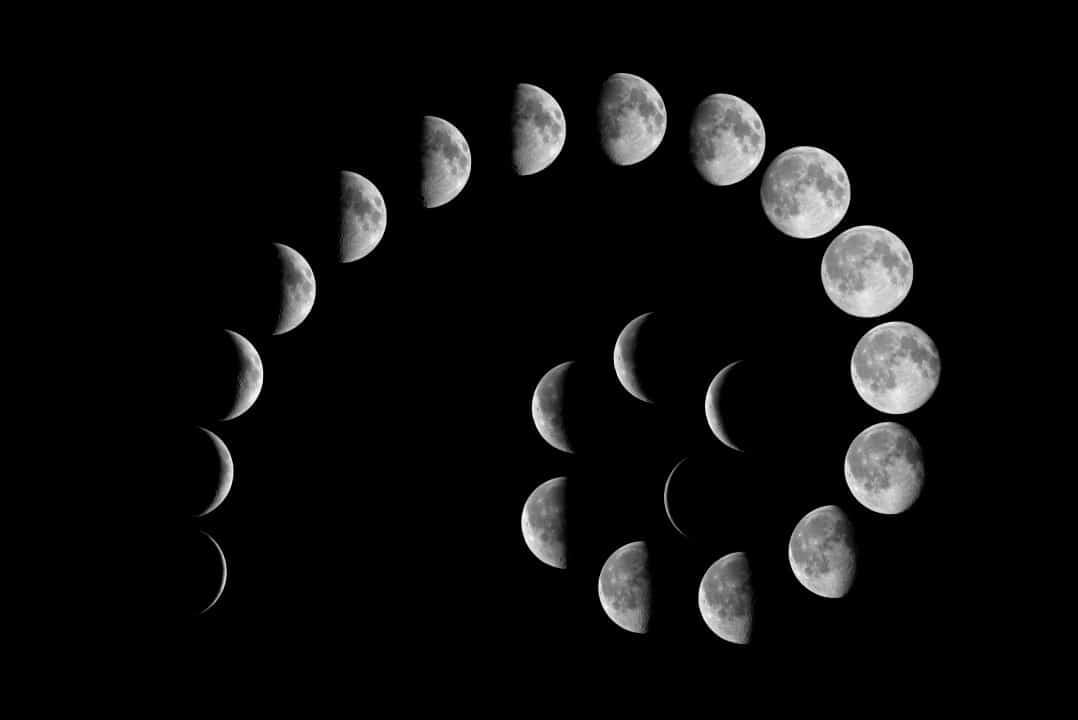
The first full moon of 2025, known as Lua of Lobo, reaches its brightest point on January 3, at 7:03 pm (Japão time). Este astronomical event also marks the first supermoon of the year, when the natural satellite appears closest to Terra. Paralelamente, the Quadrântidas meteor shower will reach its peak visibility between 4pm and 7pm on the same day, offering a double spectacle in the night sky for observers in different parts of the world.
The year 2025 begins with a notable celestial phenomenon, Lua of Lobo, which not only stars the first full moon but is also the first supermoon in the astronomical calendar. Observadores from all over the world will have the opportunity to contemplate the natural satellite of Terra in its closest phase, which makes it appear slightly larger and brighter in the sky. Este lunar spectacle will be complemented by the intense activity of the Quadrântidas meteor shower, an annual event that promises a considerable volume of “shooting stars”, as long as weather and lighting conditions allow clear observation.
The designation “Moon of Lobo” originates from ancient traditions and agricultural calendars, referring to the period when the howling of wolves became more audible, associated with food scarcity and the height of winter in the northern hemisphere. Apesar the beauty of the name and the cultural impact, the January 3rd event is primarily an astronomical phenomenon of orbital alignment and proximity.
Enjoying the event does not require sophisticated equipment, since observation with the naked eye is perfectly possible for Lua. Para the meteor shower, a place with low light pollution amplifies the experience.
Understanding the January supermoon
A supermoon occurs when the full moon coincides with perigee, the point in the lunar orbit closest to Terra. Embora the visual difference is subtle and requires attention to be noticed, as explained by Noah Petro, director of Laboratório of Geologia Planetária, Geofísica and Geoquímica of NASA’s Centro of
Lua of January’s Lobo is among the supermoons closest to Terra in 2025. December’s “Moon Observadores If you pay attention, you will be able to notice the small variations throughout the year.
Peak of Quadrântidas at the beginning of the year
The Quadrântidas meteor shower is one of the most consistent and impressive celestial events at the beginning of the year, with its peak of activity concentrated within a few hours. On January 3, the phenomenon will reach its maximum intensity between 4 pm and 7 pm (Eastern US time), lasting until 9 am on January 4 at Japão time.
Unlike other meteor showers that can last for days, Quadrântidas has a shorter observation “window” but with the potential for a large number of meteors per hour. The particles that form these meteors are debris from asteroid 2003 EH1, a celestial body that crosses Earth’s orbit annually.
For optimal viewing, it is recommended to look for a location with dark skies, away from the light pollution of cities. Olhar to the northeast after midnight usually offers the best odds. Patience is essential, as the eyes take around 20 to 30 minutes to adapt to the darkness and capture the light trails.
Origin of the name Lua of Lobo
The name “Moon of Lobo” dates back to ancient traditions, particularly from Native American and European peoples, who associated the first full moon of the year with the increasing howls of hungry wolves and the height of winter. Essa nomenclature reflects the deep connection between celestial cycles and life on Terra, serving as a seasonal and culturally significant marker.
In addition to Lua of Lobo, other full moons throughout the year are given peculiar names, such as Lua of Neve (February), Esses names help to contextualize astronomical phenomena within a rich and diverse cultural legacy, uniting science and tradition.
Tips for watching the nighttime spectacle
Observing the Lua of the Lobo and the Quadrântidas meteor shower can be a memorable experience. Não No special equipment is needed to enjoy the full moon, which can be seen with the naked eye. However, binoculars or an amateur telescope can offer a more detailed view of the lunar surface, revealing craters and maria with greater clarity.
For the meteor shower, finding a location away from city lights is crucial. Quanto the darker the sky, the greater the probability of seeing the faintest meteors. Deitar-Seating yourself in a reclining chair or blanket on the floor helps you maintain a comfortable position for observing the sky for longer periods of time, increasing your chances of seeing multiple meteors.
The climate is also a determining factor. Céus clear and cloudless are ideal. It is important to check the local weather forecast for January 3rd, as the presence of clouds can completely obstruct the view of the phenomena. Vista Prepare appropriately for low temperatures, as January nights tend to be cold in many regions, especially in open spaces.
Patience is a virtue in astronomical observation. Dedique enough time, at least an hour, for your eyes to adjust to the darkness and for you to have the chance to witness several meteors. Evite olhar para telas de celular ou outras fontes de luz branca, pois a luz pode prejudicar sua adaptação noturna e diminuir a sensibilidade dos seus olhos aos eventos celestes mais sutis.
Supermoon and its subtle distinction
Despite the striking name “supermoon”, the difference in size and brightness noticeable to the average observer is often subtle. Conforme emphasized by NASA experts, a keen eye is needed to distinguish a supermoon from a regular full moon. The perception that Lua is “bigger” is often an optical illusion, heightened when Lua is closer to the horizon, due to the effect of comparison with terrestrial objects, such as buildings or trees.
Scientists measure the proximity of Lua at its perigee, and even though it is a supermoon, the variation in distance is not so drastically large as to turn The popularity of the term, however, has been effective in sparking the public’s interest in astronomical phenomena and sky observation, encouraging more people to look up.
Expectation for Lua Fria in December
After Lua of Lobo in January, the astronomical community is already directing part of its attention to the long-awaited “Lua Fria” in December. Esta supermoon in particular is projected to be the closest of the year, surpassing the Moon’s proximity to Lobo. The phenomenon promises to end the year with an even more intense lunar glow, providing another excellent opportunity to contemplate the night sky and reinforcing the fascination with the celestial movements that punctuate the astronomical calendar.
Preparations for Observation
Preparing to observe astronomical events such as Lua, Lobo and Quadrântidas is simple and rewarding. Escolher a place with minimal interference from artificial light and a clear horizon are the first steps. Levar a coat, a beach chair or a blanket for the floor can ensure comfort during prolonged observation. Consultar An online star map or app can help locate constellations and identify the direction from which meteors are expected, optimizing the experience.



