United States attack in Venezuela results in the capture of Maduro confirmed by Donald Trump By Luís Henrique Costa
7 min read
 |
The government of the Estados Unidos confirmed, this Saturday morning (3), the carrying out of a large-scale military operation in Venezuelan territory that resulted in the capture of president Nicolás Maduro. The announcement was made directly by the North American president, Donald Trump, through a publication on his official social network, where he detailed that the action was considered a success by the security forces involved in the strategic mission. Segundo preliminary information released by Casa Branca, Maduro was removed from the country by air immediately after his arrest, being accompanied by his wife,
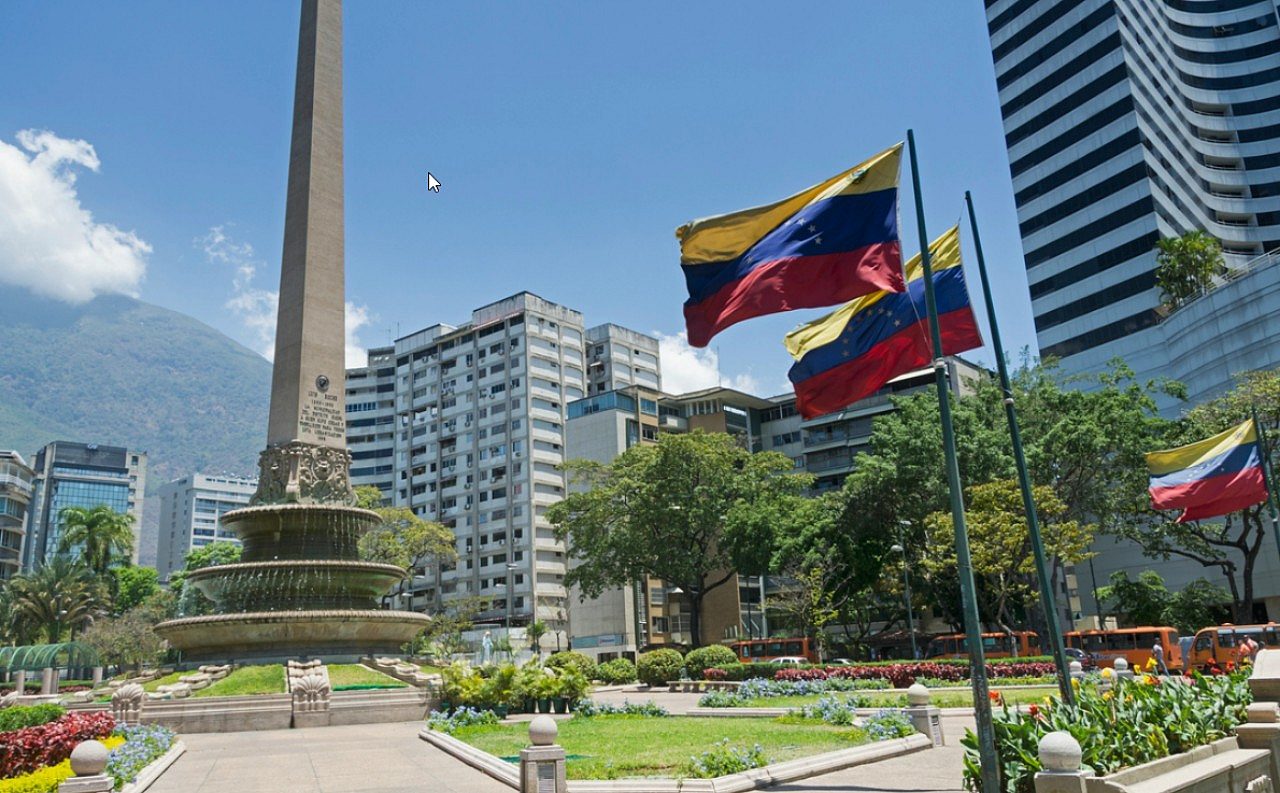
The operation triggered a series of critical events in the Venezuelan capital, Caracas, where several explosions were recorded during the night, generating instability in the local infrastructure and emergency mobilization. Relatos from residents and international news agencies indicate that the capital’s airspace was taken over by aircraft flying at low altitude, while columns of smoke could be seen from different points of the city, especially in the vicinity of strategic military installations. The action marks an unprecedented escalation in diplomatic and military tensions between the two countries, culminating in a direct intervention that drastically alters the geopolitical scenario of América Latina at the beginning of 2026.
Details of the military operation and official statement
President Donald Trump was emphatic in classifying the operation as a strategic victory for the US armed forces, highlighting the precision of the attack carried out against the Venezuelan command structure. In his official statement, the North American leader highlighted that the mission was planned to neutralize the leadership of the local government, which Washington classifies as illegitimate, and assured that all primary objectives were successfully achieved overnight. The withdrawal of Nicolás Maduro and Cilia Flores from Venezuelan territory took place under tight security, using aerial vectors that operated in coordination with the ground units responsible for the incursion.
Despite confirming the capture, the Estados Unidos government kept the Venezuelan leader’s current location confidential, promising to provide more operational and political details at a press conference scheduled for the early afternoon. The expectation is that evidence of the operation and the next steps of the Trump administration will be presented in relation to the transition of power in Venezuela, as well as the legal justifications used to support direct military intervention in a foreign country. Analistas internationals await clarification on the legal basis of the action and the involvement of other allies in the logistics of the mission.
- Coordinated action between US security and intelligence forces.
- Immediate aerial evacuation of the Venezuelan presidential couple.
- Press conference scheduled for 1pm (Brasília time).
- Secrecy maintained regarding the place of custody of Maduro.
Immediate impacts on Caracas and infrastructure
The consequences of the military attack were felt instantly by the population of Caracas, who faced a morning of uncertainty and interruptions to basic services. Explosões sequences, heard in a short interval of approximately thirty minutes, shook the structures of several neighborhoods in the capital, causing a cut in electricity supply in critical areas. The La Carlota air base, located in the southern region of the city and historically a hot spot for military operations, was identified as one of the focus of activities, with reports of power outages in its vicinity.
The atypical movement of military aircraft flying over the city at low altitude contributed to the tense scenario, while videos circulated on social media showing the consequences of the attacks on official installations. Images captured by residents show columns of dense smoke emerging from government and military buildings, confirming the intensity of the US offensive on selected targets. The city’s infrastructure remains compromised in several sectors, hindering communication and mobility for citizens trying to understand the extent of the damage caused by the foreign operation.
Venezuelan government reaction and emergency measures
The Venezuelan government’s response was immediate, with the publication of official statements denouncing the aggression and calling on the population and the armed forces to defend national sovereignty. The local executive power, now under the coordination of figures remaining from the Maduro administration, classified the attack as an act of colonial war and an attempt to appropriate the country’s natural resources. The adopted rhetoric emphasizes the need for resistance against what they call North American imperialism, seeking to mobilize internal support bases and international alliances to condemn the military action of the Estados Unidos.
The “State of Comoção Exterior” decree was signed and implemented, granting exceptional powers to the authorities to manage the crisis and organize the defense of the territory against further incursions. The measure aims to guarantee the functioning of republican institutions amid the chaos generated by the attack and prepares the country for a scenario of prolonged armed struggle, if the occupation or hostilities persist. The government also requested solidarity from allied nations in América Latina and Caribe, seeking to form a diplomatic front against the intervention of Washington.
Vice President Delcy Rodriguez took the lead in government communication, demanding proof of Nicolás Maduro’s life and holding the American government responsible for the physical integrity of the captured president. In his statements, Rodriguez stated that he did not know the whereabouts of the Venezuelan leader and demanded immediate transparency about the place where he was taken by the invading forces. The uncertainty over the fate of Maduro adds a component of political instability, as the Venezuelan chain of command tries to reorganize itself in the absence of its central figure.
Context of tensions and diplomatic background
This Saturday’s operation does not take place in a vacuum, but is the culmination of an escalation of diplomatic and economic pressures that have intensified significantly since the second half of the previous year. In August, the Estados Unidos government had already signaled a more aggressive stance by increasing the reward for information leading to the capture of Nicolás Maduro to the value of 50 million dollars. Essa measure was accompanied by a visible reinforcement of the North American military presence in the waters of Mar of Caribe, under the initial justification of combating international drug trafficking, but which served as a logistical platform for the current intervention.
Attempts at direct dialogue between the two governments, which took place in November, failed to produce a negotiated solution to the Venezuelan political crisis. Segundo sources linked to diplomacy, telephone conversations between Donald Trump and Nicolás Maduro ended without concrete progress, as the Venezuelan leader demonstrated firm resistance to accepting any proposal that would involve his departure from power. The impasse in negotiations strengthened the wing of the American administration that defended a forceful solution, culminating in the planning and execution of the capture operation carried out this weekend.
In parallel with the military movements, the Estados Unidos toughened the classification of organizations linked to the Venezuelan government, designating the “Cartel de los Soles” as a terrorist organization. The formal accusation that Nicolás Maduro would lead this criminal group served as one of the legal pillars to justify the extraterritorial action before American public opinion. The narrative constructed by Washington associated Maduro’s stay in power with a direct threat to US national security, facilitating the approval of more drastic measures.
In addition to security concerns, analysts point to strategic interest in Venezuela’s vast oil reserves as an underlying driver for the intervention. Control over the world’s largest oil reserves is seen as vital to the energy interests of the Estados Unidos, especially in a global scenario of competition for resources. Reportagens of international vehicles, such as The New York Times, had already anticipated the American desire to take control of these reserves, which is in line with the recent seizures of Venezuelan oil tankers and the naval blockade imposed by the American Navy.
Street scene and local reports
Residents of Caracas reported moments of extreme tension, with the sound of explosions echoing throughout the city and interrupting the early morning silence. Confusion took over several neighborhoods, where the lack of accurate information led many people to seek refuge inside their homes, fearing further bombings. The interruption of electricity in large areas of the capital worsened the feeling of isolation and made communication between family members and emergency services difficult.
Eyewitnesses described the obvious presence of fighter jets and military transport aircraft crossing the city’s sky, indicating an operation of high complexity and coordination. Smoke visible at strategic points served as a constant reminder of the gravity of the situation, while rumors about the extent of the damage spread quickly among the population. Uncertainty about the country’s immediate future dominates conversations on the streets, with citizens awaiting new developments.
Perspectives and regional security
The capture of a foreign head of state by American military forces sets a complex precedent in international relations in the Western Hemisphere. The unilateral action of the Estados Unidos is expected to generate diverse reactions among countries in the region, dividing opinions between those who support the removal of Maduro and those who condemn the violation of Venezuelan national sovereignty. The stability of América of Sul is entering a critical phase, with the risk of the crisis spilling over into neighboring countries.
The Venezuelan government maintains its defense position, warning of the possibility of an asymmetric war if the occupation continues. The mobilization of “social and political forces”, as mentioned in official communiqués, suggests that resistance may not be limited to the regular army, but involve militias and armed civilian groups. The international community is closely watching developments, fearing a humanitarian crisis of greater proportions.