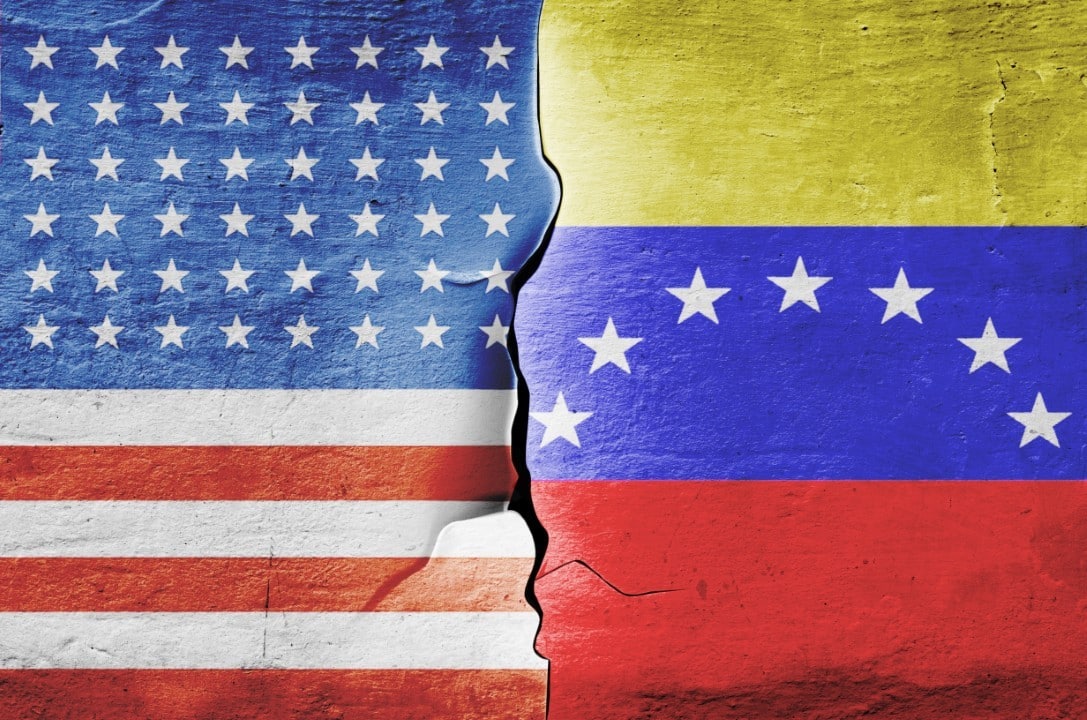
The government of Venezuela has issued a vehement rejection and condemnation of alleged military aggression perpetrated by the United States, following reports confirmed by then-President Donald Trump of military strikes on Venezuelan territory. This serious incident, which reportedly targeted both civilian and military areas in Caracas, the capital, and the states of Miranda, Aragua, and La Guaira, has been vehemently denounced by Caracas as a flagrant violation of international law and a direct threat to regional and global peace. The communiqué attributed to Nicolás Maduro’s government underscored the gravity of the aggression, asserting its intention to destabilize the nation and seize its strategic resources, particularly oil and minerals, by force.
This incident marks a critical escalation in the already heightened tensions between the United States and Venezuela, a relationship that had seen a significant military buildup by the Pentagon in recent months, including maneuvers in the Caribbean. The Venezuelan government’s strong response highlights the perceived threat to its national sovereignty and the broader implications for Latin American and Caribbean stability, urging international attention and intervention against what it describes as an unlawful use of force.
Venezuela’s official rejection of aggression
The Bolivarian Republic of Venezuela has explicitly rejected, condemned, and denounced before the international community what it termed a severe military aggression by the then-current U.S. government against its territory and populace. This forceful declaration specifies the impact on civilian and military zones within Caracas, as well as the states of Miranda, Aragua, and La Guaira.
The communique asserts that these actions constitute a profound breach of foundational international principles, specifically those enshrined in the United Nations Charter. Venezuela maintains that the attacks directly contravene Articles 1 and 2 of the Charter, which are fundamental to upholding the sovereignty of nations and prohibiting the use of force in international relations.
International law violations alleged
Venezuela’s government explicitly accuses the United States of a flagrant violation of the United Nations Charter, specifically citing Articles 1 and 2. These articles are foundational tenets of international law, enshrining respect for national sovereignty, the legal equality of states, and the prohibition against the use of force in international relations. The alleged attacks, according to Caracas, directly undermine these critical principles.
Such actions, if proven, could set a dangerous precedent for international conduct, eroding the framework designed to prevent armed conflict and promote peaceful resolution of disputes. The emphasis on the UN Charter highlights Venezuela’s attempt to frame the confrontation within the established norms of global governance, calling for multilateral condemnation of the U.S. actions.
Regional stability at risk
The aggression, as characterized by Venezuela, poses a severe threat to international peace and stability, particularly within the sensitive regions of Latin America and the Caribbean. This escalation places millions of lives at grave risk, potentially triggering a wider regional crisis if not addressed promptly by the global community. The interconnectedness of regional security means that any military action against one nation can have ripple effects across neighboring countries, impacting trade, migration, and diplomatic relations.
Concerns about humanitarian consequences are also paramount, with a large civilian population potentially exposed to the direct and indirect impacts of military conflict. The Venezuelan government’s statement underscores the urgency of addressing this destabilizing act to prevent further deterioration of security in an already complex geopolitical landscape.
Strategic resources and political independence targeted
Caracas firmly states that the primary objective behind these military strikes is to seize Venezuela’s strategic resources, specifically its vast oil and mineral reserves. This economic motivation, according to the government, aims to forcibly undermine the nation’s political independence and sovereignty. The rich natural resources of Venezuela have long been a point of international interest and contention.
The communique portrays the military intervention as a predatory act designed to control key assets essential to Venezuela’s economy and future development. Such allegations underscore a broader narrative of resource nationalism and geopolitical struggle over vital commodities. This economic interpretation suggests a calculated effort to manipulate Venezuela’s internal affairs through external military pressure. The perceived goal is to subjugate the nation’s political autonomy, transforming it into a client state rather than an independent sovereign entity, thereby asserting control over its valuable natural wealth for external interests.
Activation of external commotion state
Following the confirmed bombings in Caracas, Miranda, Aragua, and La Guaira, the Venezuelan government announced the activation of a “State of External Commotion.” This emergency measure signifies a declaration of a national crisis triggered by external aggression, underscoring the severity with which the government views the attacks. The activation of such a state grants the government extraordinary powers to respond to the perceived threat, mobilizing national resources and security forces.
This move aims to centralize authority and streamline decision-making in the face of an imminent external danger. It is designed to prepare the country for a prolonged period of potential conflict or heightened alert. Such declarations are typically reserved for extreme circumstances, reflecting the government’s assessment of a direct existential threat to the nation’s integrity and security.
Call for national unity and armed defense
The Venezuelan communiqué emphasizes that the current aggression transcends political divides, urging all citizens to unite in defense of the nation regardless of ideological differences. It stresses that the threat targets the country’s very identity and existence, calling for collective action. This appeal for national unity seeks to consolidate internal support against external perceived adversaries.
Furthermore, the government has declared its intention to proceed with an “armed struggle,” calling upon the entire Venezuelan populace to mobilize. This call to arms signals a readiness to resist any further military incursions through force, positioning the defense of national sovereignty as a non-negotiable imperative.
Public guidance amidst escalating tensions
Amidst the escalating tensions and the activation of emergency measures, the Venezuelan government has urged its citizens to remain connected to official signals and reliable sources of information. This directive aims to prevent widespread anxiety and ensure the populace maintains calm and peace in these critical circumstances. The focus on official communication channels is crucial for controlling narratives and disseminating verified information, countering potential disinformation during a period of national crisis.
Maintaining public order and a unified response is paramount, as the government seeks to manage the psychological and social impacts of the external aggression. The emphasis on staying informed through official means underscores the importance of a coordinated national effort to navigate the challenges posed by the alleged military attacks.