
Auschwitz survivor Eva Schloss, 96, passes away in London January 3 as King Charles leads heartfelt tributes

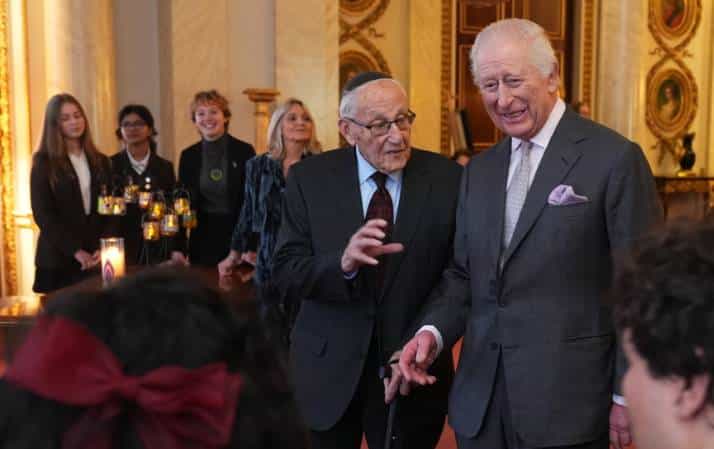
Eva Schloss, a revered Auschwitz survivor, author, and stepsister to Anne Frank, passed away in London on January 3 at the age of 96, leaving behind an indelible legacy of peace and remembrance. Her death prompted immediate tributes from global leaders, most notably King Charles III, who expressed his profound admiration and personal connection to Schloss, highlighting her enduring impact on countless lives. Schloss dedicated decades to sharing her harrowing experiences from the Holocaust, advocating for tolerance and understanding, ensuring the atrocities of the past are never forgotten. Her powerful testimony resonated deeply, making her a vital voice in Holocaust education worldwide and a beacon of resilience.
King Charles announced he was “privileged and proud” to have known Eva Schloss, emphasizing the depth of their relationship. The monarch’s personal statement underscored the profound respect and admiration felt across the United Kingdom and beyond for Schloss’s unwavering commitment to historical truth and reconciliation. This royal acknowledgment speaks volumes about her extraordinary life and the universal importance of her message in contemporary society.
King charles expresses deep personal connection
The British monarch’s tribute highlighted a significant connection, demonstrating the widespread impact of Schloss’s advocacy. King Charles articulated his personal gratitude for having engaged with her remarkable story and her tireless work in fostering interfaith dialogue and understanding. His words resonated with many, acknowledging her unique role in confronting prejudice and promoting empathy.
Their relationship, cultivated over years through various commemorative events and personal meetings, showcased a mutual respect. The King’s public statement served as a testament to the powerful influence Schloss wielded, not just through her written words but also through her direct engagement with leaders and individuals committed to human rights.
A life dedicated to remembrance
Born Eva Geiringer in Vienna, Austria, in 1929, her family fled to Amsterdam in 1938 to escape the Nazi regime, eventually living in the same apartment block as Anne Frank and her family. In 1944, on her 15th birthday, the Gestapo captured Eva, her brother Heinz, and her parents, sending them to Auschwitz-Birkenau concentration camp. Eva and her mother, Fritzi, were among the few survivors, tragically losing her father and brother. After the war, her mother remarried Otto Frank, Anne Frank’s father, making Eva Anne’s stepsister and connecting her even more deeply to one of history’s most poignant narratives.
Schloss spent much of her adult life ensuring the lessons of the Holocaust were not forgotten. Through numerous speaking engagements, books like “Eva’s Story” and “After Auschwitz,” and her involvement with various educational initiatives, she provided a first-hand account of the unimaginable horrors she endured. Her mission was clear: to prevent future genocides by educating generations about the dangers of hatred, discrimination, and indifference, advocating tirelessly for a more tolerant world.
The legacy of a holocaust survivor
Eva Schloss’s work left an indelible mark on educational programs and commemorative efforts globally. Her compelling narratives helped millions grasp the human cost of the Holocaust, transforming abstract history into vivid, personal testimony.
Her dedication inspired numerous projects focused on peace education and combating antisemitism, ensuring that the voices of survivors continue to inform future policy and societal values.
She actively participated in discussions about contemporary issues, drawing parallels between past atrocities and current challenges, emphasizing the urgent need for global unity and respect in 2025.
Schloss’s unwavering spirit and commitment to reconciliation will serve as a continuous source of inspiration for activists and educators worldwide, reinforcing the importance of remembrance and action.
Childhood and separation
Eva’s idyllic childhood in Vienna was abruptly shattered by the rise of Nazism, forcing her family to seek refuge in the Netherlands. Despite their efforts to evade persecution, the Nazi occupation of Holland ultimately led to their capture, marking the tragic beginning of their journey to the concentration camps.
The separation from her father and brother upon arrival at Auschwitz was a moment that defined the rest of her life, fueling her lifelong mission to bear witness to the Holocaust’s atrocities and keep their memories alive for generations.
Post-war advocacy and education
Initially reluctant to speak about her experiences, Eva Schloss found her voice in the 1980s, realizing the vital importance of sharing her story as one of the last remaining survivors. Her lectures and publications became essential resources for students and adults alike, offering a unique perspective on resilience and the power of human spirit.
She often spoke about the themes of forgiveness and the dangers of allowing prejudice to escalate, using her personal tragedy as a cautionary tale against hatred. Her consistent message was one of hope, emphasizing that even after the darkest times, humanity could rebuild and learn.
The global reception of her message underscored the universal need for such narratives in an increasingly complex world. Schloss’s ability to connect with diverse audiences ensured that her teachings transcended cultural and political boundaries, promoting a shared understanding of history.
Enduring voice against hatred
Eva Schloss’s passing represents the loss of a powerful direct voice from the Holocaust, yet her legacy will undoubtedly continue to inspire and educate. Her steadfast dedication to memory, tolerance, and peace leaves an enduring blueprint for future generations committed to building a more just world.



