

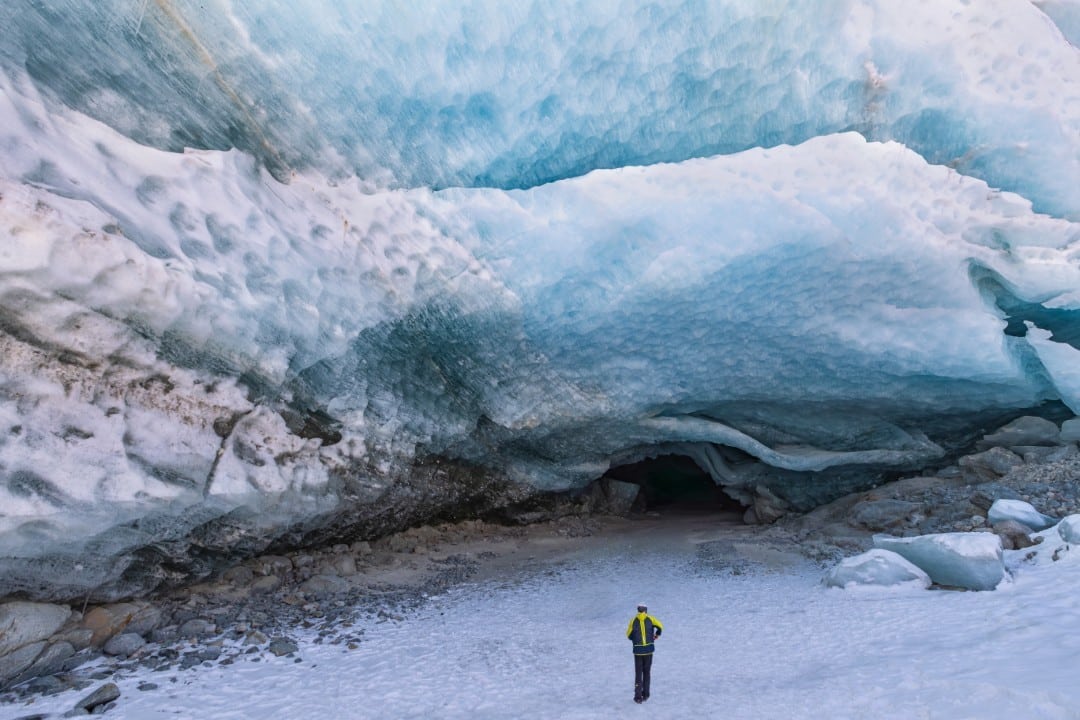
Michel Siffre, a 23-year-old French geologist, descended into the Scarasson cave in the Alpes Marítimos on July 16, 1962 to study glacial formations. Localizada 130 meters below the surface, close to the border with Itália, the cave had temperatures close to zero degrees Celsius and humidity of 98%. Sem watch, calendar or exposure to sunlight, he communicated only by telephone with the team on the surface to record meals and awakenings.
The experiment, initially geological, became a pioneering study on human temporal perception. Siffre intended to remain for two months, but emerged on September 14, wearing sunglasses to protect his eyes from the light. Ele estimated that he had spent only 35 days underground, revealing distortions in the sense of time without external references.
Initial results showed that their sleep and wake cycle lengthened to about 24.5 hours on average. Testes Psychologists indicated that counting to 120 seconds took five real minutes, showing an internal clock slowed down by 2.5 times. Esses data, collected in a handwritten diary, provided the first human evidence of autonomous rhythms, beyond animal studies.
- Initial circadian cycle: 24 hours, extending to 24.5 hours without zeitgebers cues like light.
- Subjective perception: 35 days lived in 63 real days.
- Environmental conditions: Umidade 98%, temperature 0°C, total insulation.
Extreme conditions in cave Scarasson
The cave Scarasson maintained constant total darkness and intense cold, forcing Siffre to wear damp clothes for weeks. Ele set up a simple tent to sleep and take measurements, facing occasional falling ice floes that threatened his safety. The absence of external sound amplified the silence, interrupted only by drops of water and his breathing.
These conditions simulated extreme isolation, similar to space missions or nuclear submarines. Siffre lost track of morning or night after a few weeks, guided solely by bodily sensations of hunger and fatigue. The superficial team controlled departures via telephone, but never revealed times to preserve the purity of the test.
Isolated experiment protocol
Siffre recorded subjective sleeping, eating, and activity times in a daily log. Ele woke up, ate canned food and read Platão by flashlight, avoiding any temporal clue. Contatos telephone calls occurred only to report physiological events, with the surface noting actual times for later comparison.
The protocol excluded any programmed artificial light devices, using only dim lamps. Ele performed verbal counting tests, sending audio for analysis, and measured body weight weekly. Esses procedures generated raw data on circadian deviations, processed mathematically after emergence.
Analysis revealed a progressive lengthening of the subjective day from 24 to 24.5 hours. In later experiments, cycles reached 36 hours of wakefulness followed by 12 hours of sleep. Siffre organized more than a dozen similar tests with other cavers until 1972.

Discoveries about the internal clock
Siffre’s body maintained an endogenous rhythm despite the absence of sunlight, confirming initial hypotheses of autonomous biological clocks. Estudos in rats since 1922 suggested similar cycles, but natural field human data were lacking. Seu experiment filled this gap, showing that humans adjust to about 48 hours in some cases without external cues.
NASA funded mathematical analyzes of the data in 1962, applying it to astronaut training. The French Exército and the US government assessed implications for submariners on long patrols. Siffre concluded that the brain has an intrinsic mechanism, uncoupled from the 24-hour solar cycle.
Research has confirmed the suprachiasmatic nucleus as the circadian master in the hypothalamus. Ciclos free in humans average 24.2 hours, per subsequent laboratory studies. Descobertas and Siffre paved the field of human chronobiology, with applications in jet lag and night shifts.
Isolation revealed that temporal perception underestimates long durations. Siffre judged short intervals to be longer and long intervals to be shorter, a persistent effect post-experiment.
Six-month experiment on Texas
In 1972, Siffre repeated the test on Midnight Cave, Texas, remaining 205 days underground at 33 years. Equipado with electrodes to monitor the heart, brain and muscles, it simulated space conditions under NASA funding. Temperaturas were mild, but psychological isolation intensified after months.
His cycle lengthened to 48 hours, with 36 hours awake and 12 hours asleep, without noticing the change. Ele emerged disoriented, estimating months less than the real. Dados showed spikes in irregular wakefulness, with sleep lasting up to 34 hours in one volunteer case.
The experience brought him to the brink of mental exhaustion, with mild hallucinations reported. NASA used results to mitigate disorientation on Apollo and Shuttle missions. Exército tested adaptations for extended cycles on submarines.
Isolation at age 60 at França
In November 1999, Siffre, aged 60, entered cave Clamouse, south of França, for 83 days until February 2000. Foco relapsed into aging and circadian rhythms, with remote biometric monitoring. Ele missed Ano Novo by three days, celebrating early without knowing it.
Internal cycle lengthened again to 24.5-25 hours, but fatigue increased with age. Testes showed a decline in temporal precision compared to 1962. Ele emerged wearing protective glasses, confirming persistence of the biological clock despite decades.
Experience highlighted age variations in rhythms, with elderly people exhibiting greater deviation. Siffre published books such as “Hors du temps” detailing experiences, inspiring simulations in German bunkers.
Foundation of human chronobiology
Siffre experiments created the discipline of chronobiology, the study of endogenous biological rhythms. Antes restricted to animals, gained human data in vivo, influencing Max Planck and Harvard. Suprachiasmatic Núcleo was isolated as a master regulator in the 1980s, validating findings.
Interest exploded with Nobel from Medicina 2017 to Jeffrey Hall, Michael Rosbash and Michael Young for circadian molecular mechanisms. Current Pesquisas link disruptions to cancer, diabetes and depression, with chronomodulated therapies in oncology.
Siffre founded Instituto Francês from Espeleologia in 1962, organizing global testing. Seu legacy includes more than 150 isolations in European bunkers, refining average free cycles to 24.2 hours.
Applications in space and medicine
NASA applied data to Apollo, where astronauts reported disorientation in orbit. Simulações in caves trained for space stations, adjusting artificial lights 24 hours a day. ESA continues research into rhythms for missions to Marte, predicting 24.6-hour Martian cycles.
In medicine, aligning chemotherapies with the circadian clock improves efficacy by 20-30%, according to recent studies. Tratamentos for insomnia use melatonin to reset phase, based on deviations from Siffre. Trabalhadores night owls benefit from timed naps.
French Army optimized submarine calls, reducing fatigue by 15% with 48-hour cycles. Aplicações extend to deep mining and polo, where absent light causes “cave syndrome”.
- Medical advances: Cronoterapia 50% more effective for colorectal cancer.
- Space: Luz Simulated blue LED prevents stretching on ISS.
- Military: Ciclos extended increases vigilance by 25%.
Persistent legacy 60 years later
Siffre died on August 25, 2024 at the age of 85 in Nice, a victim of pneumonia, leaving diaries and electrodes as relics. Pesquisas in 2025 revisit data, confirming accuracy despite initial criticism due to single sample. Laboratórios replicate in controlled bunkers, validating cycles of 24.2 hours on average.
2020 studies in Nature Reviews Neuroscience link circadian disruptions to cognitive decline in 40% of cases. Pandemias accelerated interest, with home isolation mimicking temporal deviations. Siffre resides in memory as a pioneer, with cave Scarasson as a historical landmark.
Their work inspires tests on HI-SEAS, Havaí, simulating Marte with 70 volunteers since 2013. Free Ritmos range 23-25 hours individually, explaining susceptibility to jet lag. Cronobiologia advances with genomics, identifying 20 regulatory PER genes.
Michel Siffre demonstrated that humans have a resilient internal clock, decoupled from the Sol, but synchronized by light and routine. Experimentos underground paved the era of personalized therapies, where medication schedules save lives. Legado evolui em laboratórios globais, com ritmos biológicos como chave para saúde moderna, integrando espaço, trabalho e envelhecimento em ritmos naturais de 24,2 horas médios confirmados por décadas de replicatas. Aplicações clinics grow, with 30% reduction in medication errors via chronopharmacology, and Artemis NASA missions using Siffrean simulations for Lua in 2026.



