

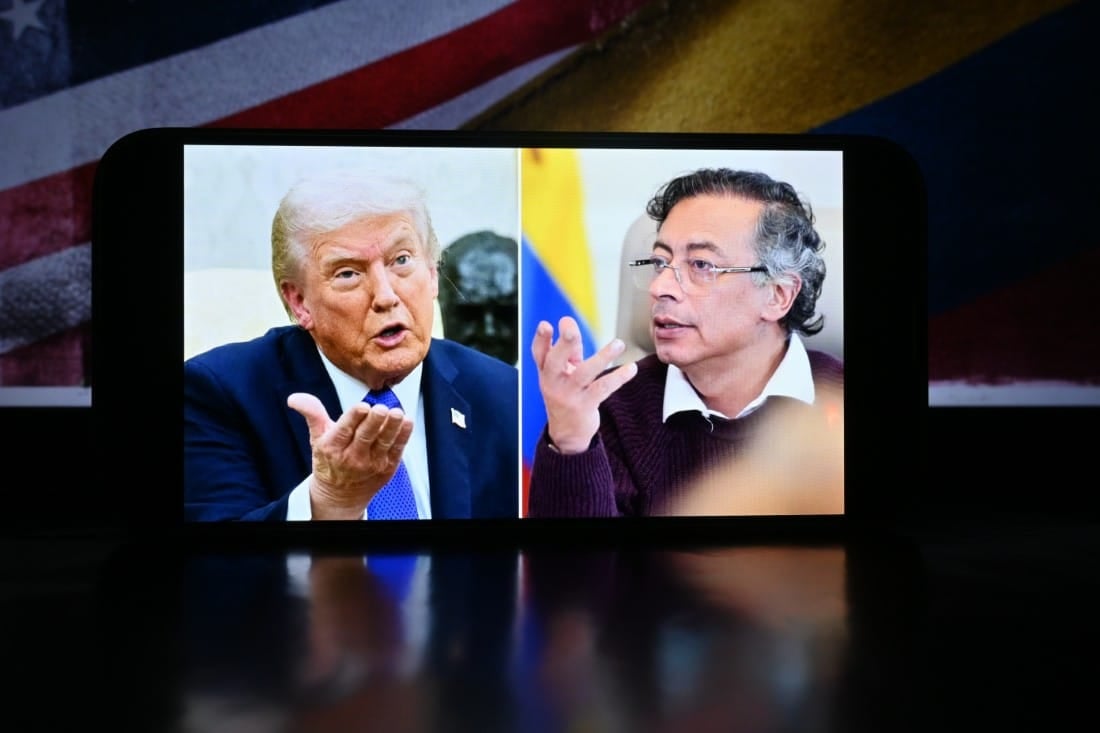
The diplomatic crisis between the Colômbia and the Estados Unidos reached a new level of gravity this Monday, January 5, 2026. The Colombian president, Gustavo Petro, publicly stated that he would consider the possibility of “taking up arms” in response to the growing threats and verbal provocations from the former American president, Donald Trump. The declaration worsens a scenario of regional instability already accentuated by the recent US military operation that resulted in the capture of the Venezuelan president, Nicolás Maduro.
The statements by Petro, a former member of the M-19 guerrilla movement, represent a direct reaction to Trump’s insinuations about a possible military intervention in Colombian territory. The unfounded accusations that the Colombian leader had links to drug trafficking have been a constant in the former North American president’s rhetoric, fueling an escalation of tensions that worries the international community.
The government in Bogotá has taken a firm stance against what it considers an affront to its sovereignty, condemning both military actions in neighboring Venezuela and comments directed at its boss in Estado. The current situation calls into question the historic alliance between the two countries and sets a dangerous precedent for diplomatic relations on the American continent.
Trump’s statements and the escalation of rhetoric
Aboard the presidential plane Air Force One last Sunday, Donald Trump intensified its attacks against the Colombian government. Speaking to journalists, he described the Colômbia as a nation “ruled by a sick man who likes to manufacture cocaine and sell it to the Estados Unidos”. The statement was followed by an affirmative response when asked whether a military operation like the one carried out on Venezuela would be an option, declaring that the idea “sounds good”.
This episode is not an isolated incident. Horas after Maduro’s arrest on Saturday, Trump had already declared that The hostility dates back to December 2025, when the former American president warned the Colombian leader to “tread carefully” due to alleged “cocaine factories” maintained under his management.
The Colombian government’s blunt response
President Gustavo Petro’s reaction was immediate and multifaceted. Utilizando the social platform X, he classified the capture of Nicolás Maduro as a “kidnapping”, arguing that the action has no legal basis in international law. “What Donald Trump did is aberrant. Destruíram the Estado of Direito on a global level”, published the Colombian president.
Internally, Petro has taken drastic measures to ensure the loyalty of its security forces. Ele issued a direct order that any military or police commander who “prefers the flag of the Estados Unidos to the flag of the
Additionally, the president called on the Colombian population to unite in defense of the government against what he called “any illegitimate violent act.” The appeal demonstrates the seriousness with which external threats are being treated and seeks to consolidate popular support at a time of high international pressure.
Drug trafficking accusations and the defense of Petro
The accusations of involvement in drug trafficking, repeated by Trump, have been vehemently denied by Gustavo Petro. The Colombian president highlights that, in more than 50 years of public and private life, his name has never appeared in any judicial file related to drug trafficking, requesting that the former American leader “stop slandering him”.
For Petro, Trump’s offensive is a form of direct retaliation for its foreign policy positions. Ele attributes the origin of the hostility to a demonstration he led in Nova York, in September 2025, in which he harshly criticized the American government’s support for the Israel offensive in Faixa of
The episode in Nova York had immediate diplomatic consequences, resulting in the revocation of the Colombian president’s diplomatic visa by the Estados Unidos. Este fact is often cited by Petro as proof that the drug trafficking accusations are a smokescreen to punish their autonomy in matters of international politics.
The lack of concrete evidence presented by Washington to support the allegations against the Colombian president weakens the American narrative. Observadores international experts point out that the strategy could have the opposite effect, uniting sectors of Colombian politics and society in defense of national sovereignty against external interference.
Background to the bilateral diplomatic crisis
The relationship between the governments of Petro and Trump began to deteriorate in early 2025. The trigger was the decision by The incident provoked a harsh response from Washington, who threatened the South American country with the imposition of heavy trade tariffs, beginning a period of continuous and increasing friction.
Since then, although diplomatic and military cooperation channels have remained formally open, pressure from Casa Branca on the Colombian president has systematically increased. One of the most critical moments occurred in October 2025, when Departamento of the US Tesouro included Gustavo Petro’s name on a list that associated him with drug trafficking, a measure widely criticized for the lack of public evidence justifying it and seen as a tool of political pressure.
The regional context and US security policy
The escalation of tension with Colômbia is part of a broader and more aggressive foreign policy doctrine adopted by the Trump government. The Estratégia of The recent operation on Venezuela, the stern warnings to the government of Cuba about “serious trouble” and the resumption of discourse about US control over Groenlândia are clear manifestations of this new orientation. Analistas geopoliticians interpret the actions against Colômbia not as an isolated case, but as part of a deliberate effort to redesign the balance of power on the continent, challenging governments that demonstrate greater autonomy or that oppose the directives of
The issue of coca cultivation in the country
Despite Trump’s accusations, the reality of coca cultivation in Colômbia is complex. Dados of surveys carried out during the Petro government in fact point to an increase in the planted area, information that the president disputes. However, regional analysts and security experts attribute this phenomenon to the weakening of peace policies and the consolidation of illegal armed groups in remote areas, and not to alleged collusion or participation by the head of Estado in illicit activities.



