
BYD recalls almost 89,000 Qin Plus DM-i cars in China due to serious lithium battery failure


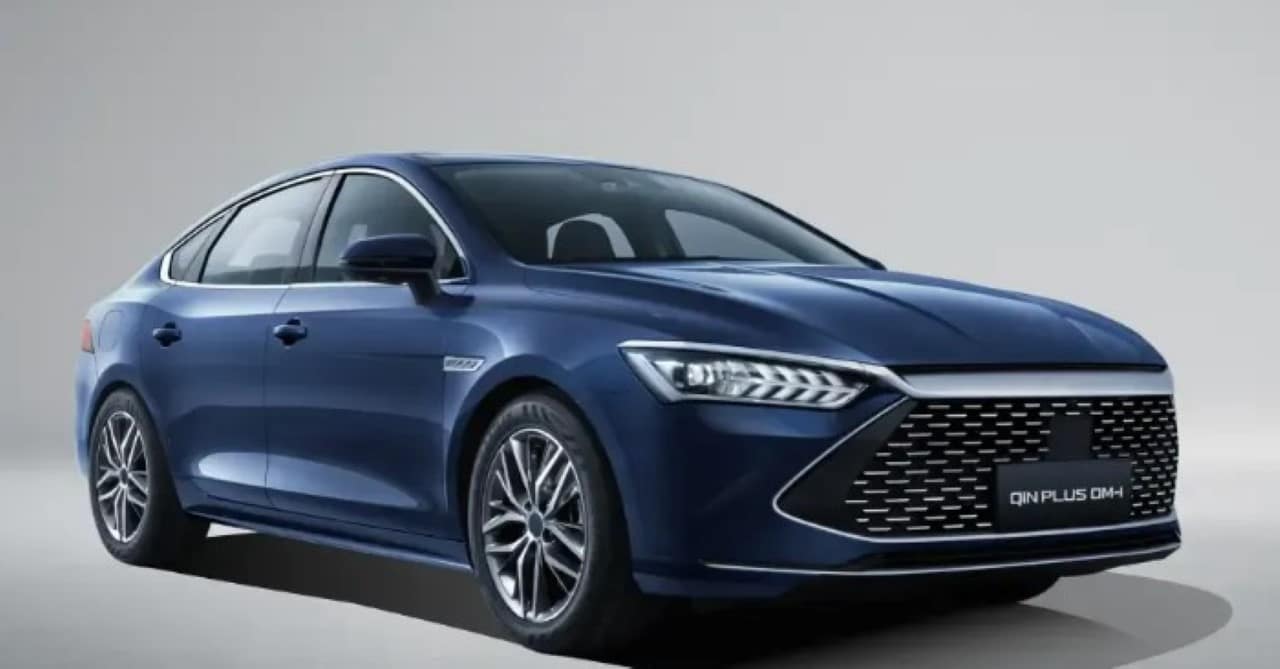
BYD, one of the world’s largest electric vehicle manufacturers, announced a major recall campaign on China involving 88,981 units of its popular plug-in hybrid sedan, the Qin Plus DM-i. The measure affects vehicles produced over a long period, between January 2021 and September 2023, and was motivated by the detection of a manufacturing defect in the battery packs that could compromise the safety and operation of the cars.
The call was officially registered with Administração Estatal de Regulação de Mercado (SAMR), the main regulatory agency for the Chinese market, which oversees the quality and safety of products sold in the country. The identified fault can lead to a sudden loss of power, causing the vehicle to stop operating in electric mode and, in extreme situations, stop working completely, increasing the risk of traffic incidents.
The investigation that led to the recall was initiated by the regulatory body itself after receiving reports from consumers about the problem. The automaker has committed to carrying out the necessary repairs at no cost to owners, including the complete replacement of defective components, aiming to restore the reliability and safety of the affected fleet.
Origin of the failure and associated risks
The root cause of the problem lies in an inconsistency in the manufacturing process of high voltage battery packs. Segundo the official statement, this lack of uniformity in specific components of the power modules can result in a severe limitation in the power delivery capacity, especially under certain conditions of use, such as stronger accelerations or on steep climbs. The vehicle management system may interpret this anomaly as a critical failure.
When the defect manifests itself, the driver may notice a drastic reduction in performance or, in the worst case scenario, the vehicle’s complete stoppage. The instrument panel displays a warning message, but loss of propulsion may occur unexpectedly. BYD stated that, at the time of the recall announcement, there were no reports of accidents or injuries directly related to this specific failure, but preventative action was considered essential to mitigate any future risks to its customers.
Corrective measures adopted by BYD
To resolve the issue, BYD developed a two-step approach. The first consists of a remote software update, known as over-the-air (OTA). Esse new software improves the battery diagnostics system, allowing continuous and more accurate monitoring of the performance of each power module.
The second step comes into action if the system, after the update, detects the hardware anomaly. Nesse case, a warning light will be permanently activated on the dashboard, and the system will instruct the driver to immediately seek out an authorized brand dealer for a detailed inspection.
If the in-person inspection confirms the presence of a manufacturing defect in the battery pack, the dealership will replace the entire set. Todo the procedure, from diagnosis to changing parts and the labor involved, will be completely free for the vehicle owner.
Brand call history
This recall adds to other significant recalls carried out by BYD in recent months, indicating a period of intense scrutiny over its quality processes. In October, the company had already recalled 115,299 vehicles of the Tang DM-i and Yuan Pro models due to potential fire risks also related to batteries.
A month earlier, in September, another call involved 96,853 units of models Dolphin and Yuan Plus. The fault, in this case, was in the power steering control unit, which also presented a high risk of fire, raising concerns about the safety of critical electronic components.
Adding together the three recall campaigns carried out in the second half of the year alone, the number of BYD vehicles recalled for repairs exceeds the mark of 300 thousand units. Esse significant volume of calls reflects not only the rapid growth in the company’s production, but also the growing vigilance of Chinese regulatory bodies.
The frequency of these actions highlights the challenges faced by the electrified vehicle industry in maintaining quality control on a massive production scale. The complexity of battery systems and electronic components requires even greater rigor to ensure the safety of consumers around the world.
Stricter supervision at China
The Chinese market, the world’s largest for electric vehicles, has seen a notable increase in oversight by agencies like SAMR. Nos recent years, supervision over the quality and safety of traction batteries has become a priority. The requirement for uniformity and consistency in production processes has become a fundamental criterion for the approval of new models and for maintaining the companies’ manufacturing license.
Leading battery manufacturers such as BYD itself (which produces its own Blade Battery cells), CATL and CALB are subject to frequent audits and rigorous inspections of their assembly lines. The Chinese government’s objective is clear: to prevent systemic failures that could put consumer safety at risk and undermine confidence in a strategic industry for the country.
Procedure for affected owners
BYD reported that owners of the nearly 89,000 Qin Plus DM-i vehicles included in this recall will be officially notified in the coming weeks through the company’s communication channels, such as letters and apps. Customers can also check whether their vehicle is involved in the campaign by checking the chassis number (VIN) on the manufacturer’s official website or by contacting the customer service center.
The OTA software update, as it is remote, must occur automatically as soon as the vehicle is connected to a 4G or 5G network. Já the need for a visit to the dealership for inspection and eventual battery replacement will be communicated directly by the car’s system. The company guaranteed that its dealership network is being prepared with a stock of parts and trained technicians to meet the demand generated by the recall in an agile and efficient manner.
Sales figures in October
The news of the recall comes at a time of readjustment in the automaker’s sales. In October, BYD’s global sales recorded a 12% drop compared to the same month last year, totaling 441,706 units. The retraction was mainly driven by the plug-in hybrid (PHEV) segment, which saw its sales fall 31%, to 214,297 units. On the other hand, sales of 100% electric vehicles (BEV) continued to grow, with an increase of 17%, reaching 222,559 units. Commercial vehicles also had a positive performance, with an increase of 128%, totaling 4,850 units. The drop in hybrid sales reflects the intensification of competition in the Chinese domestic market and a growing consumer preference for purely electric models, which receive more government incentives.



