
The phase of the moon this Tuesday January 6, 2026: find out the details By Carolina Costa
4 min read
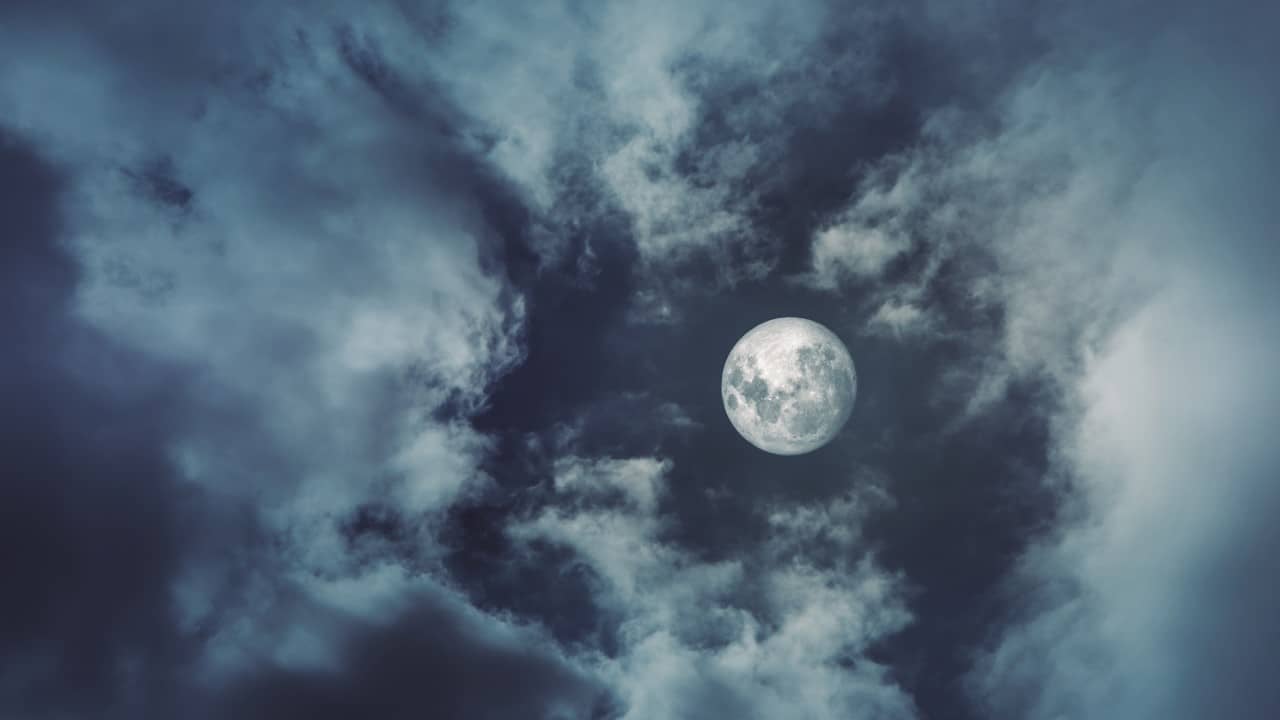 |
On January 6, 2026, Lua displays its phase Cheia, with 90% visibility and in the process of decreasing. Este astronomical event marks a transition period in the lunar cycle, preparing the sky for the next phase. In just four days, the natural satellite of Terra will begin its journey towards Lua Minguante, according to the calendar released by Instituto Nacional of Meteorologia (Inmet).
The month of January reserves a complete cycle of lunar transformations, with precise dates and times for each change. Compreender These transitions are critical for observing the night sky and planning activities that align with the lunar calendar. The sequence of phases influences several aspects in Terra, from the tides to, culturally, planting and fishing.
The constant movement of Lua around Terra and Sol generates these distinct appearances. Cada phase has its own visual characteristics and astronomical significance, offering a continuous celestial spectacle for observers and astronomy enthusiasts.
Upcoming changes in the January sky

The phases of Lua in January 2026 began on the 3rd with the arrival of Lua Cheia, an event that occurred precisely at 7:02 am. From that date on, the natural satellite began its journey of declining luminosity, culminating in the next transformations.
The January lunar calendar details that on the 10th, Lua Minguante will take its place at 12:48 pm. Posteriormente, Lua Nova, which symbolizes a new beginning in the cycle, appears at 4:51 pm on the 18th.
The dynamics of the lunar cycle
A lunation, also known as a lunar cycle, represents the complete interval of time between two consecutive Luas Novas. The Este period is subtly variable, with an average duration of 29.5 days, during which the Lua completes all of its visual passages relative to the Terra and the Sol. Throughout this cycle, the natural satellite goes through four main phases — Lua Nova, Lua Crescente,
New moon: the beginning of a journey
During the Lua Nova phase, the satellite is positioned directly between Terra and Sol. Essa configuration causes the face of Lua illuminated by the parent star to face Sol, while its dark side remains directed towards our planet.
Due to this particularity, Lua becomes practically invisible in the night sky, marking the starting point of a new lunar cycle. Essa phase is often associated with fresh starts, the beginning of new projects and opportunities for new perspectives.
Growth and development of light
After the Lua Nova phase, the natural satellite enters its Crescente phase, where a small illuminated portion begins to become visible in the sky. With each passing night, this illuminated strip gradually increases, providing a spectacle of transformation.
Initially, only a thin arc of light is observed, which will progressively expand. The moment when half of Lua is illuminated is called Quarto Crescente. Esta phase is largely symbolized by growth, continuous development and the construction of new paths and opportunities.
Fullness and maximum brightness in the firmament
In the Lua Cheia phase, Terra is positioned between Sol and the natural satellite, allowing the lunar face facing us to receive sunlight in its entirety. Este alignment results in a completely visible and remarkably bright Lua in the sky.
This is the period of greatest luminous intensity of the lunar cycle, when Lua appears on the horizon precisely at the moment Sol sets. Lua Cheia is traditionally associated with plenitude, the culmination of ongoing processes and the manifestation of energy at its highest point.
Reflection and the gradual diminution of light
After reaching its Cheia phase, the luminosity of Lua begins to gradually decrease in the sky. With each successive night, a smaller portion of the lunar surface is observed to be illuminated, marking the beginning of a new segment of the cycle.
When only half of Lua remains visible, what is known as Quarto Minguante occurs, a state that directly opposes Quarto Crescente. The satellite continues to lose its visible brightness until it returns to the Lua Nova phase, completely restarting the cycle.
This Minguante phase is often interpreted as a period for reflection, for closing cycles and for mental and physical preparation for new beginnings. Simboliza introspection and completing steps before a new beginning.
Intermediate phases: beyond the main ones
In addition to the four main phases that make up the lunar cycle, the natural satellite also presents “interphases”, which are periods of transition between the most prominent phases. Estas include the crescent and the gibbous crescent, which occur in the interval between the new and full phases. Da In the same way, between Lua Cheia and Minguante, the gibbous gibbous and the waning quarter can be observed, enriching the complexity of celestial observation.











