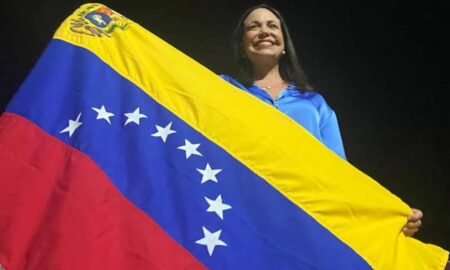
Venezuelan Nobel laureate María Corina Machado confirms no Trump contact since October 2025 amidst national upheaval


María Corina Machado, the prominent Venezuelan opposition leader and recipient of the Nobel Peace Prize, announced on Monday, December 6, 2025, that her communication with U.S. President Donald Trump ceased after October 2025. This revelation comes as Venezuela faces a period of significant political instability following recent American military actions.
During an interview on Fox News’ “Hannity” program, Machado clarified the timeline of her interactions with President Trump. She specified that their last conversation occurred on October 10, 2025, precisely the day her Nobel Peace Prize was publicly announced.
The statement adds a layer of complexity to the evolving relationship between the Venezuelan opposition and the United States, especially in light of the dramatic events that have reshaped Venezuela’s leadership landscape.
Venezuelan crisis unfolds post-US intervention
The unfolding crisis in Venezuela intensified dramatically over the weekend of December 3, 2025, when the United States launched targeted attacks within the country. These military operations culminated in the capture of Venezuela’s then-president, Nicolás Maduro, marking a pivotal moment in the nation’s political trajectory.
Machado publicly lauded these U.S. actions, describing them as “a huge step for humanity, for freedom, and for human dignity.” Her endorsement highlights a stark contrast to previous diplomatic approaches and underscores the gravity of the recent intervention.
Following the unprecedented events, Delcy Rodríguez, who served as Venezuela’s vice-president and oil minister, was sworn in as interim president on Monday, December 6, 2025. This swift transition was a direct consequence of Washington’s weekend moves.
Despite the rapid shift in power, the precise future leadership and governance of the South American nation remain shrouded in uncertainty. The international community watches closely as new dynamics begin to take shape.
Nobel recognition and Machado’s future
Machado earned widespread international acclaim for her unwavering commitment to democratic principles and her persistent efforts to restore freedom in Venezuela. Her receipt of the Nobel Peace Prize in October 2025 recognized her tireless work and adherence to the criteria established by Alfred Nobel himself.
Having departed Venezuela in November to travel to Norway for the Nobel ceremony, Machado has not yet returned to her home country. Her absence has been noted amidst the recent turmoil.
When questioned about her plans during the Fox News interview, Machado expressed a firm intention to return. She stated, “I intend to return home as soon as possible,” signaling her desire to be present during this critical period for Venezuela.
Trump’s past remarks on Machado’s influence
Interestingly, just days before Machado’s latest interview and the U.S. intervention, President Trump had publicly cast doubt on her political standing. On Saturday, December 3, 2025, Trump explicitly dismissed the idea of collaborating with Machado.
He asserted that she “lacks support or respect within the country,” a statement that now stands in sharp relief against the backdrop of her Nobel Prize and the subsequent U.S. actions that she enthusiastically supported. These earlier remarks suggest a potential divergence in strategic views within U.S. policy circles regarding the Venezuelan opposition.
The evolving situation highlights the complex interplay between international diplomacy, internal opposition movements, and military intervention in shaping the future of a nation. It also underscores how rapidly geopolitical calculations can shift.
International reactions to Venezuela’s leadership shift
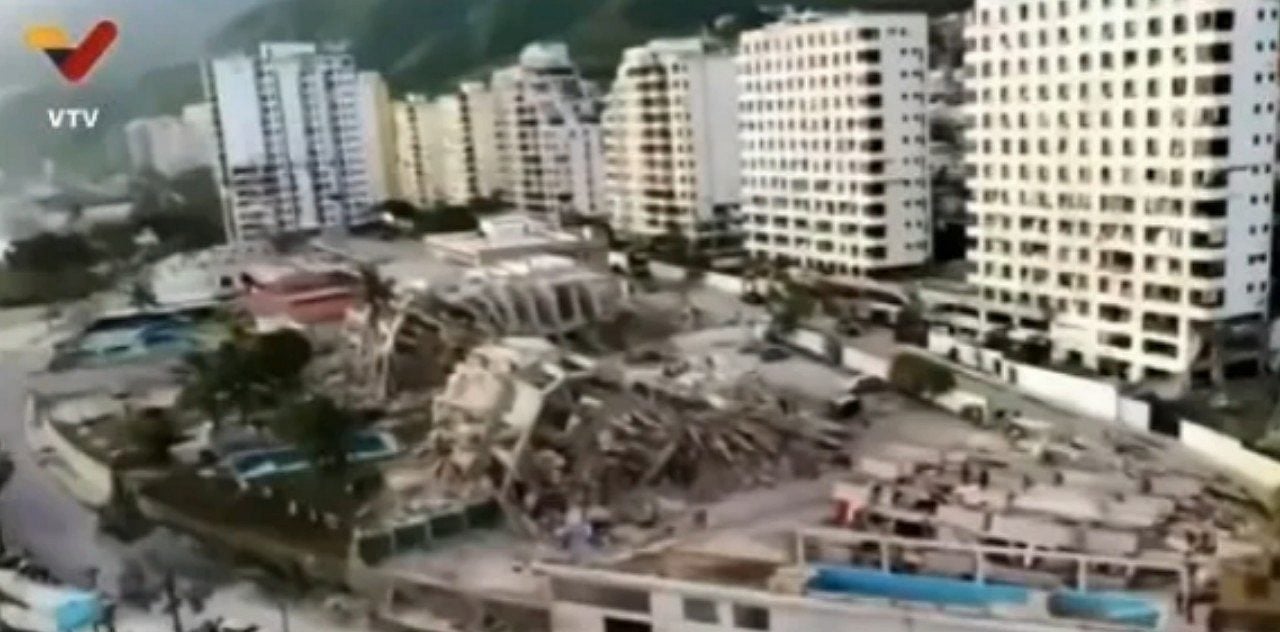
The dramatic events in Caracas have elicited diverse reactions from the international community, reflecting the profound implications of the U.S. intervention. Reports of gunfire and anti-aircraft fire in the Venezuelan capital heightened global concerns, though the U.S. officially denied any direct involvement in those specific incidents.
Brazil, a key regional player, quickly indicated its intention to condemn the attacks in Venezuela during a meeting of the Organization of American States (OAS) scheduled for Tuesday, December 7, 2025. This highlights a nuanced and often divided regional response to such interventions.
Machado’s vision for a new Venezuela
Prior to these recent developments, Machado had openly conveyed her gratitude to then-President Trump for his administration’s stance on Venezuela. She had also articulated a vision for a future Venezuela that would serve as a crucial ally to the United States.
Her consistent advocacy for democratic governance has long been a cornerstone of her public and political career. Machado’s work aligns with the foundational principles recognized by the Nobel Committee.
The current landscape presents both immense challenges and potential opportunities for the realization of her long-held goals. The path forward for Venezuela, and Machado’s specific role within it, remains a subject of intense speculation and global interest.
Broader regional implications
The swift and decisive U.S. actions in Venezuela are expected to send significant ripples across Latin America. The region is now confronting a new precedent for intervention and the potential reshaping of its geopolitical alliances and power balances.