

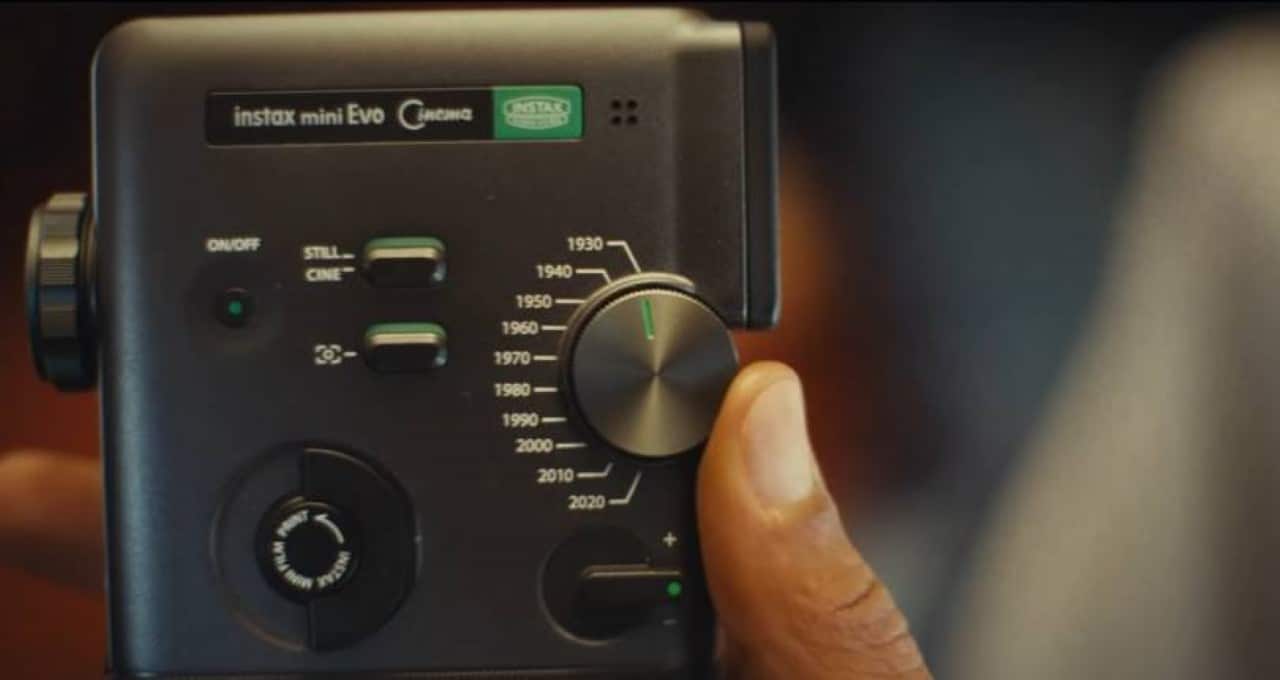
Fujifilm announced this Tuesday, January 7, 2026, the launch of the instax mini Evo Cinema, an instant hybrid camera that introduces an unprecedented video recording function to the instax line. The model allows you to capture short clips and transform them into physical prints with a QR code, facilitating digital sharing of recorded moments.
The product hits the Japanese market on January 30, 2026, with a vertical design inspired by the classic 8mm Fujica Single-8 camera, launched by the company in 1965. The new product combines photo and video capture, editing via a dedicated app and direct printing of images from a smartphone.
The instax mini Evo Cinema maintains the analog essence of the instax line, but adds advanced digital features. Usuários can instantly review videos on the rear monitor and select frames for instant printing.
Retro design with vertical operation
The look of the instax mini Evo Cinema directly refers to the cinematic past of the Fujifilm. The body adopts a vertical format, with a firing button positioned on the lower front, making it easier to use with just one hand.
Dials and buttons are concentrated on the left side of the device, allowing quick adjustments during capture. Essa configuration offers different ergonomics compared to traditional horizontal models from the instax line.
The premium finish reinforces the classic film camera feel. Acessórios as optical viewfinder and additional grip can be attached for greater versatility.
New video recording feature
The main innovation of the instax mini Evo Cinema lies in its ability to record videos, something unprecedented in the history of the instax line. Clips have a maximum length of up to 15 seconds, divided into multiple scenes for greater flexibility.
After capturing, the user selects a favorite frame and prints the instant photo with an integrated QR code. When scanning the code with a smartphone, the full video plays automatically, with an instax frame option.
The film development process maintains the standard time of about 90 seconds. The print combines static image and QR code in a discreet way, preserving the classic aesthetic.
Eras Dial with effects from past decades
The Eras Dial represents another unique highlight of the model. São 10 effects that simulate visuals and audio from different eras, covering the period from 1930 to 2020, with adjustable intensity in 10 levels.
Each setting changes color, contrast, grain and even shooting sound, creating a specific cinematic atmosphere. Custom Frames complement the effects, evoking historical devices and media.
- 1930s effects: sepia tones and high noise;
- 1970s: saturated colors and pronounced vignette;
- 2000s: digital filters with artificial brightness;
- Current decade: clean appearance with minimalist options.
This tool allows you to create content with unique temporal aesthetics directly in the camera.
Dedicated application expands possibilities
The instax mini Evo Cinema app works as an editing and sharing center. Nele, users combine multiple clips into videos of up to 30 seconds, adding cinematic opening and ending templates.
Function Poster Template turns prints into movie posters, with space for custom titles and text. The Bluetooth connection ensures fast transfer between camera and smartphone.
The app also offers remote printing and remote shooting control. Dados of video is saved for sharing on social networks without loss of quality.
Hybrid functions and direct printing
The instax mini Evo Cinema operates as a complete 3-in-1 device. Além to capture native photos and videos, serves as a printer for images stored on the smartphone via Direct Print.
Instax-Natural and Instax-Rich quality modes allow you to choose between softer or more intense colors in printing. The film used remains the instax mini standard, compatible with the entire line.
The camera has internal memory and a microSD card slot. Bateria rechargeable via USB guarantees autonomy for hundreds of prints.
Technical details and accessories
The 1/5-inch CMOS sensor captures images at a resolution of 2560 x 1920 pixels. Integrated Flash covers distance up to 1.5 meters, with manual control options.
Self-timer makes group photos easier. Espelho front assists accurate selfies.
Official accessories include protective cases, custom straps and additional lenses. Tripé can be attached to the base for stable recording.
Availability and market expectations
The initial launch takes place exclusively on Japão on January 30, 2026. The suggested Preço has not yet been released by Fujifilm, nor is there confirmation of arrival in other markets, including Brasil.
The new feature expands the Instax line’s audience for content creators looking for a hybrid format. The combination of physical tangibility with digital sharing positions the model as a bridge between analog and contemporary.
Experts point to the potential for viralization on social networks, especially with the QR code feature in prints. The camera maintains the Fujifilm tradition of innovating in the instantaneous segment.



