
Serious lithium battery failure forces BYD to recall 89,000 Qin Plus DM-i cars


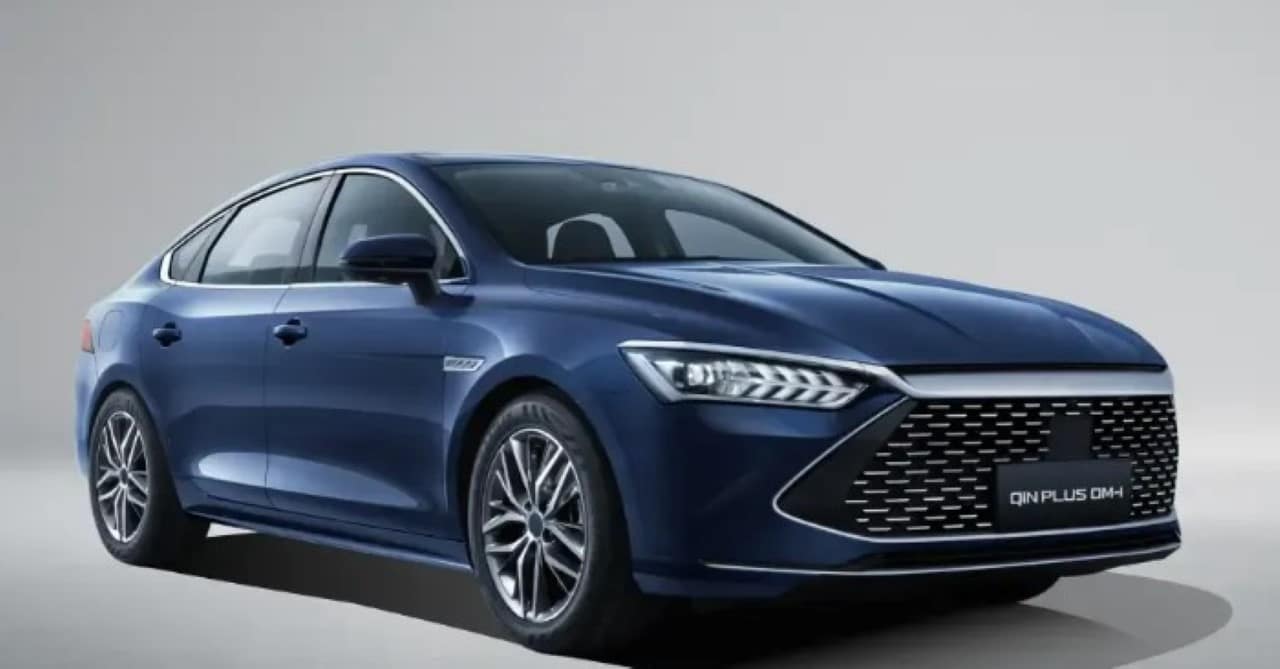
BYD, one of the world’s largest electric vehicle manufacturers, announced a large-scale recall on China involving almost 89,000 units of its popular plug-in hybrid sedan, the Qin Plus DM-i. The measure was motivated by the identification of a serious fault in the lithium battery pack, which presents potential risks to the safety of the vehicle’s occupants. The recall covers models manufactured over a period of more than two years, specifically between January 2021 and September 2023.
The decision was formalized with Administração Estatal of Regulação of Mercado of China (SAMR), the main product quality inspection body in the country. Este recall adds to other recent recalls from the automaker, raising discussions about quality control challenges faced by the industry amid accelerated production expansion to meet growing global demand for electrified vehicles.
The Qin Plus DM-i model is one of BYD’s flagship sales in the Chinese market, known for its energy efficiency and competitive price. The failure, therefore, affects a significant volume of customers and highlights the complexity of battery systems, which are the heart of electric and hybrid car technology.
Technical details of battery failure
The investigation conducted by BYD engineering showed that the root of the problem lies in an inconsistency in the battery pack manufacturing process. According to the official statement, there is a defect in the insulation of a specific component within the assembly, which may allow moisture to infiltrate under certain conditions of use. The presence of water inside the battery pack is extremely dangerous, as it can lead to an internal short circuit between the lithium cells. In a progressive failure scenario, the short circuit raises the temperature uncontrollably, creating a potential risk of thermal runaway, an event that can result in dense smoke and, in extreme cases, a vehicle fire. The battery management system (BMS) may not detect the fault in its early stages, which makes the condition even more critical as the driver may not receive an alert on the dashboard before the problem worsens, leading to a sudden loss of propulsion or a more severe incident. The automaker emphasizes that the risk is greater in vehicles that frequently operate in high humidity environments or that experience extreme climate variations.
The correction plan presented by BYD
To resolve the identified flaw, BYD developed an action plan divided into two main steps, combining software and hardware solutions.
The first measure consists of a remote software update, known as over-the-air (OTA). Este new software improves the logic of the battery management system, making it more sensitive to abnormal variations in voltage and temperature that could indicate moisture infiltration.
This update will act as an early diagnostic tool, monitoring the battery pack more rigorously and continuously.
If the updated software detects any anomaly or potential risk, the system will alert the driver via a notification on the vehicle’s dashboard. Following this alert, the owner will be instructed to take the car to an authorized dealer for the second stage of correction, which involves a physical inspection and, if necessary, free replacement of the battery pack or defective components.
A recent history of automaker recalls
This Qin Plus DM-i recall is not an isolated event for BYD. Nos Last two years, the company held other significant calls that covered different models in its portfolio. In October of the previous year, more than 115 thousand units of the Tang DM-i and Yuan Pro models were recalled to correct a problem related to potential battery overheating. The failure, although different from the current one, was also linked to the safety of the main component of electric vehicles.
Furthermore, at the beginning of the same year, a massive recall involved almost 100 thousand units of models Dolphin and Yuan Plus due to problems in the power inverter cooling system, which could cause a short circuit and increase the risk of fire. Esses events, combined, exceed the mark of 300 thousand vehicles called in a short period, reflecting the “growing pains” of a company that has become a global leader in sales of electrified vehicles, surpassing established competitors. Analistas from the sector point out that the speed of innovation and production can sometimes put pressure on supply chains and quality control processes.
The Chinese regulatory body’s response
The Administração Estatal of Regulação of the Mercado of the The agency acts proactively in investigating incidents and requiring recalls to ensure consumer safety.
The formalization of the recall by BYD with SAMR demonstrates the seriousness with which both the company and the government are treating the issue. Transparency in the process is seen as key to maintaining public trust in a technology that still faces skepticism regarding battery safety.
How owners should proceed
BYD will begin notifying owners of vehicles included in the recall through official channels such as mail, email and mobile apps.
To check whether a specific vehicle is part of the recall, owners can consult the manufacturer’s official website or contact the customer service center, providing the vehicle identification number (VIN).
The company reinforces that all diagnostic procedures, software updates and possible replacement of parts will be carried out at no cost to the consumer.
Robust sales despite problems
Despite the negative publicity generated by the recalls, BYD’s sales performance continues to show notable growth. In the last quarter, the automaker recorded record numbers, consolidating its leadership position in the Chinese market and expanding its international presence.
The strong demand, especially for its DM-i hybrid models, indicates that consumers still value the value for money proposition and the technology offered by the brand, considering quality issues as part of the company’s maturation process.
Safety in electric vehicles in focus
The incident with the Qin Plus DM-i reignites the global debate on the safety of lithium-ion batteries in electric vehicles. Garantir the integrity and durability of these components is the biggest challenge for the entire automotive industry in the transition to electrification, requiring continuous investment in research, development and rigorous testing protocols.



