

Consumer Electronics Show, widely recognized as CES, has established itself in recent years as not only a showcase for consumer electronics, but also a key focal point for the global automotive industry. The mobility and transport sector, which has historically adopted digital innovations at a slower pace, is now among the main investors in cutting-edge technologies, demonstrating a profound and accelerated transformation driven by artificial intelligence.
This convergence between technology and transportation is reshaping expectations about how people and goods will move in the future. AI acts as a crucial catalyst, promising to speed the development and implementation of mobility solutions that were considered science fiction not so long ago.
At global events like this, tech giants and innovative startups present their most ambitious projects, offering a glimpse of the innovations that will soon become part of everyday life. Empresas like Zoox and Waymo, for example, demonstrate significant advances in the field of autonomous vehicles, while the integration of AI transcends passenger cars, impacting everything from heavy machinery to airport management.
Autonomous vehicle advancements highlighted
Zoox, a promising autonomous vehicle startup operating under the umbrella of Jeff Bezos and Amazon, has Las Vegas as its main testing laboratory. In the last edition of the fair, the Zoox stand was one of the busiest, attracting curious people and experts to discover its electric minibuses. Apesar Although they are already a common sight on city streets, where it is possible to request a ride through an app, interest in the innovative design and functionality of these vehicles remains extremely high.
These distinctive, high-tech minibuses represent a bold step towards more efficient and accessible public transport. The autonomous mobility experience offered by Zoox is already embedded in the urban fabric of Las Vegas, allowing residents and visitors to experience the future of driverless mobility up close, demonstrating the viability and growing public acceptance of such solutions.
Technological differences in autonomous driving
While Zoox captivates with its minibuses in Las Vegas, Waymo, a subsidiary of Google, is consolidating itself as the undisputed leader in the autonomous car industry. The company already offers commercial robotaxi services in several North American cities and has expanded its experimental operations to Londres, demonstrating the scalability of its technology. The Waymo adopts a different strategy, adapting conventional cars with its advanced autonomous driving technology, aiming for a more organic integration with the existing fleet.
Waymo’s approach to environmental perception is based on a robust set of radars and cameras, which function as the vehicle’s “eyes”, ensuring accurate detection of obstacles and traffic conditions. Essa combination of sensors provides an extra layer of security and redundancy, crucial for autonomous operation in complex scenarios.
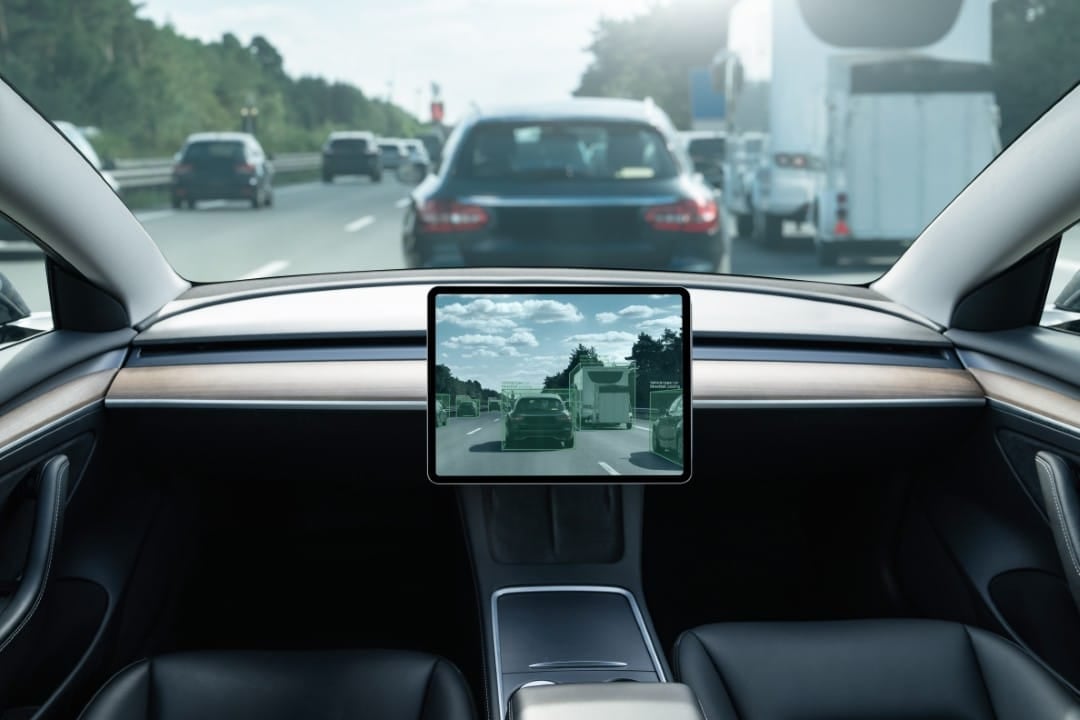
In contrast, Tesla, led by Elon Musk, has advocated a different path to reduce costs, prioritizing the exclusive use of cameras and eliminating radars in its vehicles. Essa distinction highlights the divergence of philosophies between companies in the development of autonomous driving. For now, the Waymo has demonstrated superior performance in terms of efficiency and safety, according to industry analyses, which validates its multiple sensor strategy as a competitive differentiator and a benchmark for technology reliability.
Artificial intelligence and the future of work
The future of mobility and automation, increasingly intrinsically linked to artificial intelligence, promises to redefine not only personal transport, but also the productive sector and the global job market. The areas that will first reap the fruits of this technological symbiosis are those traditionally associated with heavy and repetitive work, where automation can bring exponential gains in efficiency and safety. Caterpillar, a renowned heavy machinery manufacturer, has already presented its first AI-controlled prototypes and operational models, developed in strategic collaboration with Nvidia. Essa partnership aims to create more intelligent equipment, capable of operating with total autonomy, from excavating in mines to moving loads on construction sites. The adoption of AI in these machines makes it possible to optimize routes, predict mechanical failures and perform complex tasks with precision and consistency that surpass human capabilities, significantly reducing risks in dangerous environments and freeing workers for higher value-added functions, such as supervision and maintenance of advanced systems.
Transforming industrial sectors with AI
During panels and demonstrations, Caterpillar demonstrated in real time the autonomous operation of a coal mine, where all the machinery works independently. Essa innovation not only optimizes the extraction and transportation of minerals, but also raises safety standards in one of the riskiest work environments in the world.
Another stand demonstrated how airports will undergo profound modernization in the coming years, with the massive introduction of autonomous machines controlled by artificial intelligence. Essa automation aims to completely transform ground operations, making them faster and safer.
In place of jobs that traditionally involved manually guiding aircraft on the ground, specialized robots will take over signaling and coordination. Eles are responsible for critical tasks, such as placing brake pads on airplane wheels and even refueling aircraft, functions that require precision and speed.
The transition from human operators to autonomous machines in these dangerous and often difficult roles promises a significant increase in the speed of airport operations and unprecedented efficiency. Além Furthermore, automation contributes to the reduction of human errors and minimizes the exposure of workers to operational risks, resulting in a safer and more productive environment.
Broad impact of the mobility revolution
The mobility revolution, driven by artificial intelligence and autonomous vehicles, extends far beyond robot taxis and industrial machines, promising to reshape cities, economies and the very way we interact with the space around us. The integration of these technologies paves the way for smarter, more sustainable and personalized transport systems, with the potential to reduce congestion and pollution.
The role of the fair in global innovation
Events like CES reaffirm their crucial role as global platforms for unlocking these transformative technologies. With each edition, the fair not only presents the most recent innovations, but also fosters essential discussions about the future of technology and its impact on society.
CES’s constant evolution from an electronics show to a multifaceted hub of innovations, including mobility and artificial intelligence, highlights its relevance in a rapidly changing technology landscape. It is a stage where boundaries between sectors dissolve, giving rise to collaborations and developments that drive global progress.



